
Norman Borlaug — Plant Breeder and Leader of the Green Revolution
American agronomist and plant breeder whose development of high‑yield, disease‑resistant wheat varieties helped avert widespread famine and transformed global food production.
Overview
Norman Borlaug (1914–2009) was an American agricultural scientist and plant pathologist celebrated for developing high‑yield, disease‑resistant cereal crops. His work in wheat breeding and crop improvement is widely credited with dramatically increasing food production in parts of Asia and Latin America during the mid‑20th century and is commonly described as the core of the Green Revolution.
Image gallery
10 Images


Breeding work and the Green Revolution
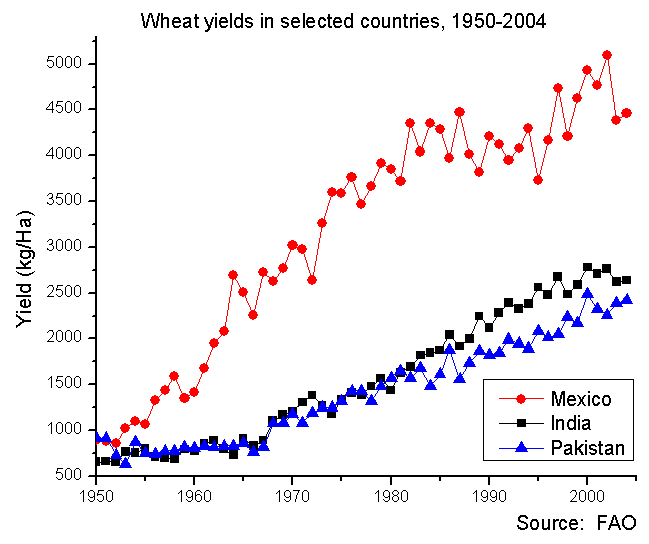
Borlaug led programs that combined traditional cross‑breeding with careful field selection to produce semi‑dwarf, sturdy wheat varieties that responded well to fertilizer and were less prone to lodging. He also emphasized incorporating disease resistance into new lines, notably against rusts that had devastated crops. These improved varieties, paired with better agronomy—irrigation, fertilizer, and extension services—helped raise yields rapidly where they were adopted.
Life and career
Borlaug was born in Cresco, Iowa, and after studying forestry and plant pathology he worked for research institutions that focused on wheat improvement. Much of his influential work took place at research centers in Mexico and later in collaboration with programs in South Asia, where governments and farmers scaled up the new technologies. He continued to advocate for agricultural research and support for smallholder farmers throughout his life.
Impact, honors, and recognition
The significance of Borlaug's contributions was recognized internationally: he received the Nobel Peace Prize in 1970 for his role in increasing food security. He also received many national and international honors for scientific and humanitarian achievement, reflecting the widespread impact of his work.
Legacy and discussion
Borlaug's legacy includes a lasting increase in cereal production and renewed global attention to crop research. At the same time, the Green Revolution prompted discussion about environmental effects, resource use, and equitable access to technology. In his later years he remained active as an advocate for continued investment in crop science and agricultural development. Borlaug died of lymphoma at age 95 in his Dallas home in 2009.
- Key themes: plant breeding, food security, agricultural research
- Notable facts: Nobel Peace Prize laureate; central figure of the Green Revolution
Author
AlegsaOnline.com Norman Borlaug — Plant Breeder and Leader of the Green Revolution Leandro Alegsa
URL: https://en.alegsaonline.com/art/127753