
Ninian Edwards
Ninian Edwards (1775–1833) was an early Illinois leader: territorial governor, one of the state's first U.S. senators, and later state governor; a dominant figure in frontier factional politics.
Overview
Ninian Edwards (March 17, 1775 – July 20, 1833) was a prominent political leader during the formative years of the state of Illinois. He served as the only governor of the Illinois Territory, became one of the first two U.S. senators from the new state, and later was elected as the third Governor of Illinois. His career spanned public administration, federal representation, and local party-building at a time when personal alliances and regional factions shaped frontier politics.
Image gallery
3 Images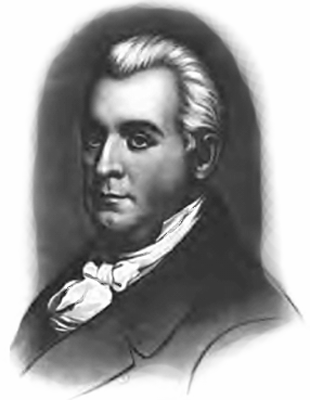


Early life and background
Edwards was born on March 17, 1775 in Montgomery County, Maryland. Like many frontier leaders of his era, he moved west as opportunity opened, bringing with him legal training and connections that helped him acquire appointments and influence. He established himself in the Illinois country at a moment when the Northwest and Mississippi valley territories were being organized and settled, and he rose quickly within territorial administration.
Offices held
- Governor of the Illinois Territory, 1809–1818
- United States Senator from Illinois, 1818–1824
- Governor of the State of Illinois, 1826–1830
These positions placed Edwards at the center of transition from territorial government to statehood. As territorial governor he oversaw local administration and relations between settlers, Native American nations, and federal authorities; as senator he represented Illinois in the early years after admission to the Union; and as state governor he managed executive responsibilities while facing the evolving political landscape of a growing state.
Political style and influence
Edwards led one of the dominant factions in early Illinois politics. During this era, formal national parties were less important on the frontier than local coalitions built around prominent individuals. Edwards’s leadership combined appointment power, personal patronage, and public visibility. He was often a polarizing figure — admired by supporters for his forceful leadership and criticized by rivals for his concentration of influence. His factional rivalries helped define Illinois’s initial political alignments.
Legacy and notable facts
Edwards’s career is significant for several reasons: he governed the territory that would become a state, he helped shape Illinois’s earliest representation in Congress, and he returned to serve as a state executive at a later stage. He is remembered both for the offices he held and for the role he played in establishing political patterns on the early frontier. Contemporary accounts and later historians note his prominence in appointment networks and factional contests that influenced policy and local leadership in the region.
Personal life and death
Edwards was married to Elvira Lane and they had four children. He died on July 20, 1833 in Belleville, Illinois, during an outbreak of cholera. His life illustrates the opportunities and hardships of the early American frontier: rapid political advancement, intense local competition, and vulnerability to epidemics and the difficulties of frontier life.
For additional context on the institutions and early political history of the region, see materials on territorial governance and early statehood politics in the upper Mississippi valley and Midwest. Contemporary primary documents and later biographies provide more detailed discussion of Edwards’s administration, patronage networks, and the electoral contests that marked his career.
Author
AlegsaOnline.com Ninian Edwards Leandro Alegsa
URL: https://en.alegsaonline.com/art/127702