
Nelson Rockefeller: Businessman, Governor and U.S. Vice President
Nelson A. Rockefeller (1908–1979) was an American businessman, New York governor (1959–1973), and U.S. vice president (1974–1977); a leading figure among moderate Republicans and a major arts patron.
Nelson Aldrich Rockefeller (July 8, 1908 – January 26, 1979) was a prominent American politician and businessman. A grandson of John D. Rockefeller, he combined leadership in family enterprises with decades of public service and cultural philanthropy. Rockefeller became a defining figure of mid-20th century public life, associated both with the liberal wing of the Republican Party and with large-scale civic projects tied to state and national government. He remained active in business and the arts while serving in a succession of appointed and elected offices, and his career illustrates the close ties between private wealth, institutional philanthropy, and public responsibility.
Image gallery
10 Images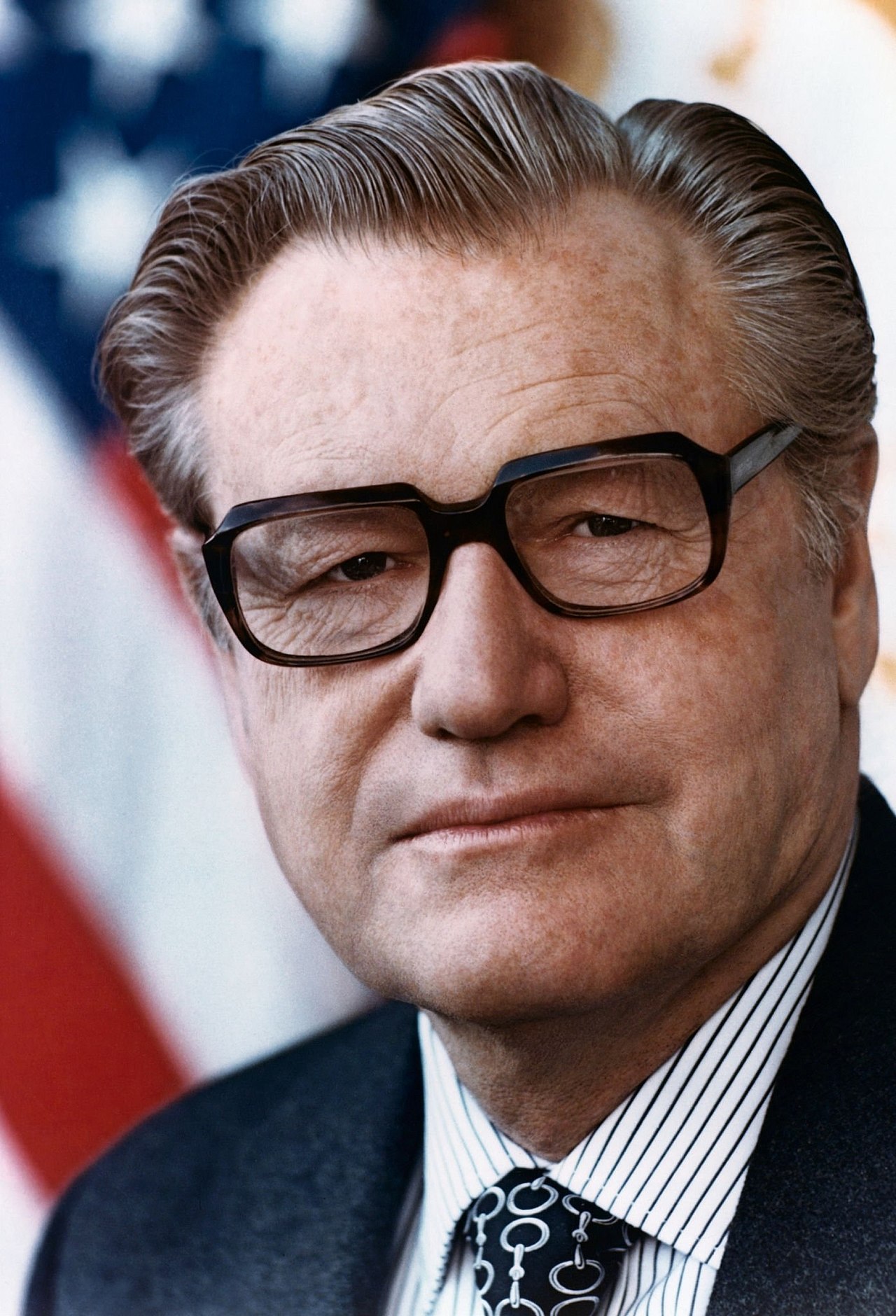




Early life and business activity
Born into the Rockefeller family, he assumed management roles in family enterprises and private ventures. Rockefeller served as an executive of Rockefeller Center, Inc., and in 1947 he founded the International Basic Economy Corporation, a company intended to promote development and business ties abroad. He also held leadership positions with important cultural institutions, serving as trustee and officer of the Museum of Modern Art and founding the Museum of Primitive Art. These roles reflected a personal interest in collecting and in expanding public access to modern and non-Western art, and they shaped his reputation as an arts patron.
Federal service and political emergence
Before winning elective office, Rockefeller held appointed positions in the federal government, including posts focused on inter-American affairs and on social administration. These appointments gave him administrative experience and a national profile that he later translated into statewide politics. He made several bids for the Republican presidential nomination in the 1960s and early 1970s, campaigns that helped define the moderate, internationalist wing of the party often labeled "Rockefeller Republicans." For documentary records and research materials see archival guides at archival collections.
Governor of New York (1959–1973)
Rockefeller was elected governor of New York in 1958 and served through 1973. His long tenure was marked by an emphasis on infrastructure, expansion of public institutions, and investment in higher education and health facilities. He supported large public works and state-level programs that enlarged the role of government in providing services, while maintaining a pragmatic, managerial approach to administration. His governorship left a visible imprint on the state's institutions and set patterns for state-led modernization efforts in the postwar era; related state records can be consulted at state archives.
Vice presidency and later years
After Richard Nixon's administration, Rockefeller was nominated by President Gerald Ford and confirmed as the 41st vice president of the United States, serving from December 1974 to January 1977. In that role he performed constitutional and representative duties while continuing to take an interest in domestic and international issues. His selection reflected both his national stature and the desire of the administration for an experienced, moderate partner during a period of political transition.
Cultural patronage and philanthropy
Rockefeller's cultural commitments were longstanding. He supported museum building, collecting, and educational initiatives, and he served for many years in leadership roles with major cultural organizations. His philanthropic work followed a family tradition of institutional giving and civic investment; researchers interested in family papers and foundation records may consult family collections and material held by related foundations at foundation archives.
Legacy and assessment
- Long-serving governor of New York (1959–1973) who promoted expanded state programs and infrastructure investment.
- U.S. vice president (1974–1977), appointed to fill a midterm vacancy and serve during a period of national realignment.
- Key figure among moderate or liberal Republicans, often referred to as a leading example of the "Rockefeller Republican" tradition.
- Major arts patron whose institutional leadership and collecting influenced American museums and cultural policy.
Nelson Rockefeller's career blended private enterprise, appointed office, elected leadership, and cultural philanthropy. His pragmatic, managerial style and his support for robust public programs placed him at the center of debates about the proper role of government in mid-century America. For further information and primary sources consult the biographical and government records linked above, which provide documentary context for his public life and private endeavors.
Author
AlegsaOnline.com Nelson Rockefeller: Businessman, Governor and U.S. Vice President Leandro Alegsa
URL: https://en.alegsaonline.com/art/127517