
Morihiro Hosokawa: Japan's 79th Prime Minister and Coalition Reformer
Overview of Morihiro Hosokawa (born 1938), Japan's 79th prime minister (1993–1994), his coalition government, reform agenda, later political activity, and historical significance.
Morihiro Hosokawa (born 14 January 1938) is a Japanese politician who served as the 79th Prime Minister of Japan from 9 August 1993 to 28 April 1994. He led a multi-party coalition that displaced the long-dominant Liberal Democratic Party (LDP) and became widely noted as the first non-LDP prime minister in the post-1955 political order. His term was brief but is often discussed for its reformist orientation and symbolic break with single-party rule.
Image gallery
6 Images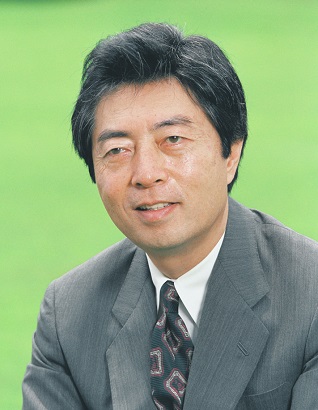


Background and early career
Hosokawa comes from a family historically associated with the Hosokawa clan, a samurai lineage with roots in Japan's feudal era. He entered public life as a centrist reformer at a time when Japan's political landscape was changing. Over his career he has been linked in reporting and biographies to reform-minded parties and movements that sought to challenge entrenched party structures and to address issues such as campaign finance and administrative reform. For more on his public profile see detailed biographical sources here.
Premiership and policies
Hosokawa headed a coalition government made up of non-LDP parties. The coalition emphasized transparency, political reform, and measures intended to reduce corruption and factional control of politics. During and after his tenure, Japan pursued significant electoral system changes that moved the country toward a mixed system combining single-member districts with proportional representation; Hosokawa is commonly associated with the political momentum behind those reforms. His administration also sought fiscal and administrative adjustments, though many proposed measures faced resistance and the government lasted less than a year.
Later political activity and candidacy
After leaving the premiership, Hosokawa remained active in public affairs and periodic political campaigns. Notably, in February 2014 he stood as an independent candidate for Governor of Tokyo backed by the Democratic Party of Japan. That campaign demonstrated his continued engagement in national and local politics and his appeal to voters seeking alternatives to dominant parties. He has at times been a commentator and participant in civic initiatives focused on governance reform.
Significance and notable facts
- He is remembered as the first non-LDP prime minister since the formation of the postwar conservative alignment in 1955, a landmark moment in modern Japanese politics.
- His brief administration helped catalyze attention to electoral and campaign-finance reform, contributing to debates that shaped Japan's political system in the 1990s.
- His later candidacy for Tokyo governor underlined a pattern of independents and reformist figures seeking office outside traditional party hierarchies.
Hosokawa's career illustrates how short-lived governments can nonetheless have lasting effects by changing expectations about political competition and by pressing reforms that are subsequently adopted or adapted. For additional context and updates on his public activities consult further resources and archival material related to Japan's party politics and contemporary commentary on political reform.
Author
AlegsaOnline.com Morihiro Hosokawa: Japan's 79th Prime Minister and Coalition Reformer Leandro Alegsa
URL: https://en.alegsaonline.com/art/127237