
Miguel de la Madrid — Mexican president (1982–1988) and economic reformer
Mexican president Miguel de la Madrid (1934–2012) led from 1982 to 1988. His term addressed a severe debt crisis with austerity and market-oriented reforms and endured the 1985 Mexico City earthquake.
Miguel de la Madrid Hurtado (August 12, 1934 – April 1, 2012) was a Mexican politician who served as president of Mexico from 1982 to 1988. A member of the Institutional Revolutionary Party, his administration confronted a deep economic crisis, instituted fiscal austerity and began shifts toward privatization and deregulation that marked a change in Mexican economic policy. His term is also remembered for the 1985 Mexico City earthquake, which revealed shortcomings in disaster response and galvanized civic participation.
Image gallery
9 Images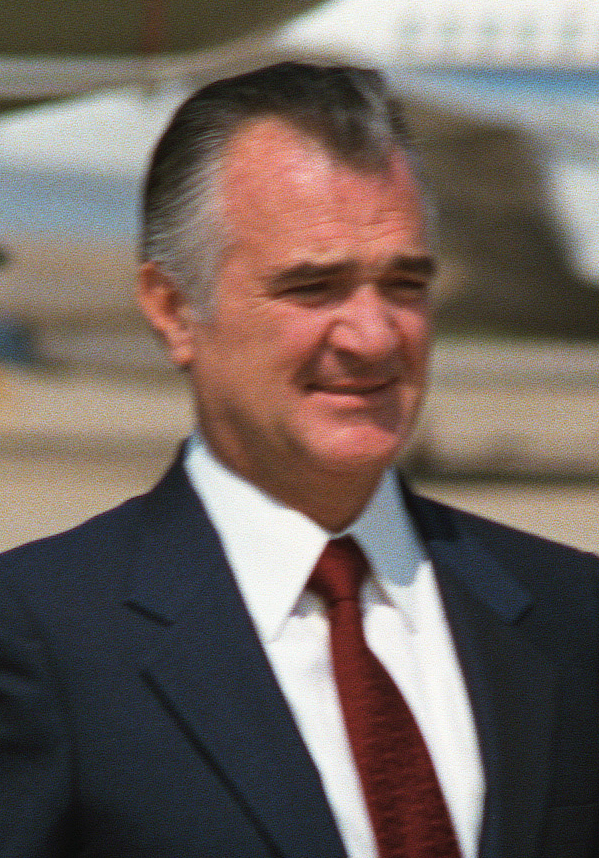




Background and political rise
De la Madrid came to power within the dominant party structure of the PRI at a moment when technocratic administration and economic management were emphasized. He presented himself as a leader focused on fiscal stabilization, institutional reform and the modernization of administration rather than populist mobilization. He promoted a program of "moral renovation" aimed at combating corruption and improving public sector efficiency, a theme that he used to legitimize administrative changes.
Economic policy and reforms
Inheriting a severe international debt and balance-of-payments crisis, his government adopted austerity measures intended to restore macroeconomic balance. Policies included tighter public spending, renegotiation with creditors and measures to encourage private investment and participation in sectors previously dominated by the state. These steps are commonly seen as the opening phase of a longer shift toward market-oriented economic policy in Mexico, later continued by his successor.
1985 earthquake and public response
The earthquake that struck Mexico City in 1985 was a defining test of the administration. The disaster caused widespread destruction and loss of life and prompted extensive civic mobilization. Official relief efforts were widely criticized for delays and coordination problems, and the event intensified demands for transparency, better urban planning and stronger civil-society oversight of government actions.
Controversies and political context
De la Madrid presided during a period of increasing public debate about accountability, economic inequality and the role of the state. Critics argued that austerity measures had social costs and that reforms benefited certain sectors more than others. Supporters countered that stabilization was necessary to end chronic imbalances and to create conditions for future growth. His presidency bridged the long PRI dominance of the 20th century and the deeper economic and political transformations that followed.
Later life and legacy
After leaving office in 1988, when he was succeeded by Carlos Salinas de Gortari, de la Madrid remained a figure associated with the transition toward liberalized economic policies. He died in 2012. Historians and analysts often view his term as transitional: it set policy directions that shaped Mexico's subsequent economic and political trajectory and highlighted the rising importance of technocratic governance and civil-society scrutiny in national life. For general context on his political role see an entry for politicians, the PRI's history at Institutional Revolutionary Party resources, and an overview of the presidency of Mexico.
Author
AlegsaOnline.com Miguel de la Madrid — Mexican president (1982–1988) and economic reformer Leandro Alegsa
URL: https://en.alegsaonline.com/art/126923