
Miguel d'Escoto Brockmann
Nicaraguan Catholic priest, diplomat, and politician who served as president of the UN General Assembly in 2008–2009 and as foreign minister under the Sandinista government.
Miguel d’Escoto Brockmann (1933–2017) was a Nicaraguan Catholic priest, diplomat, and political figure associated with the Maryknoll Missionary Society. He became internationally known for combining religious vocation with public service, especially during Nicaragua’s revolutionary period and later at the United Nations General Assembly.
Image gallery
2 Images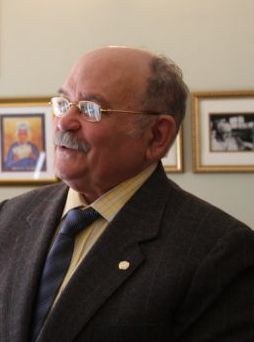
Background and public life
Born in 1933, d’Escoto was part of a generation of Latin American clergy who argued that faith should also address poverty, inequality, and war. His career drew attention because he did not keep religion and politics separate: instead, he used his priestly status to support social change and international causes. He is best remembered for serving as Nicaragua’s foreign minister after the 1979 Sandinista revolution, when the country was led by the Sandinista government. His political activity also brought him into conflict with church authorities, and his priestly ministry was restricted for a period.
Role at the United Nations
From September 2008 to September 2009, he presided over the 63rd session of the General Assembly as its president. The office is largely ceremonial, but it gives its holder a platform to shape discussion and emphasize priorities. D’Escoto used the role to call for peace, dialogue, development, and a more equitable world order. His election also highlighted the unusual path that had taken him from priestly ministry to high-level diplomacy.
- Religious identity: Catholic priest and Maryknoll missionary.
- Political role: foreign minister and international spokesman for revolutionary Nicaragua.
- Global profile: president of the UN General Assembly for the 63rd session.
- Public image: admired by supporters of social justice, criticized by opponents of Sandinista policy.
Legacy
D’Escoto remained a controversial but significant figure in Nicaraguan and international affairs. Supporters saw him as a principled advocate of the poor and a voice for peace. Critics argued that his activism blurred the line between clerical work and partisan politics. He died in 2017, leaving behind a career that reflected the political and moral struggles of modern Latin America. In 2011, he was also nominated by Libya’s government as its representative to the United Nations, underscoring how far his diplomatic profile had extended beyond Nicaragua.
Author
AlegsaOnline.com Miguel d'Escoto Brockmann Leandro Alegsa
URL: https://en.alegsaonline.com/art/126921