
Body language
Nonverbal communication expressed through posture, gestures, facial expressions, eye contact and personal space; reflects emotions and intentions but requires context and cultural awareness to interpret accurately.
Overview
Body language is a form of nonverbal communication that uses observable behaviour to convey information without words. It includes posture, gestures, facial expressions, eye movements, touch and use of space. Some signals are produced deliberately, but many occur automatically and reveal feelings or reactions that words may hide. Body language differs from formal, intentional systems such as sign language in that it is often spontaneous and context-dependent rather than rule‑bound.
Image gallery
7 Images



Primary components
- Posture: how a person stands or sits can suggest openness, confidence, submission or tension.
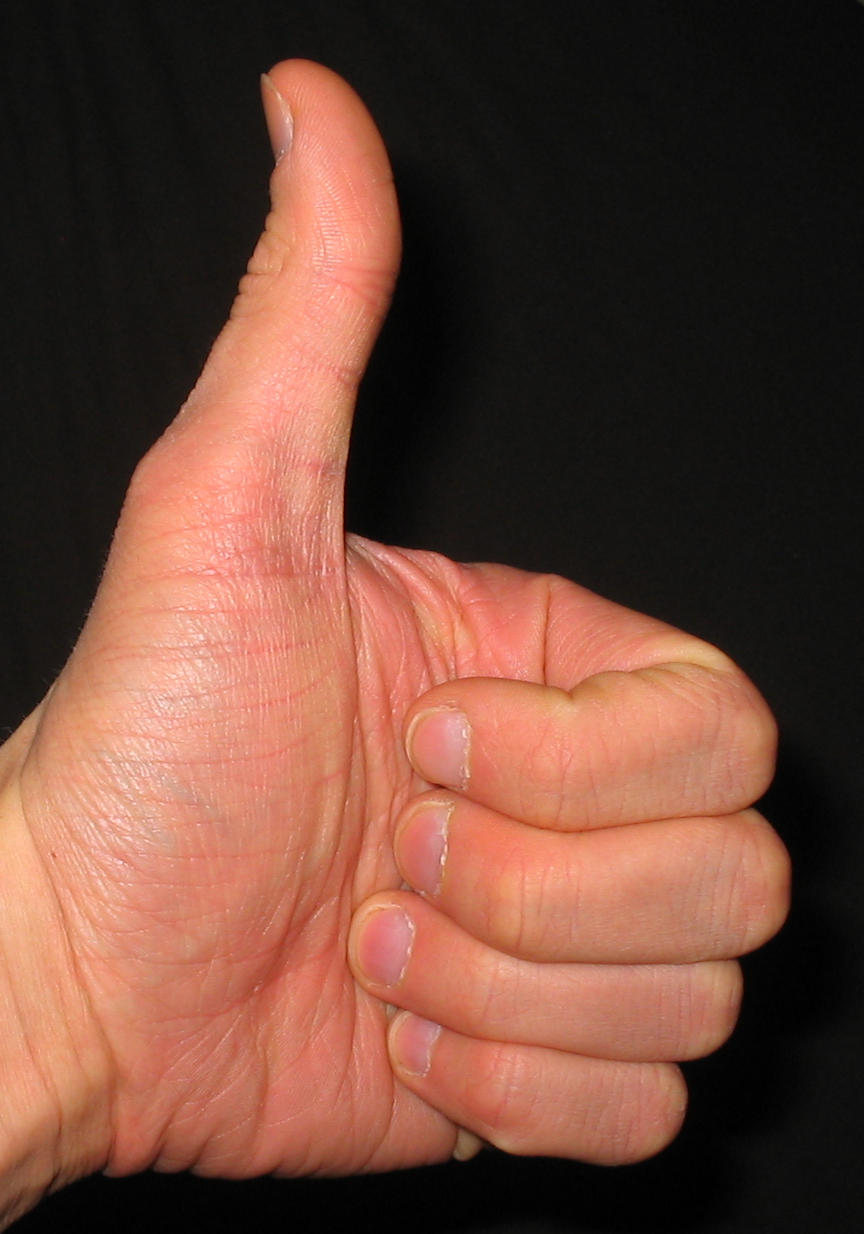
- Gestures: movements of the hands and arms that can emphasize speech, indicate objects or regulate conversation; see gestures for examples.
- Facial expressions: the face registers many basic emotions and subtle social signals.
- Eye behaviour: gaze direction, contact and blink rate communicate attention, interest and intent.
- Proxemics: preferred interpersonal distance varies by relationship and culture.
- Haptics (touch): brief contact can convey support, dominance or intimacy.
Scientific study and measurement
Researchers in psychology, anthropology, ethology and communication study body language using observation, coding systems and experimental methods. One common approach is to record and classify specific facial muscle actions and body movements to relate patterns to emotional states or social functions. Comparative work looks at how animals and humans use posture and gestures to signal, noting both shared tendencies and species‑specific forms; for example, studies consider how some cues appear across species while others depend on culture or situation (animal signalling comparisons).
Cultural variation and display rules
While certain expressions are widely recognized, display rules—social norms that govern how and when emotions are shown—differ between groups. Personal space, appropriate touching and the meaning of particular gestures can vary greatly. Misreading these conventions can cause misunderstandings, so observers should avoid assuming universal meanings for single gestures.
Applications and relevance
Body language matters in many social contexts: leadership and management, negotiation, teaching and healthcare, as well as dating, parenting and everyday interactions. Practitioners use nonverbal cues to assess engagement, sincerity and mood. For example, leaning forward often signals interest, while repeated yawning or diverted gaze can indicate boredom. Signs associated with aggression, anxiety or relaxation should be interpreted alongside other information.
Interpretation, limits and ethical considerations
Interpreting body language requires caution. No single gesture reliably reveals intent; accurate reading depends on clusters of signals, baseline behaviour and corroborating verbal content. Context, culture and individual differences are crucial. Ethical observers respect privacy and avoid making definitive judgments about complex inner states from limited cues. Training can improve sensitivity, but overconfidence in stereotyped interpretations can produce errors.
Practical tips for observers
- Consider multiple, simultaneous cues rather than isolated movements.
- Compare current behaviour to a person’s typical patterns to detect changes.
- Account for situational factors (temperature, fatigue, medical conditions).
- Be conscious of cultural norms governing eye contact, touch and distance.
- Use nonverbal feedback to guide questions and verify understanding.
Further reading and resources
Introductory materials and summaries of empirical work can help deepen understanding of nonverbal communication. Discussions of general behavioral cues, the role of facial expression taxonomies, and applied guidance for specific settings are widely available. Practical guides discuss interpreting signs of relaxation and pleasure (relaxed state, pleasure) while noting ambiguities and the need for context. For focused topics such as gesture function or comparative signalling, follow specialized sources and scholarly reviews to balance illustrative examples with empirical caution.
Related articles
Author
AlegsaOnline.com Body language Leandro Alegsa
URL: https://en.alegsaonline.com/art/12617
Sources
- businessballs.com : "Body Language"