
Bob Cerv (1925–2017), American Major League Baseball outfielder
Concise biography of Bob Cerv, a Nebraska-born collegiate athlete who played as an outfielder in MLB during the 1950s–1960s for the Yankees, Athletics, Angels and Colt .45s.
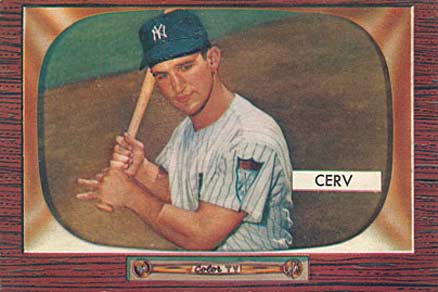
Robert Henry "Bob" Cerv (May 5, 1925 – April 6, 2017) was an American professional baseball player whose major league career spanned the 1950s and early 1960s. Born in Weston, Nebraska, he was a multi-sport athlete at the University of Nebraska before signing with the New York Yankees organization in 1950. Over more than a decade in professional baseball, Cerv was known as a productive corner outfielder, a capable first baseman on occasion and a veteran presence in several major league clubhouses.
Image gallery
2 Images
Early life and college
Cerv grew up in rural northeastern Nebraska and attended the University of Nebraska, where he competed in both baseball and basketball. Like many athletes of his generation, he developed his skills in multiple sports, which contributed to his athletic versatility. After college he entered professional baseball, progressing through minor-league assignments before reaching the major leagues with the Yankees organization.
Major league career
Cerv made his major league debut with the New York Yankees and was part of their roster during the early 1950s. He served primarily as a reserve outfielder and pinch hitter while with the Yankees, learning the routines of a championship-minded club and contributing when starters needed rest or were injured. Seeking more regular playing time, Cerv joined the Kansas City Athletics, where he spent several seasons as a more consistent member of the everyday lineup. Later in his career he also played for the expansion-era Los Angeles Angels and the Houston Colt .45s, providing experience and leadership on those rosters.
- Teams: New York Yankees, Kansas City Athletics, Los Angeles Angels, Houston Colt .45s.
- Primary role: corner outfielder; also saw time at first base and as a pinch hitter.
- Professional span: major-league service principally during the 1950s and into the early 1960s.
Playing style and contributions
Cerv was regarded as a power-capable hitter within a corner outfield profile. He combined patience at the plate with the ability to drive for extra bases, making him a valuable option in the middle of a batting order or as a veteran bat off the bench. Defensively he was used mainly in the corners of the outfield and occasionally at first base, fulfilling the needs of managers who required flexibility from role players. His career is illustrative of many mid‑20th‑century major leaguers who alternated between reserve roles on deep rosters and starting assignments on smaller clubs.
Later life and legacy
After retiring from playing, Cerv returned to Nebraska where he remained active in his local community. He is remembered in his home region for both his collegiate and professional athletic achievements and is one of several Nebraska-born players to reach the major leagues. His longevity in the game, adaptability to different team roles and presence on both established and expansion clubs make his career a useful example for those studying baseball in the 1950s and 1960s.
Death and remembrance
Cerv died on April 6, 2017, in Blair, Nebraska. His passing was reported as resulting from a stroke. Obituaries and retrospective accounts recall his years as a major-league outfielder and his connection to Nebraska athletics. For general context on the sport and era in which he played, see sources on major league baseball and team histories; biographical summaries of Cerv also appear in baseball reference works and regional histories of Nebraska athletes. More detailed accounts of his playing years can be found through team archives and retrospective baseball literature.
For additional information about his career and statistics consult dedicated baseball reference sources and club histories; many such resources provide season-by-season summaries, game logs and contemporaneous reporting that illuminate the role Cerv played on his teams. A direct biographical entry may be available under his name, Bob Cerv, in online and printed baseball reference collections.
Tags
Related articles
Author
AlegsaOnline.com Bob Cerv (1925–2017), American Major League Baseball outfielder Leandro Alegsa
URL: https://en.alegsaonline.com/art/12476