
Leon (Leone) Battista Alberti (1404–1472)
Italian Renaissance humanist and polymath: architect, theorist, writer and inventor. Alberti shaped art and architecture with treatises on painting and building and applied classical ideals to practical design.
Overview
Leon (often spelled "Leone" in Italian) Battista Alberti (1404–1472) was a leading figure of the early Italian Renaissance: a versatile humanist whose work crossed literature, visual arts, architecture and technical invention. Celebrated as an archetype of the "universal man," Alberti combined classical learning with a drive to create practical rules for artists and builders. His career and ideas are summarized in contemporary lives, most notably by Giorgio Vasari in his Lives of the Artists.
Image gallery
10 Images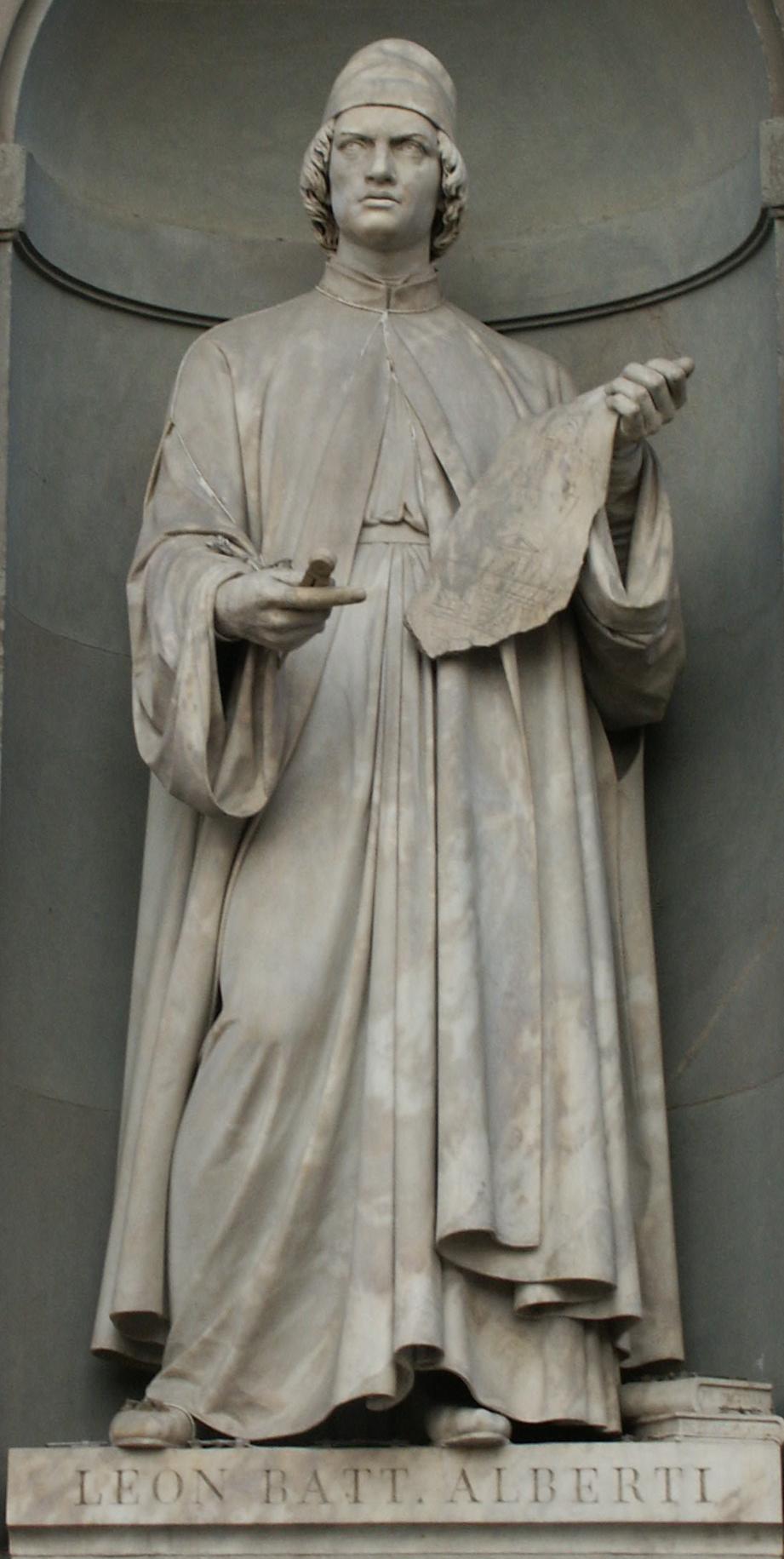


Major writings and ideas
Alberti wrote influential treatises that became textual foundations of Renaissance practice. His De pictura (On Painting) set out the geometric rules of perspective and guidance for pictorial composition; De re aedificatoria (On the Art of Building) offered an architectural handbook modeled on ancient Roman sources; and shorter works addressed sculpture, language and family life. In these texts he argued that classical models could be adapted to contemporary needs and that art combined theory with skilled craft.
Architecture and design
As an architect, Alberti is credited with several important commissions and façades that exemplify Renaissance proportions and classical motifs. Notable projects associated with him include the façade of Santa Maria Novella and the Palazzo Rucellai in Florence, the design of Sant'Andrea in Mantua, and the rebuilding of the Tempio Malatestiano in Rimini. His building work emphasized harmonious order, mathematical proportion and the use of classical elements adapted to modern urban contexts.
Other pursuits and inventions
Alberti was also an accomplished author, poet and linguist, producing treatises in both Latin and the Italian vernacular. He pursued philosophical questions about art and human nature and left practical contributions to coded communication: the cipher disk commonly called the "Alberti cipher" represents an early step toward polyalphabetic encryption, earning him a place among early cryptographers.
Legacy and significance
Alberti's combined role as theorist and practitioner helped define Renaissance concepts of beauty, proportion and the role of antiquity in modern life. His books were studied by artists and architects for generations and his built projects helped spread classical vocabulary in civic and religious architecture. He remains a key figure for understanding how humanist scholarship shaped practical arts in 15th-century Italy.
Selected themes
- Integration of theory and practice in art and architecture
- Promotion of classical models adapted to contemporary functions
- Advances in perspective, design theory and early cryptography
Related articles
Author
AlegsaOnline.com Leon (Leone) Battista Alberti (1404–1472) Leandro Alegsa
URL: https://en.alegsaonline.com/art/124232