
Lennart Carleson — Swedish mathematician known for harmonic analysis and Fourier theory
Lennart Carleson (born 1928) is a Swedish mathematician noted for major results in harmonic analysis, including the proof of Lusin's conjecture on almost everywhere convergence of Fourier series. Abel Prize laureate.
Lennart Axel Edvard Carleson (born 18 March 1928) is a Swedish mathematician celebrated for deep contributions to harmonic analysis and related areas of pure mathematics. He established landmark results about the pointwise behavior of Fourier series and introduced concepts that now carry his name, influencing analysis, complex function theory, and partial differential equations. His work is widely cited and taught as part of modern analysis.
Image gallery
1 Image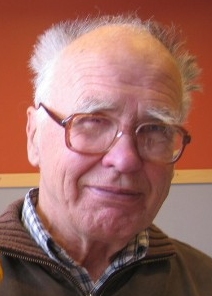
Major contributions
- Carleson's theorem: In the 1960s he proved a celebrated result on the almost everywhere convergence of Fourier series for square-integrable functions, resolving a long-standing problem often referred to as Lusin's conjecture.
- Carleson measures and embedding theorems: He developed measure-theoretic tools that characterize boundedness and compactness properties of operators in spaces of analytic and harmonic functions.
- Complex analysis and operator problems: His methods were applied to corona-type problems and to questions in several complex variables and operator theory, creating techniques now standard in those fields.
Carleson's ideas produced a suite of concepts—Carleson measures, the Carleson operator, and related estimates—that have become part of the standard toolkit in harmonic analysis. These notions are used to study singular integrals, boundary behavior of holomorphic functions, and related mapping properties.
Career and recognition
Born in Sweden, Carleson pursued a mathematical career that combined deep theoretical work with mentorship and leadership in the research community. He held academic positions and visiting appointments at several institutions and maintained an active research program well into later decades. For biographical and bibliographic summaries see biographical sources and general references to his publications at research archives.
His achievements have been recognized by many honors. Major awards include the Wolf Prize in Mathematics (1992), the Lomonosov Gold Medal (2002), the Sylvester Medal (2003) and the Abel Prize (2006). He is a member of international academies and was elected a fellow of the American Mathematical Society in 2012. For official award citations and statements see award announcements and institutional pages such as prize pages.
Carleson's influence extends beyond specific theorems: his blend of real-variable techniques, complex analysis, and clever estimates reshaped approaches to convergence and boundary-value problems. His work remains central in graduate courses on harmonic analysis and continues to inspire research on oscillatory integrals, PDEs, and dynamical systems. For further reading and contemporary assessments consult surveys and lecture notes linked from mathematical society pages.
Related articles
Author
AlegsaOnline.com Lennart Carleson — Swedish mathematician known for harmonic analysis and Fourier theory Leandro Alegsa
URL: https://en.alegsaonline.com/art/124203
Sources
- dnva.no : "Gruppe 1: Matematiske fag"
- ams.org : List of Fellows of the American Mathematical Society