
Kostas Karamanlis
Greek centre-right politician who led New Democracy and served as Prime Minister of Greece from 2004 to 2009; notable for his role during the Athens Olympics, domestic crises and early signs of the sovereign debt problems.
Kostas Karamanlis (born 14 September 1956) is a Greek politician best known for serving as Prime Minister of Greece from 2004 to 2009 and for leading the centre-right New Democracy party. His birth name and Greek form are often given in Greek-language sources: Κωνσταντίνος Αλεξάνδρου Καραμανλής. Over more than a decade as a national political figure he was a central actor in debates over economic policy, public administration and Greece's role in the European Union. For general background and profiles see a contemporary political profile.
Image gallery
5 Images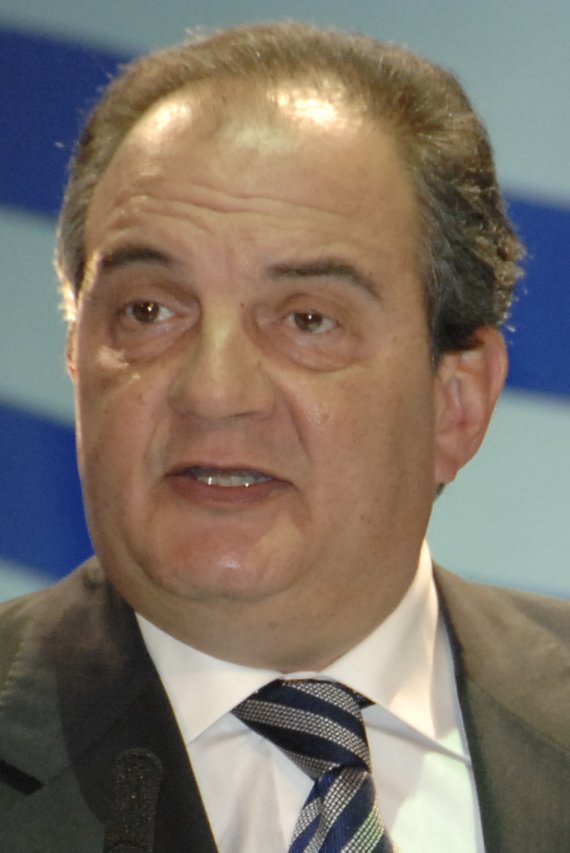


Political career and offices
Karamanlis rose through New Democracy to become its leader and lead the party into national elections. He became prime minister following New Democracy's victory and headed successive governments between 2004 and 2009. During his premiership he was the public face of the country's governing coalition and its policies at home and abroad. His term as prime minister is often summarized in accounts of early 21st-century Greek politics; official information about the office is available via basic references to the Prime Minister's office.
Key policies and events
Karamanlis's governments addressed a range of issues typical for a centre-right administration in a European democracy. Topics frequently associated with his tenure include infrastructure investment, administrative reforms, and fiscal management. Internationally, his administrations maintained Greece's commitments within the European Union and NATO while handling regional matters such as relations with neighbouring countries.
- Olympics and infrastructure: His government managed the immediate legacy of the Athens 2004 Olympic Games and related infrastructure projects.
- Public services and reforms: Attempts at modernizing parts of public administration and law were part of the agenda, with mixed assessments by analysts.
- Economic pressures: Toward the end of his term, growing concern about public finances and transparency of fiscal statistics became a major political issue in Greece.
Controversies and crises
The period 2004–2009 included several high-profile challenges. Large wildfires and serious civil unrest at moments of social tension tested government responses. The police killing of a young person in 2008 sparked widely reported riots and a broader debate about policing and social policy. Critics also pointed to fiscal practices and reporting that later commentators saw as contributing to or revealing underlying vulnerabilities in Greece's public finances.
Legacy and later life
Kostas Karamanlis remains a prominent name in contemporary Greek political history. He is often mentioned in connection with his famous uncle, Konstantinos Karamanlis, a dominant figure in postwar Greek politics. After leaving the premiership he stepped down from party leadership and receded from frontline government responsibility, though he continued to be a recognized participant in national political discussion for years afterward. For information on his party, see New Democracy.
Assessments of Karamanlis's record vary: supporters highlight stability, infrastructure works and a pro-European orientation; critics emphasize shortcomings in crisis management and fiscal transparency. His premiership is an important chapter in understanding Greece's subsequent political and economic developments.
Related articles
Author
AlegsaOnline.com Kostas Karamanlis Leandro Alegsa
URL: https://en.alegsaonline.com/art/123839
Sources
- web.archive.org : Kostas Karamanlis