
Blue Mound, Kansas
Small city in Linn County, eastern Kansas. Part of the Kansas City metropolitan area with a rural character and a population of 275 at the 2010 census.
Overview
Blue Mound is a small city located in Linn County in eastern Kansas, United States. It had 275 residents recorded by the 2010 census. Although modest in size, Blue Mound is counted within the broader Kansas City metropolitan area, reflecting commuting patterns and regional ties.
Image gallery
1 Image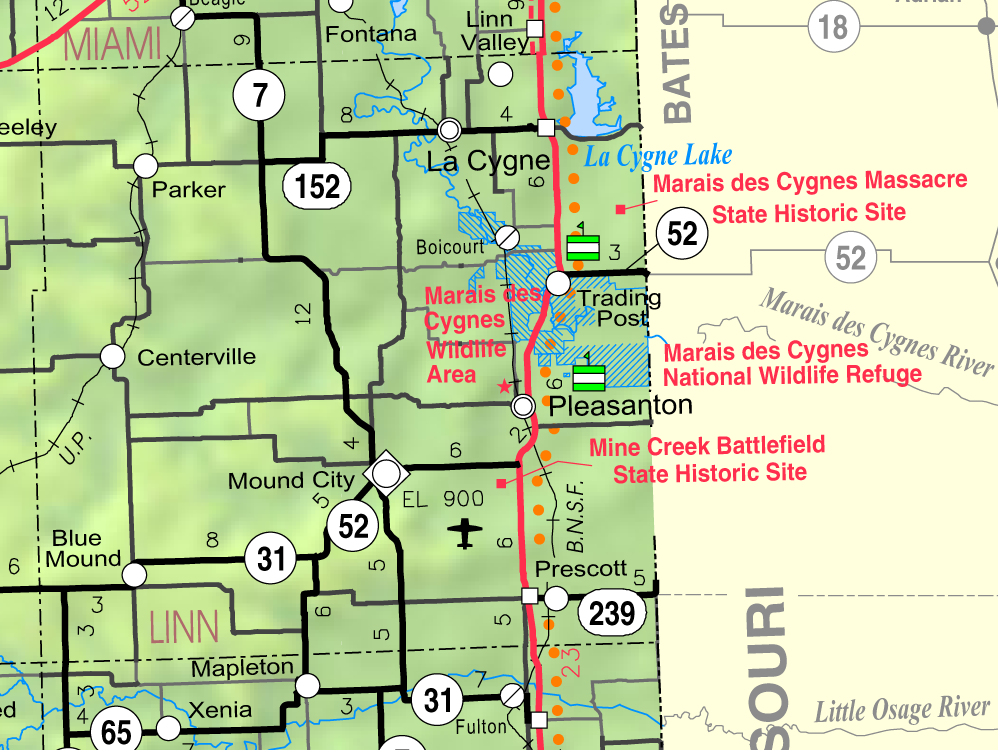
Geography and climate
The community sits within the rural landscapes of eastern Kansas, an area characterized by mixed prairie and agricultural land. The region experiences a temperate continental climate with warm to hot summers and cold winters, typical of the central United States. Local terrain includes low hills and farmland rather than steep or rugged features.
History and name
Like many small Midwestern towns, Blue Mound originated during the period of westward settlement in the 19th century. The name is commonly understood to refer to a nearby rise or hill that appeared bluish at a distance, a descriptive naming pattern found across American place names. Over time the town developed as a local center for surrounding farms and residents.
Demographics and community life
With a population measured in the low hundreds, Blue Mound has the social character of a close-knit rural community. Small towns in this size range typically support civic organizations, churches, and volunteer services, and rely on nearby larger towns for specialized medical, retail, and educational services. Inclusion in the Kansas City metro area indicates some residents may commute to jobs or access amenities in larger population centers.
Economy and services
The local economy is largely tied to agriculture and small businesses that serve daily needs. Municipal services in towns of this scale are modest, with an emphasis on maintaining basic infrastructure and community facilities. Regional networks and nearby cities provide broader employment and commercial options for residents.
Notable facts and practical information
- County: Linn County
- State: Kansas
- Population (2010): 275 (2010 census)
- Metropolitan area: part of the Kansas City metropolitan area
For more detailed statistics or recent population updates, consult county records or national census resources. Local history collections and regional archives can provide additional context on the town's founding and development.
Tags
Related articles
Author
AlegsaOnline.com Blue Mound, Kansas Leandro Alegsa
URL: https://en.alegsaonline.com/art/12358
Sources
- census.gov : "US Gazetteer files 2010"
- factfinder2.census.gov : "American FactFinder"
- census.gov : "Population and Housing Unit Estimates"
- factfinder2.census.gov : "American FactFinder" · web.archive.org
- geonames.usgs.gov : "US Board on Geographic Names"
- factfinder2.census.gov : "2010 City Population and Housing Occupancy Status" · web.archive.org
- marc.org : marc.org/Data-Economy/Metrodataline/General-Information/Statistical-Areas
- books.google.com : Kansas: A Cyclopedia of State History, Embracing Events, Institutions, Industries, Counties, Cities, Towns, Prominent Persons, Etc
- census.gov : "US Gazetteer files: 2010, 2000, and 1990"