
Blue Christmas (song)
A melancholic Christmas standard written in the late 1940s, popularized by country artists and made iconic by Elvis Presley's recording; widely covered across genres and featured in holiday media.
Overview
"Blue Christmas" is a popular Christmas song characterized by its sorrowful theme of loneliness during the holiday season. Written in the late 1940s by songwriters Billy Hayes and Jay W. Johnson, it contrasts the customary cheer of Christmas with the voice of someone missing a lost love. Over time the tune became a standard in both country and pop repertoires and is frequently included in seasonal broadcasts and compilations, often cited simply as a classic holiday number.
Image gallery
1 Image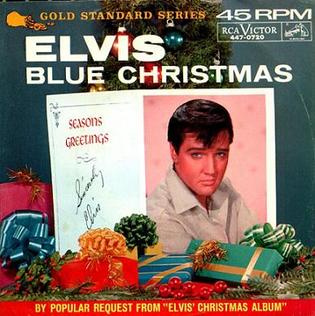
Composition and style
The song's lyrics are straightforward and emotive, using simple phrases and a repeating chorus to underline the narrator's melancholy. Musically it is commonly arranged as a slow ballad: many versions lean on country instrumentation such as steel guitar and gentle rhythm sections, while others employ orchestral strings or a pop-rock backing. Performers often emphasize a plaintive vocal delivery that underscores the song's theme of longing.
History and notable recordings
The earliest known commercial recording was by Doye O'Dell around 1948, and the song was brought to wider attention by the country singer Ernest Tubb in 1949. Since then it has been recorded by a large number of artists in varied styles. The tune became particularly well known after a 1957 version by Elvis Presley, whose rendition brought that plaintive sound to a rock-and-roll audience and helped cement the song's place in popular culture. Other prominent performers who have recorded it include Celine Dion, Kenny Rogers and many country and pop acts; collectors and anthologies often list dozens of interpretations.
Uses and cultural impact
Because of its emotional contrast with festive imagery, "Blue Christmas" is frequently used in holiday television specials, radio programs and seasonal playlists to convey nostalgia or bittersweet mood. It appears in live concert set lists, Christmas albums and compilation records, and it has been adapted into both solo and ensemble arrangements. The song's persistent popularity testifies to its adaptability: performers from traditional country singers to contemporary pop vocalists have found ways to make it their own.
Distinctions and notable facts
- Authorship is attributed to Billy Hayes and Jay W. Johnson, while early commercial recordings date from the late 1940s.
- Its lyrics are notable for reversing the usual upbeat Christmas sentiment and focusing on personal loss and memory.
- It has been featured in numerous Christmas specials and televised performances and appears widely on holiday playlists and compilations.
- Many artists across genres have interpreted the song; references to various other musicians and versions are common in music histories.
For listeners and performers, "Blue Christmas" remains a memorable example of how holiday music can address complex feelings as well as joy, giving the season a moment of reflective melancholy amid its celebrations. Additional discographies and discussions of notable versions can be found in catalogues of seasonal recordings and performances.
Related articles
Author
AlegsaOnline.com Blue Christmas (song) Leandro Alegsa
URL: https://en.alegsaonline.com/art/12333