
Blue Beetle (DC Comics superhero name)
Blue Beetle is a legacy name used by three DC Comics superheroes—Dan Garrett, Ted Kord and Jaime Reyes—whose stories mix mystical artifacts, gadgetry and alien technology; adapted into cartoons and film.
Blue Beetle is the shared alias of several superhero characters in American comic books, most closely associated today with the DC Comics stable. The name has been applied to more than one hero over decades, and the character's tone and origin have changed with publishers and creative teams. The Blue Beetle identity is notable for combining mystery-tinged artifacts with science-fiction gadgetry and for exploring themes of legacy and responsibility.
Image gallery
2 Images
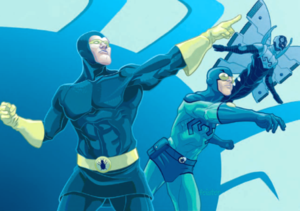
History and notable versions
The Blue Beetle concept originated long before DC's current usage and passed through multiple publishers before becoming part of the DC lineup. In the early 1980s DC acquired the rights to earlier versions and subsequently published new interpretations. Three principal incarnations are widely recognized:
- Dan Garrett — an earlier, pulp-influenced adventurer whose association with a scarab artifact provided him with enhanced abilities in some tellings.
- Ted Kord — a non-powered inventor and detective who operated as a gadget-wielding crimefighter and became known for his wit and membership in teams such as the Justice League International.
- Jaime Reyes — a modern teenager who discovers the scarab and gains an integrated battle-suit; this version broadened the character's cultural profile and introduced an explicitly technological, extraterrestrial angle to the scarab's origin. See Jaime Reyes for more on this incarnation.
Powers, equipment and recurring themes
Across different versions, Blue Beetle stories revolve around a few recurring elements: an insect-themed motif, a scarab that serves as a plot device, and a contrast between magic and science. In some continuities the scarab functions as a mystical talisman; in others it is revealed to be alien technology that bonds to a host and forms armor, weapons and flight systems. Ted Kord is distinguished by the absence of supernatural powers and by relying on inventions and tactical skill rather than a scarab.
Writers often use the character to examine legacy heroism: each successor copes with expectations tied to the mantle and must reconcile personal life with vigilante duties. The Jaime Reyes era in particular emphasizes community, family ties and the perspective of a young, often Latino, protagonist navigating both high school and superhuman responsibilities.
Blue Beetle has appeared in animated television programs, ensemble comic runs and other media. A live-action feature film adaptation was produced and marketed widely, bringing renewed attention to the character; for details about contemporary adaptations see the film adaptation and publisher pages at DC Comics. For historical context and publication records consult resources on earlier publishers and legal transfers, such as earlier publishers and character listings at comics databases.
Because Blue Beetle exists in multiple continuities and has been rebooted or retold several times, individual stories can vary widely in tone and explanation of the scarab. That flexibility has allowed creators to reimagine the core idea for different eras: pulpy adventure, gadget-driven humor and modern, culturally specific superhero storytelling have all had a place under the Blue Beetle name.
Related articles
Author
AlegsaOnline.com Blue Beetle (DC Comics superhero name) Leandro Alegsa
URL: https://en.alegsaonline.com/art/12329