
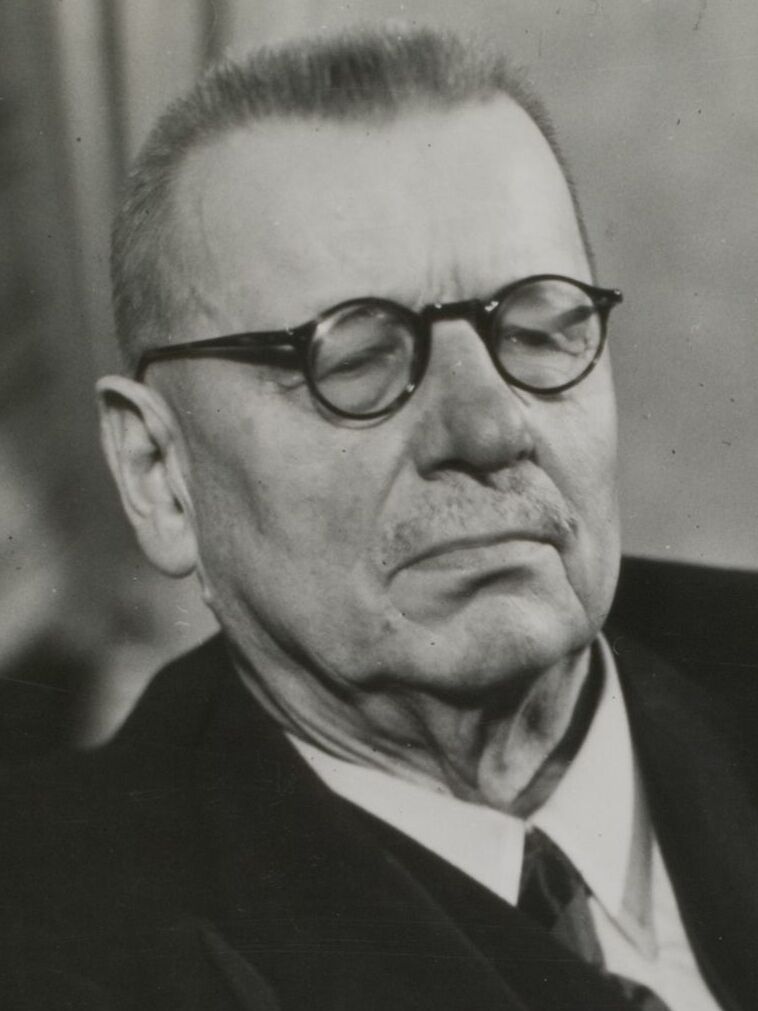
Juho Kusti Paasikivi
Finnish statesman, lawyer, banker and diplomat who served as President of Finland from 1946 to 1956 and helped shape Finland’s postwar foreign policy toward the Soviet Union.
Juho Kusti Paasikivi (27 November 1870 – 14 December 1956) was a prominent Finnish statesman, lawyer, academic and banker whose leadership after World War II helped define Finland’s relationship with the Soviet Union. Born in Helsinki, Paasikivi combined scholarly study of Russian history with long public service; he served as President of Finland from 1946 to 1956 and is widely remembered for a pragmatic foreign-policy doctrine that sought to preserve Finland’s independence in difficult geopolitical circumstances.
Image gallery
10 Images




Early life, education and professional career
Paasikivi studied history and law at the Imperial Alexander University in Helsinki, completing a doctorate in law in 1901 and receiving an academic appointment as an associate professor in 1902. His academic interests focused on Russian history and law, a background that later informed his diplomatic approach. In 1913 he became director of KOP, one of Finland’s major banks, establishing a reputation for organizational competence and conservative economic views. He was married to Anna Matilda Forsman; she remained his first wife until her death in 1931.
Political involvement before independence
Active in politics during the period when Finland was part of the Russian Empire, Paasikivi was elected to the Finnish Parliament in 1907 and again in 1910. During the turbulent years surrounding Finland’s move to independence in 1917, he was among those who at times favored a constitutional monarchy rather than a republic, reflecting the debate among Finnish conservatives about the best form of government to secure stability.
Wartime diplomacy and the presidency
During World War II and its aftermath Paasikivi took on major diplomatic responsibilities, negotiating directly with the Soviet Union. When President Carl Gustaf Emil Mannerheim resigned in 1946, the Finnish parliament chose Paasikivi as his successor. He was confirmed for a second term in 1950. His presidency emphasized careful, realistic dealings with the neighboring Soviet state to safeguard Finland’s sovereignty, democratic institutions and market economy.
The Paasikivi–Kekkonen line and legacy
Paasikivi’s most lasting contribution is the foreign-policy approach later named the Paasikivi–Kekkonen line, continued by his successor Urho Kekkonen. The doctrine advocated pragmatic neutrality and constructive relations with the Soviet Union as the best means for a small state on the Soviet border to survive as an independent, democratic and capitalist nation. Notable facts about Paasikivi include his status as the first person to appear on Finnish currency and his curious role in the 1956 presidential contest: though not an official candidate he nonetheless received votes as a "dark horse" in that election.
Significance and assessment
Historians and political analysts regard Paasikivi as a cautious, realistic leader whose policies reflected the constraints of geography and power rather than ideology. His combination of legal scholarship, financial management and diplomatic skill positioned him to steer Finland through a precarious decade. While debates about the costs and benefits of accommodation with the Soviet Union continue, Paasikivi’s role in preserving Finland’s independence and democratic system during the early Cold War is a central part of his legacy.
- Born: 1870; Died: 1956
- President of Finland: 1946–1956
- Noted for: Paasikivi–Kekkonen foreign policy line
Related articles
Author
AlegsaOnline.com Juho Kusti Paasikivi Leandro Alegsa
URL: https://en.alegsaonline.com/art/123085
Sources
- 375humanistia.helsinki.fi : From student of history to bank director
- www2.hs.fi : Kekkonen diaries reveal how Paasikivi-Kekkonen line was born
- Juho Kusti Paasikivi