
Joaquín Balaguer
Dominican politician, writer, and three‑time president whose long career (1906–2002) shaped late 20th‑century politics in the Dominican Republic amid development and controversy.
Overview
Joaquín Antonio Balaguer Ricardo (1906–2002) was a central figure in Dominican politics across much of the twentieth century. He served three non‑consecutive terms as president of the Dominican Republic (1960–1962, 1966–1978 and 1986–1996) and led the Social Christian Reformist Party (Partido Reformista Social Cristiano, PRSC). Balaguer combined political longevity with a reputation as an intellectual and author, and he remained a prominent public presence until his final electoral attempts in the late 1990s and 2000.
Image gallery
7 Images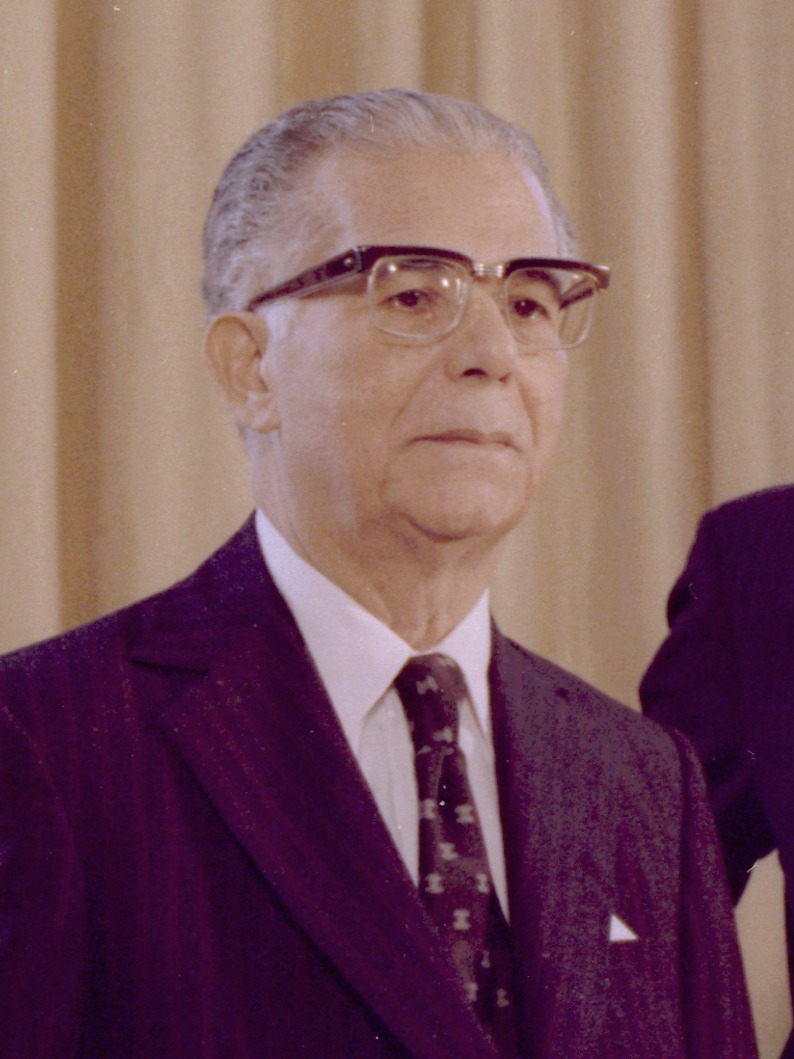


Political career and terms in office
Balaguer first became president during a turbulent period in Dominican history and later returned to power after the political crisis and foreign intervention of the mid‑1960s. His long second spell (1966–1978) is often described as a period of authoritarian stability: governments under his leadership promoted economic modernization and infrastructure projects while maintaining strong executive control. After a hiatus, he won the presidency again in 1986 and served two consecutive terms until 1996.
Policies, achievements and controversies
Supporters point to investments in roads, public works and efforts to modernize institutions and attract investment. Balaguer was also credited with political skill that kept his party influential over decades. Critics and human rights observers, however, accused his administrations of suppressing dissent, restricting political freedoms and manipulating electoral processes on several occasions. These contrasting assessments are central to understanding his complex legacy.
Intellectual life and public image
Beyond politics, Balaguer was known as a writer, historian and poet. He cultivated an image of a cultured statesman, publishing works on national history and culture. His long public life made him a symbol of continuity for some Dominicans and a reminder of authoritarian tendencies for others.
Death and legacy
Balaguer died in Santo Domingo in 2002 at age 95. Reports at the time noted he died of heart failure at a private clinic; contemporary accounts are available for consultation here. His career remains a subject of debate: he is remembered for both development projects and for a style of governance that concentrated power and provoked serious criticism.
Notable facts
- Three non‑consecutive presidential terms spanning over three decades.
- Founder and long‑time leader of the Social Christian Reformist Party (PRSC).
- Recognized public intellectual who authored historical and literary works.
- Legacy marked by economic modernization efforts and controversial human rights and electoral records.
Related articles
Author
AlegsaOnline.com Joaquín Balaguer Leandro Alegsa
URL: https://en.alegsaonline.com/art/122149
Sources
- nytimes.com : "Joaquín Balaguer, 95, Dies; Dominated Dominican Life"