
Janis Joplin — American rock and blues singer and cultural icon
Singer-songwriter Janis Joplin (1943–1970) gained fame in the late 1960s with Big Brother and as a solo artist. Renowned for her raw, emotive voice, she remains a major figure in rock and blues history.
Janis Lyn Joplin (January 19, 1943 – October 4, 1970) was an American singer, songwriter and music arranger from Port Arthur, Texas. She rose to prominence in the late 1960s as the lead vocalist of Big Brother and the Holding Company and later enjoyed success as a solo artist. Critics and fans praised her passionate delivery and emotional directness; Rolling Stone ranked her among the century's greatest artists. Her voice is generally described as a mezzo-soprano with a distinctive raspy timbre.
Image gallery
9 Images

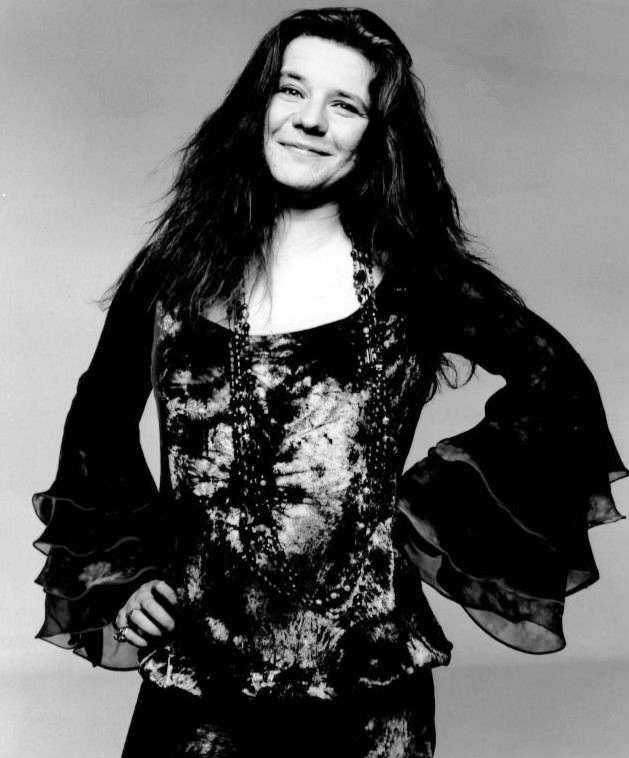



Early life and musical roots
Joplin grew up in southeast Texas and first sang in church choirs and local talent shows. She briefly attended college before leaving to pursue music, moving to the folk and blues scenes of the 1960s. Deeply influenced by early blues and jazz singers, she drew inspiration from artists such as Bessie Smith and Billie Holiday and from acoustic folk and Delta blues traditions. Her informal training and devotion to those forms shaped a uniquely emotional approach to rock performance.
Career and recordings
After finding an audience in San Francisco, Joplin joined Big Brother and the Holding Company and appeared at major festivals and clubs. The band's 1968 album Cheap Thrills brought wide attention with its raw live energy and hit performances. Joplin later formed the Kozmic Blues Band and then the Full Tilt Boogie Band as she refined a solo identity that blended soul, blues, and rock.
Notable songs and performances
- Standout recordings include interpretations of "Piece of My Heart," "Cry Baby," and the blues-inflected "Summertime."
- Her posthumous album Pearl featured "Me and Bobby McGee," which became one of her most commercially successful recordings.
- She was known for electrifying live shows at venues like the Monterey Pop Festival and Woodstock-era stages, where her vocal intensity connected directly with audiences.
Joplin combined an improvisatory singing style with theatrical stage presence: unrestrained phrasing, frequent shouts, and a willingness to let emotion override polished technique. Reviewers often contrasted that immediacy with the more restrained approaches of contemporaries, noting how her background in blues gave her performances a heartfelt authenticity.
Death and legacy
Janis Joplin died in October 1970 at age 27. Her premature death cemented her image as part of a generation of artists whose lives were cut short, but it also intensified interest in her recordings and life. She was posthumously celebrated for advancing the role of women in rock music and for bringing a blues sensibility into mainstream rock. Honors and retrospectives have kept her music in public view, and younger performers frequently cite her as an influence. For further reading on her recordings and biography see sources and curated collections available online and in music archives.
For more detailed discographies, archival footage, and biographies consult specialized resources: artist profiles, regional histories, and critical anthologies such as those referenced by major music publications and academic studies on 1960s rock and blues vocal analysis.
Related articles
Author
AlegsaOnline.com Janis Joplin — American rock and blues singer and cultural icon Leandro Alegsa
URL: https://en.alegsaonline.com/art/121461