
Janusz Tazbir: Historian of Polish Culture and Religion (16th–17th c.)
Polish historian Janusz Tazbir (1927–2016) specialized in the culture, religion and social life of Poland in the 16th and 17th centuries. He authored over 1,000 publications and helped popularize early modern Polish history.
Overview
Janusz Tazbir (5 August 1927 – 3 May 2016) was a prominent Polish historian known for his wide-ranging studies of culture, religion and everyday life in Poland during the 16th and 17th centuries. Over a long career he produced more than a thousand publications, including scholarly monographs, essays and works aimed at a general readership. His research clarified aspects of the Polish–Lithuanian Commonwealth, especially the cultural and religious dynamics of its so-called Golden Age.
Image gallery
1 Image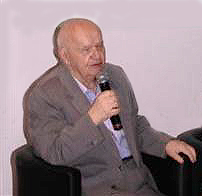
Research themes and approach
Tazbir focused on the intersection of belief, ritual and social identity. He examined topics such as the Reformation and Counter-Reformation in Poland, patterns of confessional coexistence and conflict, and the cultural practices of the nobility and townspeople. His approach combined archival scholarship with attention to material culture and popular mentalities, seeking to show how religious life shaped institutions and daily routines.
Career and public role
Born in Kałuszyn, Tazbir spent much of his professional life publishing, lecturing and engaging with a broad public. He wrote for both academic and popular audiences and was regarded as an effective communicator of complex historical themes. His writings helped bring scholarly debates about early modern Polish history to readers beyond the academy and informed discussions about national memory.
Notable contributions
- Clarifying the contours of religious tolerance and conflict in the Commonwealth.
- Illuminating cultural practices, ceremonies and symbols of the Polish nobility.
- Producing a large corpus of accessible studies that bridged scholarly and popular history.
Legacy
Tazbir died in Warsaw on 3 May 2016 at the age of 88. His work remains a reference point for students of early modern Poland and for anyone examining how religion and culture shaped social life in Central Europe. For further reading on the subjects he studied see general introductions to Polish cultural history or resources on the Polish–Lithuanian Commonwealth, for example cultural history surveys and materials available through institutions in Warsaw.
Related articles
Author
AlegsaOnline.com Janusz Tazbir: Historian of Polish Culture and Religion (16th–17th c.) Leandro Alegsa
URL: https://en.alegsaonline.com/art/121467
Sources
- wiadomosci.onet.pl : wiadomosci.onet.pl