
James Ensor: Flemish Painter and Printmaker, Pioneer of Modern Art
James Ensor (1860–1949), a Flemish-Belgian painter and printmaker from Ostend, produced satirical, mask-filled works that shaped Expressionism and Surrealism and became a leading figure in Belgian modernism.
Overview
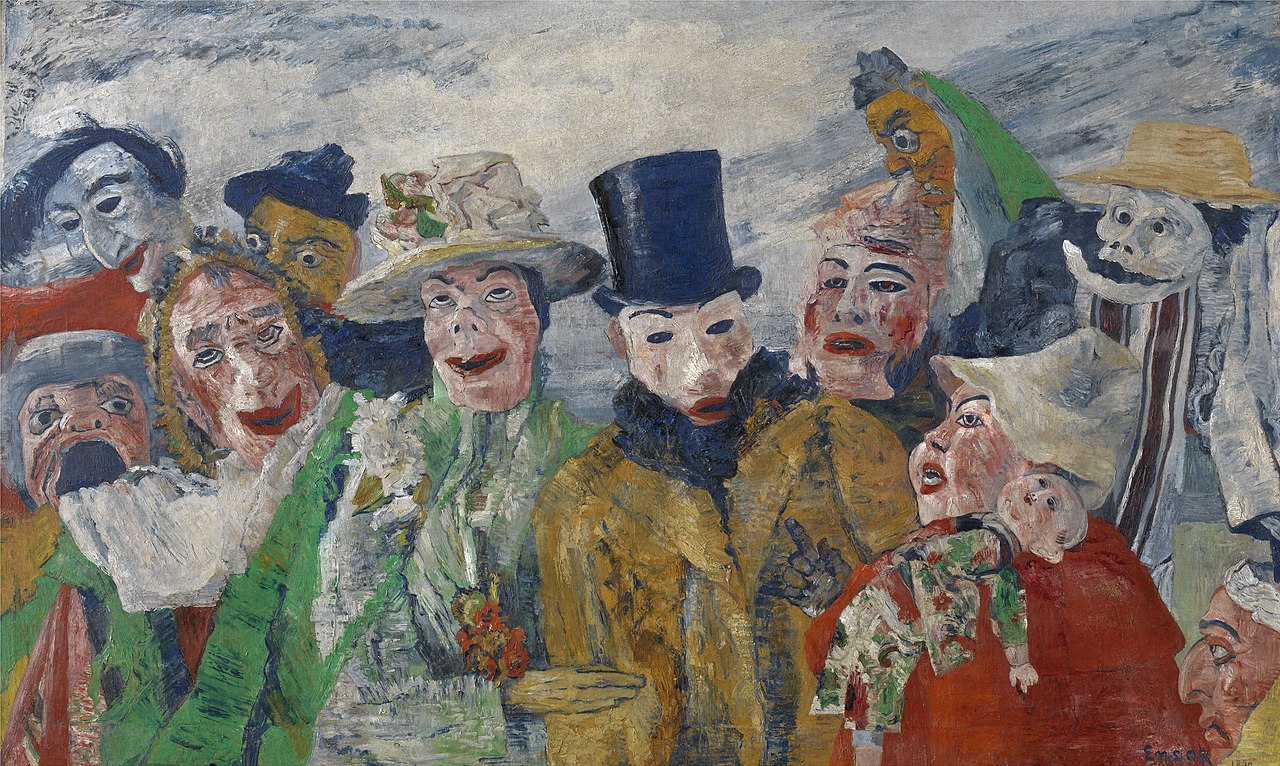
James Ensor (13 April 1860 – 19 November 1949) was a Flemish-Belgian artist best known for his work as a painter and printmaker. He spent most of his life in the coastal city of Ostend, where the local carnival, seaside life and a lifelong preoccupation with masks and skeletons found frequent expression in his art. His provocative imagery and experimental approach strongly influenced later movements such as Expressionism and Surrealism.
Image gallery
10 Images


Life and Career
Ensor trained as an artist in Belgium and established a studio in Ostend. For many years his work met with limited public appreciation; he exhibited with progressive groups and sometimes provoked controversy with his satirical portraits of society and the church. He was associated with the avant-garde circle Les XX, which brought him into contact with other modern artists and helped spread his reputation beyond Belgium. Later in life he received official recognition and became an important figure in national and international exhibitions.
Style, Subjects and Techniques
Ensor’s paintings and prints are marked by bold, often lurid color, flattened space, and a blend of realistic detail with grotesque, often comic exaggeration. Frequent motifs include carnival masks, skeletons, crowds and chaotic street scenes that serve as vehicles for social satire, religious commentary and psychological insight. He worked in oils, watercolors and a range of printmaking techniques — including etching and lithography — experimenting with line and texture to heighten emotional effect.
Major Works and Reception
- The Entry of Christ into Brussels in 1889 — a large, chaotic tableau ridiculing public spectacle and hypocrisy; often cited as one of his most provocative works.
- Numerous self-portraits and carnival scenes that explore identity, performance and social masks.
- Print series and drawings that circulated widely and influenced younger artists.
Legacy and Influence
Ensor’s combination of satire, dreamlike imagery and expressive color helped prepare the ground for 20th-century movements that emphasized inner vision and emotional intensity. While he remained rooted in the Belgian context, his ideas about distortion, theatricality and the uncanny were taken up by Expressionist and Surrealist artists across Europe. Museums and scholars now regard him as a key transitional figure between late 19th-century realism and modernist experimentation.
Notable Facts
Throughout his career Ensor balanced local attachment and international impact: he rarely left Ostend but produced work whose themes — masks, mortality, crowd psychology, satire of authority — resonate widely. He also maintained a productive practice in printmaking alongside painting, leaving a diverse body of work that continues to be studied and exhibited.
For further reading and curated selections of his work see resources linked to contemporary scholarship and museum collections: biographical overview, painting and printmaking, influence on Expressionism, connections to Surrealism and historical notes on his role in Les XX.
Related articles
Author
AlegsaOnline.com James Ensor: Flemish Painter and Printmaker, Pioneer of Modern Art Leandro Alegsa
URL: https://en.alegsaonline.com/art/121290