
Hong Jun-pyo: South Korean conservative politician and 2017 presidential nominee
Profile of Hong Jun-pyo, a South Korean conservative politician, former Liberty Korea Party leader and 2017 presidential nominee, noted for a populist campaign style and frequent media comparisons to Donald Trump.
Overview
Hong Jun-pyo (born 5 December 1954) is a prominent South Korean conservative politician. He has served multiple terms as a member of the National Assembly and has held executive office at a provincial level. Hong became widely known nationally when he was chosen as the presidential nominee of the conservative party in 2017 and later led his party for a period.
Image gallery
2 Images
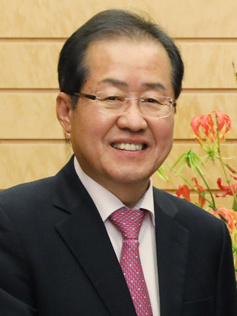
Political career and offices
Over several decades Hong has been active in mainstream conservative politics in South Korea. His resume includes elected legislative experience and at least one term as a provincial governor. He has been a visible figure inside the party structure and was the chairperson of the Liberty Korea Party from July 2017 to June 2018. Major offices associated with him include:
- Member of the National Assembly (multiple terms)
- Governor of a South Korean province
- Leader and presidential nominee of the major conservative party (Liberty Korea Party)
2017 presidential run and leadership
Hong was the conservative bloc's candidate in the 2017 presidential election. His nomination followed a period of political turmoil in the country and a realignment of conservative forces. After the election he served as chairperson of his party, overseeing organizational recovery and electoral strategy during a challenging time for conservatives.
Style, positions and public image
Hong is widely described as a conservative and populist politician. His campaigning has emphasized direct appeals to voters, strong rhetoric on public order and economic growth, and a tough stance on national security—positions typical of South Korea's conservative wing. International media and commentators have compared aspects of his style to that of Donald Trump, and he has sometimes been nicknamed "Hong Trump" in domestic and foreign coverage for his blunt rhetorical approach.
Significance and notable facts
Hong's career illustrates the evolution of conservative politics in South Korea in the 21st century: experienced legislators who combine regional power bases with national ambitions. His 2017 candidacy and subsequent party leadership made him a central figure in debates about strategy, messaging and the conservative response to social and political change. Observers note his role in shaping campaign tactics and in efforts to unify a fragmented conservative electorate.
Further reading
For summaries of the party and general context see resources on the conservative party (Liberty Korea Party) and comparative commentary that mentions international parallels (Donald Trump).
Related articles
Author
AlegsaOnline.com Hong Jun-pyo: South Korean conservative politician and 2017 presidential nominee Leandro Alegsa
URL: https://en.alegsaonline.com/art/120681
Sources
- m.koreaherald.com : "Will new leader turn around Liberty Korea Party?"
- en.yna.co.kr : "(LEAD) Main opposition leader steps down over election defeat"
- cnn.com : "South Korean opposition leader: Nukes are the only way to guarantee peace"