
Guillaume de Machaut: 14th-Century French Poet and Composer
Guillaume de Machaut (c.1300–1377), leading composer-poet of the medieval Ars Nova, known for Messe de Nostre Dame and many secular songs that shaped late medieval music and poetry.
Guillaume de Machaut (c. 1300 – April 1377) was a French poet and composer whose work defines much of the musical and literary culture of the 14th century. He is widely regarded as the most important composer of his generation and one of the earliest medieval artists whose life and output are documented with relative clarity. Machaut combined literary skill with advanced musical technique, producing both sacred and secular works that circulated in richly illuminated manuscripts.
Image gallery
6 Images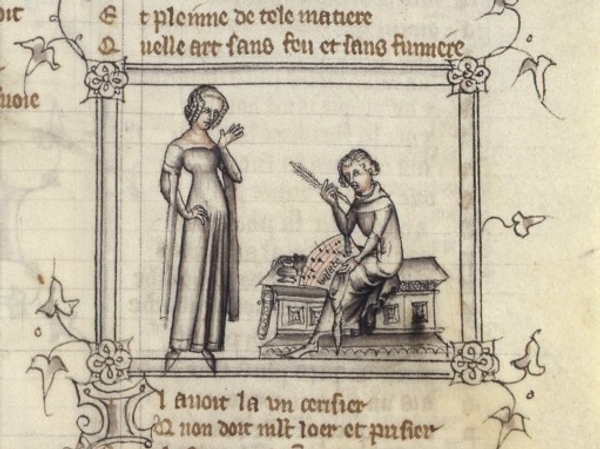



Musical style and major works
Machaut was a central figure in the movement known as the Ars Nova, which introduced increased rhythmic complexity and more flexible notation. His sacred masterpiece, the Messe de Nostre Dame, is notable as one of the earliest complete settings of the Mass Ordinary by a single composer and remains a landmark in Western music. He also wrote motets, lais, and a large body of chansons—ballades, rondeaux, and virelais—using the formes fixes that characterize medieval secular song. Techniques such as isorhythm and refined counterpoint appear throughout his music.
Poetry, prose, and manuscript culture
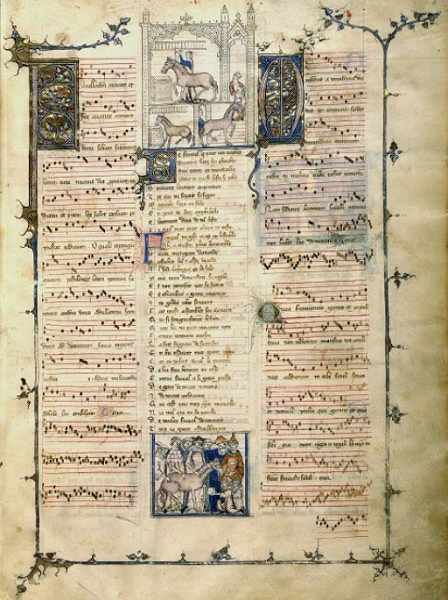
As a poet Machaut produced lyric poems and longer narratives, including the semi-autobiographical Le Voir Dit (The True Story). He carefully supervised the compilation of his works into manuscripts, often adding prologues, rubrics, and illuminations that present him as an authorial figure. These manuscripts are important historical sources for understanding both performance practice and the interplay of text and music in the Middle Ages.
Career and patrons
Machaut spent much of his life in the service of aristocratic patrons and royal courts, which provided him with the social context for composing and circulating works. He traveled with and wrote for nobles across France and beyond, and at various times was attached to prominent households, including that of King John of Bohemia. Documents and payments recorded in surviving archives help establish a chronology of his career.
Legacy and significance
Machaut's fusion of poetic language and complex musical structure influenced later medieval and Renaissance composers and contributed to the emerging idea of the composer as an individual artist. His works are preserved in illuminated codices that have been studied and edited since the 19th century, and his music is performed and recorded by early-music ensembles today. Scholars continue to examine his role in the development of notation, rhythm, and the relationship between text and music.
Further resources
- Biographical overview and chronology
- Analysis of the Messe de Nostre Dame
- Collections of Machaut's poetry and chansons
- Manuscripts and recordings
For readers new to his work, listening to a modern performance of the Messe de Nostre Dame or exploring facsimiles of Machaut's manuscripts provides an accessible introduction to the sound world and visual culture that made him a defining figure of 14th-century music and letters.
Questions and answers
Q: Who was Guillaume de Machaut?
A: Guillaume de Machaut was a Medieval French poet and composer who was born around 1300 and died in April 1377.
Q: What was Guillaume de Machaut's occupation?
A: Guillaume de Machaut was a poet and composer.
Q: Was Guillaume de Machaut an important composer?
A: Yes, Guillaume de Machaut was the most important composer of the 14th century.
Q: Do we know much about Guillaume de Machaut's life?
A: Yes, he is one of the earliest composers whose life we know something about.
Q: How should Guillaume de Machaut's name be pronounced?
A: Guillaume de Machaut's name should be pronounced "GHEE-yoam de MA-show."
Q: When was Guillaume de Machaut born?
A: Guillaume de Machaut was born around 1300.
Q: When did Guillaume de Machaut die?
A: Guillaume de Machaut died in April 1377.
Related articles
Author
AlegsaOnline.com Guillaume de Machaut: 14th-Century French Poet and Composer Leandro Alegsa
URL: https://en.alegsaonline.com/art/120101