
Guillaume Dufay (c. 1397–1474)
Guillaume Dufay was a leading Franco‑Flemish composer of the early Renaissance, central to the Burgundian School. He shaped 15th‑century sacred and secular music and advanced compositional techniques like fauxbourdon.
Guillaume Dufay is widely regarded as one of the most important composers of the early Renaissance. Born near Beersel about c. 1397, he spent much of his career in northern France and Italy and died in Cambrai on 27 November 1474. His output includes masses, motets and chansons that helped define a new musical language as medieval practices gave way to Renaissance ideals.
Image gallery
6 Images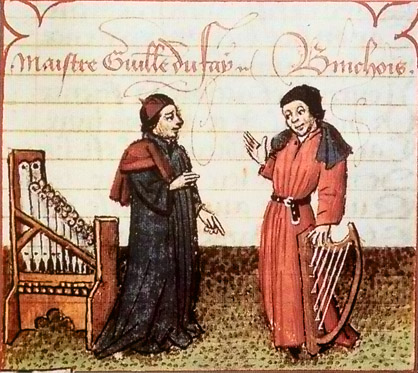



Life and career
Dufay is usually described as Franco-Flemish in cultural origin and belonged to the group of composers associated with the Burgundian School. He held positions at cathedral chapters and served patrons including the Burgundian court and the papal chapel. His travels between northern courts and Italian centres exposed him to diverse musical traditions and widened his influence across Europe.
Musical style and innovations
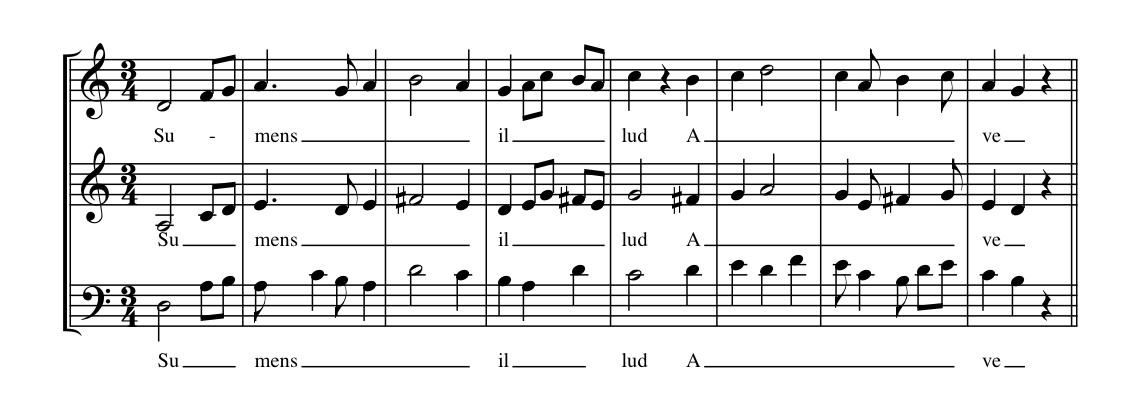
Dufay's music reflects characteristics of the early Renaissance: clearer melodic lines, greater attention to consonance and fuller harmonic textures. He was influential as a music theorist and practitioner, associated with techniques such as fauxbourdon, the use of cantus firmus in mass settings, and a move toward triadic sonorities. His approach made polyphony more transparent and expressive and shaped how sacred and secular music developed in the 15th century.
Genres and notable works
Dufay wrote in the main genres of his time: mass cycles and isolated masses, Latin motets, and vernacular songs (chansons, ballades and rondeaux). Examples that are widely cited include the motet "Nuper rosarum flores" and the chanson "Se la face ay pale"; these works illustrate his skill at integrating formal structure with expressive melody. His music continued to circulate and be reworked by later composers, contributing to the evolving repertoire of sacred music.
Influence and legacy
Across his long career Dufay acted as a bridge between medieval techniques and the emerging Renaissance style. Composers of the Burgundian School and subsequent generations studied and imitated his methods; his blend of continental practices helped standardize compositional models used throughout the continent. Today he is remembered both for particular masterpieces and for the broader role he played in shaping 15th‑century musical taste.
Notable facts: he combined service at important ecclesiastical posts with courtly employment, adapted secular tunes for liturgical use, and left a legacy that linked northern and Italian traditions. For further reading on specific works and manuscripts consult specialist catalogues and modern critical editions (Beersel resources or institutional archives often provide starting points).
Questions and answers
Q: When was Guillaume Dufay born?
A: Guillaume Dufay was born on August 5, 1397.
Q: Where was Guillaume Dufay born?
A: It is believed that Guillaume Dufay was born in Beersel, although it is uncertain.
Q: When did Guillaume Dufay pass away?
A: Guillaume Dufay passed away on November 27, 1474 in Cambrai.
Q: What was Guillaume Dufay's occupation?
A: Guillaume Dufay was a composer and music theorist.
Q: What group of composers did Guillaume Dufay belong to?
A: Guillaume Dufay belonged to the group of composers known as the Burgundian School.
Q: Was Guillaume Dufay influential in the world of music?
A: Yes, Guillaume Dufay had more influence on music in Europe than any other composer of the 15th century.
Q: What time period was Guillaume Dufay considered to be a composer during?
A: Guillaume Dufay was a composer during the early Renaissance period.
Related articles
Author
AlegsaOnline.com Guillaume Dufay (c. 1397–1474) Leandro Alegsa
URL: https://en.alegsaonline.com/art/120102
Sources
- grovemusic.com : grove dictionary of music online