
Gladys West — American mathematician and pioneer of satellite geodesy
Gladys West is an American mathematician whose work in satellite geodesy and mathematical modeling of the Earth's shape contributed to the development of the Global Positioning System.
Gladys Mae West (born 1930, sometimes reported as 1931) is an American mathematician noted for her contributions to satellite geodesy and the mathematical modeling of Earth's shape. Her computations and programming for large-scale data sets helped refine reference models of the geoid and satellite orbits, work that later became part of the technical foundation for the Global Positioning System (GPS).
Image gallery
5 Images


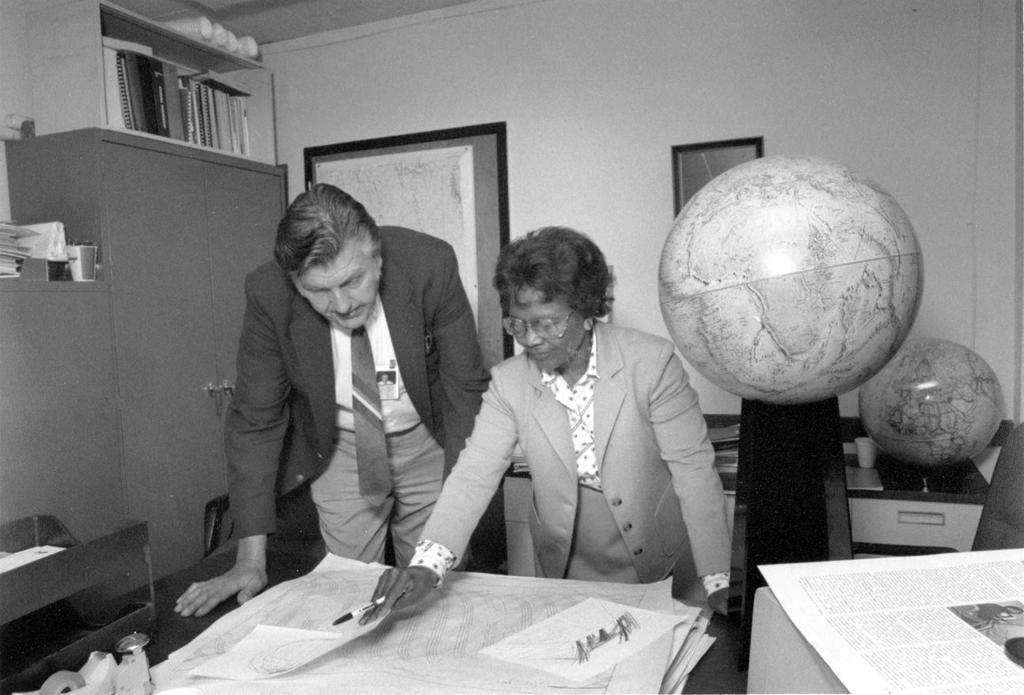

Early life and education
West grew up in rural Virginia and showed an early aptitude for mathematics. She attended a historically Black college and earned a degree in mathematics before teaching at the primary and secondary levels. Later she moved into applied mathematics and computing at a time when electronic computers and satellite technology were new fields for many scientists.
Career and technical contributions
Beginning in the mid-20th century, West worked as a mathematician at a U.S. naval research establishment where she analyzed satellite data and developed algorithms to model the Earth's surface. Her tasks included processing astronomical and range data, programming early mainframe computers, and developing precise models to describe the geoid — the equipotential surface that approximates mean sea level worldwide.
- She helped construct mathematical models that corrected for orbital perturbations and measurement errors.
- Her work contributed to accurate coordinate systems used for navigation and mapping.
- She was part of a team whose efforts fed into later civilian and military positioning systems, including GPS.
Recognition and legacy
West has been recognized as one of the pioneering Black women in U.S. scientific computing and geodesy. In 2018 she was inducted into a U.S. Air Force hall of fame in recognition of her role in advancing the mathematical techniques that underpin modern satellite navigation (US Air Force Hall of Fame). Her story has since been cited in discussions about diversity in STEM and the often-overlooked contributions of women and minorities to major technological achievements.
Importance and notable facts
Although she worked mostly behind the scenes, West's contributions illustrate how careful mathematical modeling and data processing can have far-reaching practical effects. Her career intersects several broader themes: the rise of electronic computing, the growth of satellite-based Earth observation, and the expanding role of women and African Americans in mid-20th-century science. For an overview of her life and professional record see a general biography entry here.
Related articles
Author
AlegsaOnline.com Gladys West — American mathematician and pioneer of satellite geodesy Leandro Alegsa
URL: https://en.alegsaonline.com/art/119890
Sources
- bbc.co.uk : "Gladys West - the 'hidden figure' of GPS"
- bbc.com : BBC 100 Women 2018
- becauseofthemwecan.com : "Meet Gladys West: One Of The 'Hidden Figures' Behind The Creation Of The GPS System"