
George Emil Palade — Romanian‑American cell biologist and Nobel laureate
George Emil Palade (1912–2008) was a Romanian‑born cell biologist whose advances in electron microscopy and cell fractionation transformed understanding of cellular structure and protein secretion.
Overview
George Emil Palade (November 19, 1912 – October 8, 2008) was a Romanian‑born scientist who became a central figure in modern cell biology. He is best known for combining improved electron microscopy with biochemical separation methods to reveal the organization and function of subcellular structures. In 1974 Palade shared the Nobel Prize in Physiology or Medicine "for their discoveries concerning the structural and functional organization of the cell" with Albert Claude and Christian de Duve. His work helped to move cell biology from descriptive anatomy toward a molecular and mechanistic discipline.
Image gallery
3 Images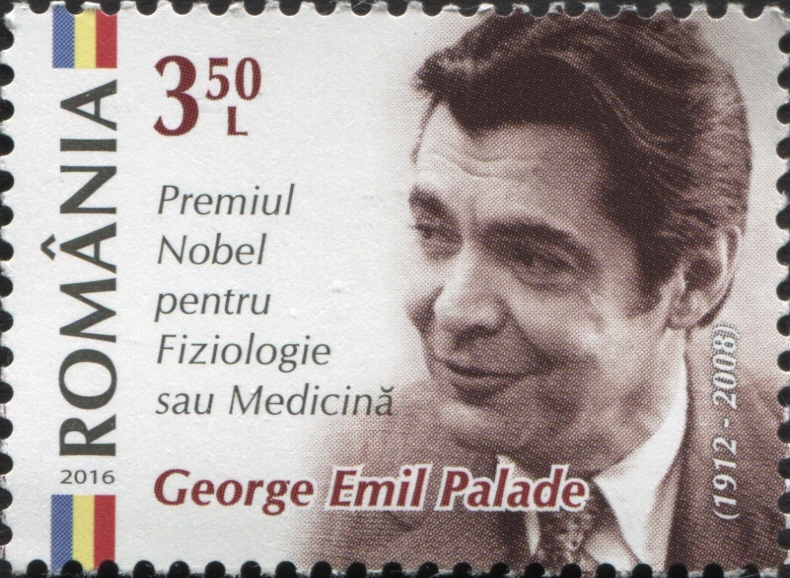


Key contributions and discoveries
Palade developed and refined techniques that allowed scientists to see and isolate the components of the cell. Using high‑resolution electron microscopy together with cell fractionation and ultracentrifugation, he identified particulate structures associated with protein synthesis. These particles, initially observed by Palade and colleagues, later became widely recognized as ribosomes and were sometimes called "Palade particles." He also mapped the pathway by which proteins are synthesized on the rough endoplasmic reticulum, processed in the Golgi apparatus, and transported to secretory vesicles — a foundation for understanding intracellular trafficking.
Methods and approach
Palade's signature approach combined visual and biochemical evidence. Electron microscopy provided the spatial detail to locate organelles and complexes within the cytoplasm, while fractionation separated membranes and soluble components so their functions could be measured biochemically. Pulse‑chase labeling, autoradiography, and correlation of light and electron micrographs were among the methods that made it possible to follow newly made proteins through cellular compartments and to assign functions to structures seen in the microscope.
Career, recognition and influence
After training in Europe, Palade spent much of his career at research centers in the United States where he mentored generations of cell biologists. His work earned numerous honors beyond the Nobel Prize and established standards for how microscopic imaging and biochemical fractionation are used together. Colleagues and historians frequently cite Palade as a key architect of molecular cell biology because his methods and discoveries opened new questions about how cells build and organize their internal machinery.
Legacy and notable facts
- Introduced rigorous use of electron microscopy to study cellular ultrastructure.
- Helped identify and characterize ribosomes ("Palade particles") and clarified the secretory pathway.
- Established methodological synthesis of imaging and fractionation that remains central to cell biology.
Palade's combination of technical innovation and careful interpretation remains a model for experimental cell biology. For further reading on his work and its context, consult primary reviews and historical summaries in cell biology texts and archives. Relevant resources include institutional and scholarly collections that preserve correspondence, laboratory notes, and early micrographs.
Related articles
Author
AlegsaOnline.com George Emil Palade — Romanian‑American cell biologist and Nobel laureate Leandro Alegsa
URL: https://en.alegsaonline.com/art/119582
Sources
- nobelprize.org : "George E. Palade - Facts" · web.archive.org