
Black Mask (DC Comics villain)
Black Mask is a recurring Gotham City crime lord and Batman antagonist in DC Comics. The mantle has been held by Roman Sionis and later by Jeremiah Arkham; notable for a black skull mask, organized crime, and media adaptations.
Overview
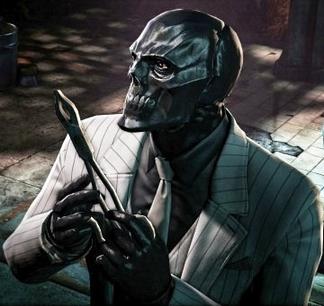
Black Mask is the name used by multiple supervillains in DC Comics, best known as a brutal crime boss and adversary of Batman. The character is visually defined by a featureless black skull-like mask and a dark, formal wardrobe. Black Mask operates as a figurehead who combines organized criminal control with a sadistic interest in identity and disguise. He has appeared repeatedly in Gotham-set comic storylines, and the mantle has been assumed by more than one individual within the shared continuity.
Image gallery
5 Images


Publication history and identities
The original Black Mask, Roman Sionis, was created in the mid-1980s and introduced as a villain who rose from privilege to lead a criminal empire. Sionis’s fixation on masks and his theatrical presentation set the tone for the character: he favors anonymity, ritualized violence, and a symbolic black mask that conceals — and represents — his fractured identity. In later stories the name and mask were adopted by others; most prominently, the psychiatrist Jeremiah Arkham, associated with Arkham Asylum, has taken up the mantle in attempts to continue or pervert Sionis’s legacy. Over time writers expanded the mythos to show Black Mask as both a criminal organizer and a personal nemesis to several heroes.
Characteristics and modus operandi
- Appearance: A smooth, black skull mask paired with a dark suit or tailored clothing; the mask functions as an emblem as much as concealment.
- Organization: He typically leads an organized gang or network (sometimes called the False Face Society) that carries out extortion, violent enforcement and territorial control.
- Methods: Black Mask blends businesslike control of crime with theatrical cruelty, often torturing enemies and manipulating identities; he is known for ruthlessness rather than superpowers.
- Psychology: Obsessions with masks, face and identity are central themes; the character embodies a dark inversion of social masks and public personas.
Notable storylines and adaptations
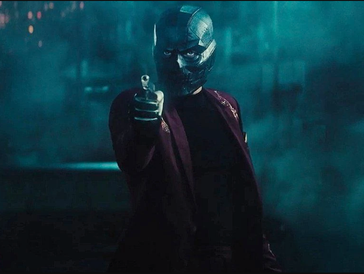
Black Mask has featured in several major Batman arcs that explore Gotham’s criminal underworld and gang conflicts, and he has been used to escalate personal stakes for Batman and his allies. His role in 1990s and 2000s crime sagas reinforced his image as a kingpin who prefers to rule from the shadows. In film and television the character’s visual and thematic elements have surfaced in different ways: some viewers note a visual resemblance between the burned corpse of Max Shreck in Batman Returns and the comic mask, and the Roman Sionis version was adapted for the 2020 film Birds of Prey, where the villain was portrayed on screen by Ewan McGregor. Cinematic and televised interpretations sometimes combine traits from different comic eras; the motif of the mask and the figure of a Gotham crime boss remain consistent. Actors such as Christopher Walken have been associated with similar visual moments in earlier films, contributing to fan comparisons.
Legacy and distinctions
Black Mask stands out in Batman’s rogues gallery as an explicitly criminal and managerial villain rather than a purely anarchic one. He represents calculated cruelty and the corruption that festers within Gotham’s institutions. The recurring transfer of the mask from one bearer to another allows writers to use the symbol of Black Mask flexibly — as a title, an ideology, or a personal vendetta. In comics and other media he remains a vehicle for stories about power, identity and the performative nature of villainy.
Further reading and related topics
Readers interested in deeper background can explore canonical Batman crime sagas and profiles of recurring Gotham figures; articles and character dossiers often trace the Roman Sionis origin, subsequent claimants to the mask, and the role of Black Mask in organized crime plots. For portrayals beyond comics, consult film and adaptation overviews that discuss how the character’s mask motif translates to screen and how different actors and writers interpret the crime lord archetype.
Tags
Related articles
Author
AlegsaOnline.com Black Mask (DC Comics villain) Leandro Alegsa
URL: https://en.alegsaonline.com/art/11940