
Fulbert Youlou — First President of the Republic of the Congo
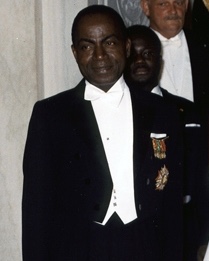
Abbé Fulbert Youlou (1917–1972) was a laicized Roman Catholic priest who became the Republic of the Congo’s first president at independence, a nationalist leader whose rule ended in a popular uprising in 1963.
Abbé Fulbert Youlou (born 1917; died 6 May 1972) was a Congolese Roman Catholic priest turned politician who led his country to independence and became the first president of the Republic of the Congo (Brazzaville). His political career combined nationalist ambitions, personal authority, and ties to Christian networks; it ended abruptly in 1963 after large-scale protests and political opposition.
Image gallery
8 Images




Early life and clerical career
Youlou trained and served as a Roman Catholic priest, a background that gave him social standing and access to educated urban networks in colonial Congo. Sources differ about his exact birth date; his clerical title "Abbé" remained associated with him even after he left the priesthood to enter public life. He became active in local politics in the late colonial period, projecting himself as a leader able to negotiate with colonial authorities and mobilize popular support.
Rise to power and presidency
As decolonization accelerated, Youlou founded a political movement, commonly known by the acronym UDDIA (Union démocratique pour la défense des intérêts africains), which positioned him as a principal nationalist figure. When the Republic of the Congo gained independence in 1960 he assumed the presidency. During his administration he sought to consolidate power, attract investment, and establish state institutions while balancing relations with former colonial powers and Cold War actors.
Conflict, overthrow, and later life
Youlou's presidency faced growing tensions with trade unions, left-wing politicians and younger military officers. In August 1963 mass demonstrations and strikes—often called the "Trois Glorieuses" or Three Glorious Days—forced him to resign. He was replaced by a government that moved toward more left-leaning policies. After his fall from power Youlou lived away from the political forefront; he died in 1972.
Significance and legacy
Youlou remains a controversial figure in Congolese history. Supporters credit him with leadership during the transition to independence and efforts to build a national administration; critics point to authoritarian tendencies, conflict with organized labor, and political exclusion that contributed to his downfall. His biography illustrates the complex role of religious leaders in African nationalist movements and the volatile politics of early postcolonial states.
Quick facts
- Known as: Abbé Fulbert Youlou.
- Political formation: founder of UDDIA.
- Presidency: led the Republic of the Congo at independence (1960–1963).
- Overthrown during mass protests in 1963; died in 1972.
For further basic references about his life and the early years of Congolese independence see related resources.
Related articles
Author
AlegsaOnline.com Fulbert Youlou — First President of the Republic of the Congo Leandro Alegsa
URL: https://en.alegsaonline.com/art/119300