
Franklin Pierce: 14th President of the United States (1853–1857)
Franklin Pierce, a New Hampshire Democrat and 14th U.S. president, presided over midcentury sectional tensions, the Kansas–Nebraska Act, the Gadsden Purchase, and a presidency marred by national division and personal tragedy.
Franklin Pierce (November 23, 1804 – October 8, 1869) served as the 14th president of the United States from 1853 to 1857. A native of New Hampshire and a member of the Democratic Party, he emerged as a compromise, or "dark horse," candidate in 1852. Pierce was widely seen in his time as a Northerner sympathetic to Southern interests — a so‑called "doughface" — a stance that shaped his policies and public reputation. For a concise reference, see biographical summaries.
Image gallery
10 Images


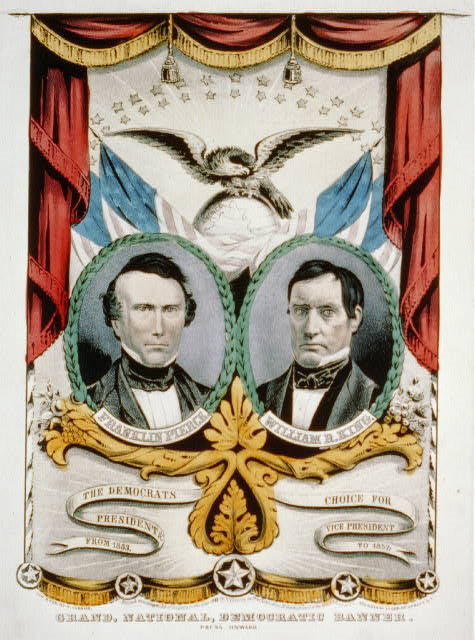


Early life and political rise
Born and raised in rural New Hampshire, Pierce trained as a lawyer and entered politics in the 1820s and 1830s. He served in the U.S. House of Representatives and the U.S. Senate, where he backed many Democratic positions of the era. During the Mexican–American War he was appointed a brigadier general; his military service won political notice but did not bring lasting military distinction. By 1852, sectional divisions within the major parties created an opening for Pierce, who appealed to national party leaders as a unifying nominee.
Presidency: policies and controversies
Pierce’s single term coincided with intensifying conflict over slavery’s expansion. His administration supported the Kansas–Nebraska Act (1854), legislation that allowed new territories to decide the slavery question by popular sovereignty and effectively repealed the Missouri Compromise. That measure contributed directly to violent conflict in Kansas and deepened sectional animosities.
- He enforced federal laws such as the Fugitive Slave Act, a stance that alienated many Northern voters.
- The administration completed the Gadsden Purchase (1853), acquiring land from Mexico to facilitate a southern transcontinental railroad route.
- Officials associated with his presidency pursued attempts to acquire Cuba (Ostend Manifesto), which proved politically damaging when publicly revealed.
- Jefferson Davis served as his Secretary of War for much of Pierce’s term.
Those measures and the perceived sympathy toward Southern interests diminished Pierce’s support in the North and contributed to the fragmentation of national politics that produced the Republican Party’s rise.
Personal life, tragedy, and later years
Pierce’s private life was marked by sorrow. He and his wife Jane Appleton Pierce endured the deaths of two children in early childhood; their only surviving son, Benjamin, died in a railroad accident shortly after Pierce’s inauguration, a blow that deeply affected the president and his family. Jane Pierce largely avoided public social duties while living in the White House. After leaving office, Pierce remained politically vocal, opposing some Republican wartime policies and drawing criticism for his views as the nation moved toward and through the Civil War.
Legacy and historical assessment
Historians typically judge Pierce’s presidency as unsuccessful in averting national division. While his administration accomplished territorial and diplomatic initiatives, its handling of sectional disputes and support for policies that opened new controversies over slavery have led many scholars to rank him among the less effective U.S. presidents. His career illustrates how political compromise and attempts to placate competing regional interests can accelerate, rather than resolve, deep national crises.
Related articles
Author
AlegsaOnline.com Franklin Pierce: 14th President of the United States (1853–1857) Leandro Alegsa
URL: https://en.alegsaonline.com/art/119117
Sources
- books.google.com : What do we do now?: a workbook for the president-elect