
Ferid Murad: American Physician and Nobel Laureate in Medicine
Ferid Murad (born 1936) is an American physician and pharmacologist who helped discover nitric oxide–cGMP signaling; awarded the 1998 Nobel Prize for its role in cardiovascular function.
Overview
Ferid Murad is an American physician and pharmacologist best known for his work that established nitric oxide (NO) as a biological signaling molecule that acts through cyclic guanosine monophosphate (cGMP). His discoveries reshaped understanding of vascular biology and led to important medical advances in treating heart disease and other conditions. For this work he shared the Nobel Prize in Physiology or Medicine in 1998 with Robert F. Furchgott and Louis J. Ignarro.
Image gallery
2 Images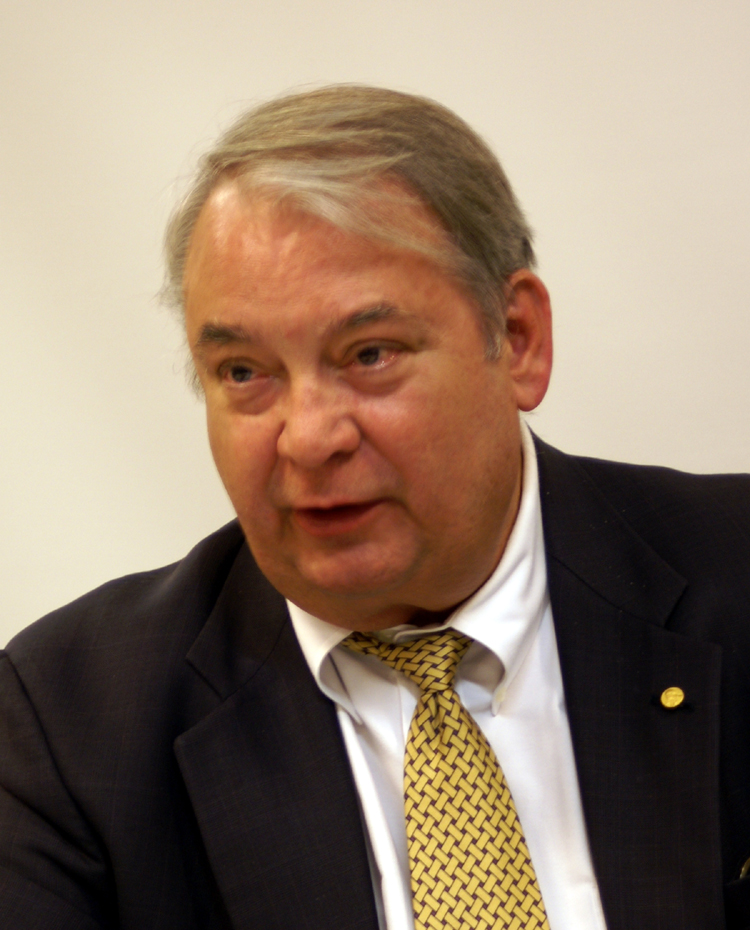

Scientific contribution and mechanism
Murad's research demonstrated that nitric oxide stimulates soluble guanylate cyclase, an enzyme that increases levels of cGMP inside cells. Elevated cGMP triggers a cascade of biochemical events that relax smooth muscle cells in blood vessel walls, causing vasodilation and lowering blood pressure. This NO–cGMP pathway explained the action of long-used drugs such as nitroglycerin and provided a molecular basis for the development of newer therapies.
Development and recognition
The identification of NO as a signaling molecule was the result of work by several groups; Murad showed how nitrovasodilators release NO and stimulate guanylate cyclase. The complementary findings of Furchgott, who discovered endothelium-derived relaxing factor, and Ignarro, who independently identified NO as that factor, together formed the scientific foundation recognized by the Nobel Committee. More about Murad's career and publications can be found in concise biographies and professional summaries (biography, pharmacology overview).
Applications and impact
The practical consequences of the NO–cGMP pathway have been extensive. Clinically, the pathway underlies the therapeutic action of nitrate drugs used in angina and other cardiovascular disorders. It also informed the development of phosphodiesterase inhibitors that prolong cGMP signaling; one well-known example is the class of drugs used to treat erectile dysfunction. Beyond cardiovascular medicine, NO signaling is implicated in neurotransmission, immune responses, and platelet function.
Honors, later life, and notable facts
In addition to the Nobel Prize, Murad received numerous professional honors and memberships during his career and held academic and industry positions that bridged basic research and clinical application. He shared his Nobel honor with colleagues Robert F. Furchgott (Furchgott) and Louis J. Ignarro (Ignarro), whose complementary discoveries helped complete the picture of NO signaling. Some regional institutions and communities have also recognized Murad; for example, sources note honorary affiliations such as membership in cultural academies and local civic honors (honorary recognition).
Legacy and distinctions
Murad's work is widely regarded as a turning point in cardiovascular pharmacology because it connected molecular signaling to established therapies and enabled the rational design of new drugs. The NO–cGMP pathway remains an active area of research with ongoing implications for hypertension, heart failure, neurobiology, and immunology. His scientific legacy endures in textbooks, clinical practice, and continuing research into gaseous and second-messenger signaling in health and disease.
- Major discovery: nitric oxide as a signaling molecule acting via cGMP.
- Nobel Prize in Physiology or Medicine: awarded in 1998 (shared).
- Clinical impact: explained effects of nitroglycerin and guided new drug development.
Further reading and authoritative summaries about Murad's life and work are available through research profiles and award citations (career summary, research overview), while collaborative context is discussed in materials on his co-laureates (Furchgott, Ignarro) and in local honors and remembrances (regional recognition).
Related articles
Author
AlegsaOnline.com Ferid Murad: American Physician and Nobel Laureate in Medicine Leandro Alegsa
URL: https://en.alegsaonline.com/art/118912
Sources
- nobelprize.org : "Ferid Murad - Facts"
- telegrafi.com : "Arritjet ia dedikoj kombit tim!"