
Ewa Kopacz — Polish politician and former Prime Minister
Ewa Kopacz is a Polish physician-turned-politician who served as Prime Minister (2014–2015), earlier as Minister of Health and Speaker of the Sejm, and later as a Vice‑President of the European Parliament.
Overview
Ewa Bożena Kopacz (born 3 December 1956) is a Polish politician and medical graduate who rose from a health-care background into senior national and European offices. She served as Prime Minister of Poland beginning on 22 September 2014 after her predecessor left to take a European post, and led the Civic Platform (Platforma Obywatelska) party during part of her premiership. Her career has blended executive government roles, parliamentary leadership, and later service in the European Parliament.
Image gallery
4 Images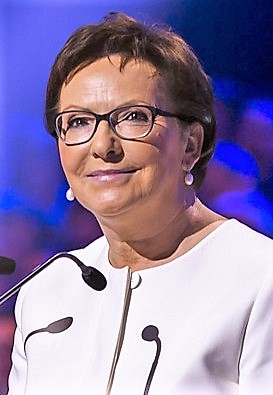


Background and education
Kopacz trained as a physician, graduating from the Faculty of Medicine at the University of Lublin. Before entering national politics she worked in the health sector, which informed her later role as a national health minister. Her medical background has frequently been noted as part of her public profile and policy interests.
Political career and positions
Kopacz has held a succession of important offices at the national and European level. Her rise within the Civic Platform movement and in government included both ministerial and parliamentary leadership roles. Key positions include:
- Minister of Health in the national government, where she was responsible for health policy and administration;
- Speaker of the lower house of parliament (Sejm), a post that made her a central figure in legislative proceedings and parliamentary organisation — see her tenure as Speaker of the Sejm;
- Prime Minister of Poland from September 2014, an appointment linked to the departure of her predecessor to become President of the European Council; details of the role are described at Prime Minister of Poland;
- Later, a Vice‑President of the European Parliament, a senior role within the European legislative body beginning in July 2019.
Premiership and transition
Kopacz became prime minister in a period of transition for her party and government. Her leadership aimed to continue centrist, pro-European policies while responding to domestic priorities such as healthcare, public administration and economic matters. Following the parliamentary elections in 2015, she submitted her government's resignation on 12 November 2015, after which a new administration was formed and she stepped down from the premiership in accordance with constitutional practice.
Significance and later work
As one of the relatively few women to occupy Poland's highest government office, Kopacz's term is often discussed in studies of gender and politics in Central Europe. Her movement from national government into a prominent role in the European Parliament underscores a common path for senior politicians in EU member states. In the European Parliament she continued to engage with issues with cross‑border significance and to represent her political grouping at a vice‑presidential level.
Notable facts and distinctions
Kopacz's combined background as a physician and politician shaped both her public image and policy priorities. She led her party for a period following the departure of a long‑time leader and remained an active public figure in Polish and European affairs after leaving the prime ministerial office.
Related articles
Author
AlegsaOnline.com Ewa Kopacz — Polish politician and former Prime Minister Leandro Alegsa
URL: https://en.alegsaonline.com/art/118789
Sources
- katalog.bip.ipn.gov.pl : "Biuletyn Informacji Publicznej Instytutu Pamięci Narodowej"
- sejm.gov.pl : "Ewa Kopacz"
- tradebridgeconsultants.com : "Ewa Kopacz is new Prime Minister"