
Bizen Province (備前国): history, geography, and cultural legacy
Bizen Province was a historical province of Japan in what is now eastern Okayama Prefecture on Honshū, noted for Bizen-yaki pottery, coastal trade on the Seto Inland Sea, and its role in premodern administration.
Overview
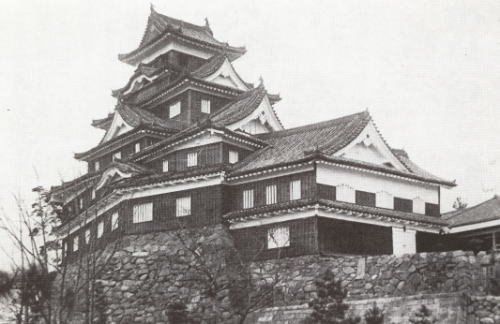
Bizen Province (備前国, Bizen-no kuni) was an old provincial unit of Japan occupying much of what is now the eastern portion of Okayama Prefecture on the island of Honshū. In many historical contexts it is grouped with its neighbouring provinces and is mentioned together with Bitchū and Bingo under the collective name Bishū. The ancient provincial capital (kokufu) and associated administrative sites lay near the modern city of Okayama, and the region appears repeatedly in records and maps from the classical period through the Edo era.
Image gallery
7 Images



Geography and boundaries
Bizen faced the Seto Inland Sea on its southern shore, giving it a long coastal margin with sheltered bays and port sites that supported fishing, salt production and maritime transport. Inland the province included plains suitable for wet-rice agriculture and rising hills that separated it from adjacent provinces: to the north and east lay Mimasaka, to the west bordered Harima, and to the northwest it met Bitchū. These natural and administrative boundaries influenced local economies and strategic considerations over many centuries.
History and administration
As a unit of the ritsuryō state in the Nara and Heian periods, Bizen functioned with a provincial office and appointed officials responsible for taxation, law and military levies. During the medieval and Sengoku periods control over the province shifted among competing local lords and samurai clans, reflecting the broader pattern of decentralization across Japan. In the early modern era much of the territory was organized into domains under daimyo rule. With the Meiji Restoration and the abolition of the han system, the traditional provinces were superseded by prefectures and Bizen's territory was absorbed into the modern administrative structures centered on present-day Okayama Prefecture.
Economy, craft and culture
Bizen is most widely known for its ceramic tradition, Bizen-yaki, one of Japan's oldest and most respected stoneware schools. Characteristic features include an iron-rich clay, unglazed surfaces, and natural effects produced during long wood firings in traditional kilns such as anagama and noborigama. Bizen ware was used locally and traded widely, contributing to the province's cultural identity. The coastal location also supported fishing, salt-making, and maritime trade along the Inland Sea, while fertile plains produced rice and other staples.
Archaeology, sites and legacy
Archaeological sites, kiln remains and the locations of former administrative centers survive in and around modern urban areas, and they form a significant part of regional museum collections and craft tourism. Contemporary potters and cultural institutions preserve techniques associated with Bizen-yaki, attracting study and visitors who seek to understand continuity between premodern production methods and living craft practices. The provincial name survives in place names, artisanal branding and historical studies of the San'yō and Inland Sea regions.
Further reading and resources
- General overviews and regional histories: province summary.
- Modern administrative context: Okayama Prefecture resources.
- Geographical setting and island context: Honshū.
- Regional grouping and neighbouring provinces: Bitchū, Bingo.
- Adjacent provinces and boundary studies: Bitchū adjacency, Mimasaka adjacency, Harima adjacency.
- Local historical sites and the ancient capital area: ancient capital.
This article provides a concise introduction to the province's geography, administrative history and cultural contributions. For detailed historical maps, domain records and specialized studies of kiln technology consult academic works, regional museum catalogues and local historical societies that focus on the San'yō and Seto Inland Sea cultural landscape.
Tags
Related articles
Author
AlegsaOnline.com Bizen Province (備前国): history, geography, and cultural legacy Leandro Alegsa
URL: https://en.alegsaonline.com/art/11867
Sources
- books.google.com : "Bizen"
- books.google.com : Annales des empereurs du japon, p. 64
- books.google.com : "Provinces and prefectures"
- eos.kokugakuin.ac.jp : "Nationwide List of Ichinomiya," p. 3