
Emmy Noether — Architect of Modern Abstract Algebra
Overview of Emmy Noether (1882–1935), her life, key mathematical contributions (Noether's theorem, ring theory), teaching, and lasting influence on mathematics and physics.
Overview
Amalie Emmy Noether (1882–1935) was a German-born mathematician whose ideas reshaped large parts of modern mathematics and influenced theoretical physics. Working in what became known as abstract algebra, she introduced structural and conceptual methods that clarified vague calculations and unified many formerly separate results.
Image gallery
10 Images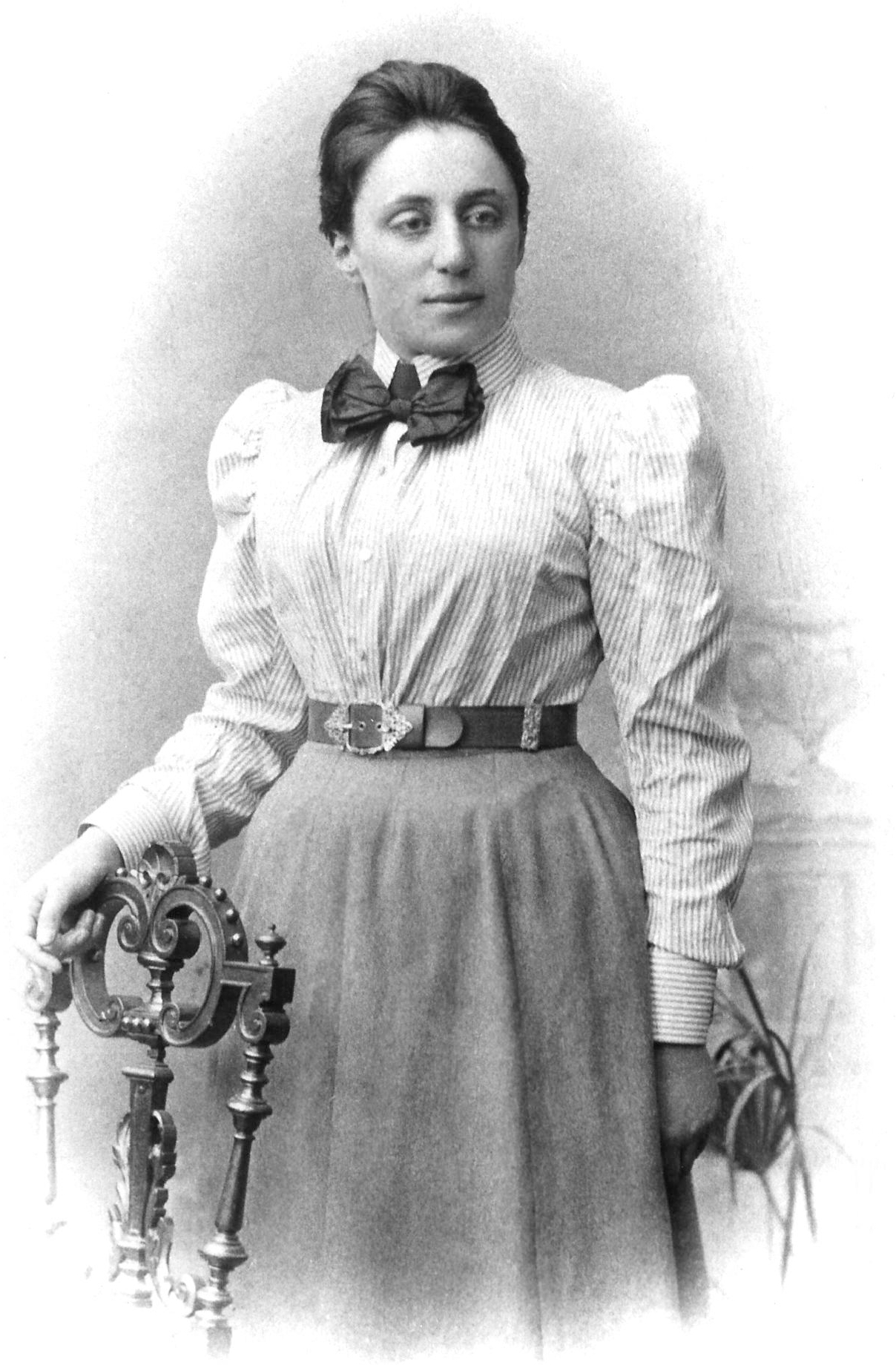


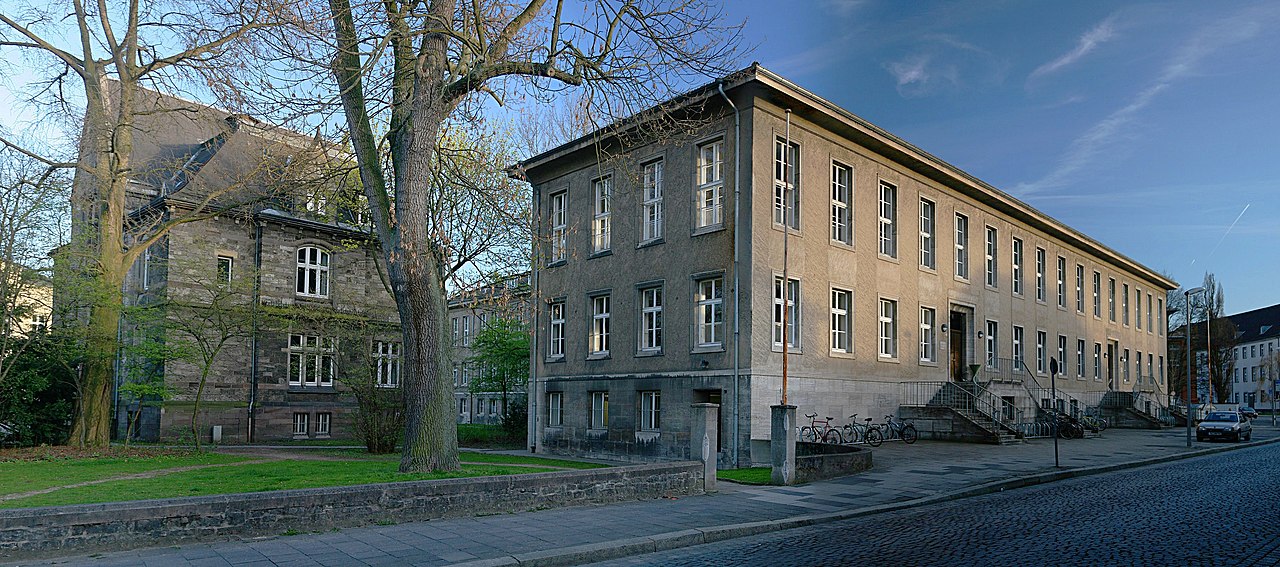


Early life and academic career
Noether was born in Erlangen, Germany, and studied mathematics at the University of Erlangen. After completing her training she moved to the mathematical center at the University of Göttingen, where she taught and collaborated with leading mathematicians. For a long time she encountered institutional barriers and taught without pay or formal title, but her influence on students and colleagues grew rapidly because of the originality and clarity of her work.
Main contributions and themes
Noether's research can be viewed in phases: early work on algebraic invariants and number fields, the development of ideal theory in commutative rings, and later investigations of noncommutative algebras. Across these areas she emphasized general structural principles rather than special-case computations. Several concepts and results are named after her, including "Noetherian" conditions that capture the idea that algebraic constructions do not grow indefinitely and thus can be studied by finite methods.
- Invariant theory and the algebraic foundations of symmetry.
- Ideals and the formalization of ring theory, leading to modern commutative algebra.
- Abstract methods in noncommutative algebra and influence on representation theory.
Noether's theorem and impact on physics
One of Noether's most widely known results—often called Noether's theorem—establishes a deep link between continuous symmetries and conservation laws in physics. In broad terms, it shows that each differentiable symmetry of a variational problem corresponds to a conserved quantity, a principle that underlies conservation of energy, momentum, and similar laws in classical and modern physics.
Teaching, collaboration, and influence
Noether was known for a collaborative style and for mentoring many students who later became prominent mathematicians. Her ideas crossed disciplinary boundaries and helped shape areas such as algebraic geometry, category-theoretic approaches, and even aspects of algebraic topology. Colleagues praised her for simplifying and unifying disparate results into coherent theory; some results attributed to others grew directly from discussions with her.
Later life and legacy
The political upheavals of the 1930s forced many scholars to leave Germany. Noether emigrated and continued to teach abroad before dying in 1935. Her legacy endures in the language and methods of modern algebra: the adjective "Noetherian" describes many finiteness conditions central to algebra and geometry; her structural viewpoint remains a foundation of contemporary research and graduate teaching. For further reading see historical and mathematical surveys that detail her biography and the subsequent development of the subjects she helped to found. Research overview and historical notes are useful starting points for study.
Notable aspects of her life and work include the combination of deep abstract thought with practical mathematical influence, a strong record of mentorship, and a lasting conceptual framework that continues to guide both pure mathematics and applications in physics and beyond.
References and additional resources: biographical summaries, university archives at Göttingen, introductions to abstract algebra, and specialized discussions of number theory and commutative algebra provide entry points for readers seeking more detail.
Related articles
Author
AlegsaOnline.com Emmy Noether — Architect of Modern Abstract Algebra Leandro Alegsa
URL: https://en.alegsaonline.com/art/118482