
Elliot Richardson: U.S. Cabinet Member and Watergate Resignation
Elliot Richardson (1920–1999) was an American lawyer and Republican politician who held four U.S. Cabinet posts and resigned as Attorney General during the Watergate crisis rather than dismiss the special prosecutor.
Elliot Richardson was an American lawyer and public official who served in several high-level posts in the administrations of Presidents Richard Nixon and Gerald Ford. He is best remembered for his principled resignation in 1973 as U.S. Attorney General during the Watergate scandal rather than carry out President Nixon's order to dismiss the special prosecutor investigating the affair. Richardson's career spanned multiple Cabinet offices and left a lasting mark on the norms of executive branch independence and legal ethics.
Image gallery
4 Images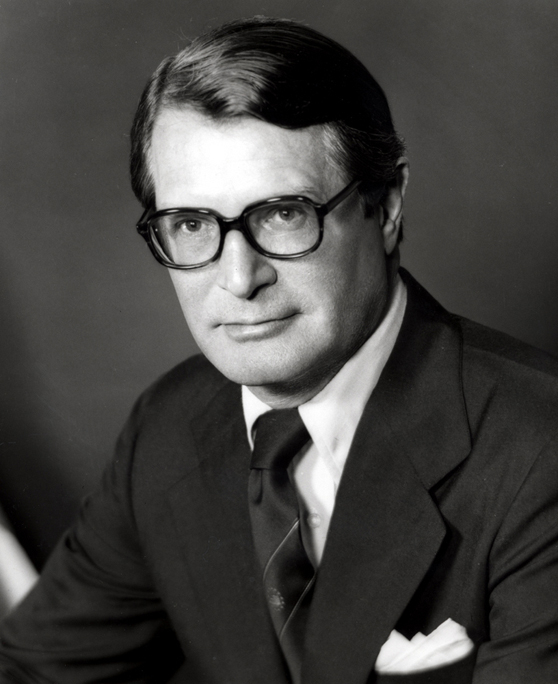


Major offices and roles
Across the early 1970s and mid-1970s Richardson held a sequence of senior federal positions. His principal cabinet posts included:
- Secretary of Health, Education, and Welfare (1970–1973)
- Secretary of Defense (January–May 1973)
- United States Attorney General (May–October 1973)
- Secretary of Commerce (1976–1977)
Holding four distinct Cabinet offices places Richardson in a very small group of officials with comparable breadth of service; he and George Shultz are the two widely noted examples of this level of rotation through cabinet posts in modern American history.
Role in the Watergate crisis
As Attorney General in 1973, Richardson confronted a central constitutional and political test during the unfolding Watergate scandal. When President Nixon ordered the dismissal of the independent special prosecutor, Richardson refused and chose to resign instead of carrying out the directive. His decision drew public attention to the tension between presidential authority and the rule of law in criminal investigations of the executive branch. The episode—often referred to in historical accounts of Watergate—helped galvanize congressional oversight and shaped later reforms aimed at strengthening prosecutorial independence.
Public reputation and legacy
Richardson was widely regarded as a lawyer committed to institutional integrity and the principle that legal processes must remain free from improper political interference. His resignation is frequently cited in discussions of ethical leadership in government, and his willingness to leave office rather than issue an order he judged improper remains a defining feature of his public image. Histories of the Nixon administration and studies of executive accountability often point to Richardson's stand as a notable example of conscience-driven resignation.
Later life and death
After leaving federal office Richardson continued to be active in law and public affairs. He served in the Ford administration and later returned to private practice and public comment. He died on December 31, 1999, of a cerebral hemorrhage at the age of 79. His death prompted reflections from colleagues and commentators on the standards of public service he embodied.
Further reading and resources
For additional biographical details, archival material, and analysis of the Watergate period, see official biographies and documentary collections. Reliable starting points include published biographies, legal histories of the era, and collections of oral histories and government documents. Some useful starting links are available in major archives and presidential collections: Biography and archival overview, Material on the Nixon administration, Records from the Ford administration, Attorney General office histories, and Department of Defense background.
Notable distinction: Richardson is one of the few Americans to have led four different Cabinet departments, and his 1973 resignation remains a frequently cited case in studies of executive power, legal ethics, and public accountability.
Related articles
Author
AlegsaOnline.com Elliot Richardson: U.S. Cabinet Member and Watergate Resignation Leandro Alegsa
URL: https://en.alegsaonline.com/art/118371
Sources
- nytimes.com : "Anne Richardson Obituary"
- nytimes.com : "Elliot Richardson dies"