
Donald Tsang — Hong Kong civil servant and former Chief Executive
Donald Tsang Yam-kuen (born 7 October 1944) is a former Hong Kong career civil servant who served as the territory's second Chief Executive from 2005 to 2012 and later faced legal proceedings.
Donald Tsang Yam-kuen (born 7 October 1944) is a retired Hong Kong civil servant and politician who served as the second Chief Executive of the Hong Kong Special Administrative Region from 2005 to 2012. A long-time member of the territory's administrative service, he rose through senior government ranks and is a recipient of the Grand Bauhinia Medal (GBM).
Image gallery
3 Images

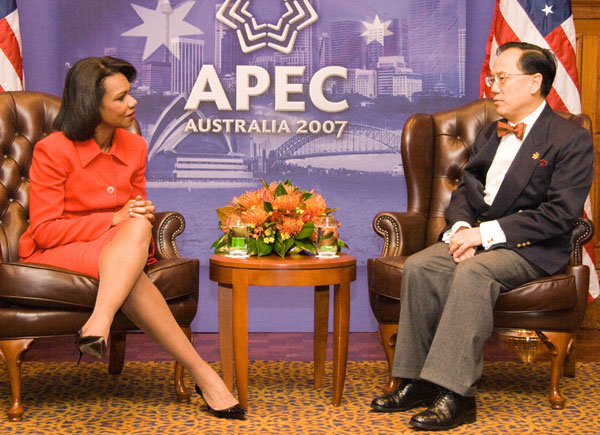
Career and roles
Tsang spent much of his professional life in public administration, holding a sequence of senior posts before becoming Chief Executive. He served in top-level offices including Chief Secretary and Financial Secretary, positions that placed him at the centre of policy coordination and fiscal management. In 2005 he became acting Chief Executive following his predecessor's resignation, then won the subsequent selection to lead the Hong Kong government.
As Chief Executive (2005–2012)
During his two terms, Tsang presented himself as a steady hand focused on economic stability, public finance and continuity during a period of political tension and change. His administration addressed matters such as economic recovery, housing and public services, and sought to manage relations with the central government in Beijing while responding to local social and political concerns.
Later developments and controversies
After leaving office Tsang became the subject of investigations and criminal proceedings regarding alleged misconduct in public office related to the acceptance of benefits. He was convicted in 2017, and the case subsequently progressed through appeals and legal review. These events have become an important part of assessments of his public career.
Legacy and notable facts
- Known as a career civil servant who attained the territory's highest office.
- Served as Chief Executive from 2005 to 2012 and held senior financial and administrative posts beforehand.
- Decorated with the Grand Bauhinia Medal; later legal issues have complicated his public reputation.
For an official profile and further background on his terms in office, see more information. His tenure is often discussed in studies of Hong Kong's post‑handover governance, offering a case study in career public service, policy continuity and the legal accountability of senior officials.
Related articles
Author
AlegsaOnline.com Donald Tsang — Hong Kong civil servant and former Chief Executive Leandro Alegsa
URL: https://en.alegsaonline.com/art/117813
Sources
- gld.gov.hk : G.N.(E.) 45 of 2005, The Government of the Hong Kong Special Administrative Region Gazette
- hkilang.org : "Archived copy"
- ceo.gov.hk : "Chief Executive of the Hong Kong Biography"
- legco.gov.hk : "Legislative Council of Hong Kong - Meeting record, bottom of the page listed: "Patron: The Honourable Sir Donald Tsang, GBM, KBE""