
Bird sounds
An overview of bird sounds: songs, calls and other noises birds use to communicate; their physiology, functions, learning, study and importance for ecology and human culture.
Overview
Bird sounds include vocalizations commonly called songs and calls, as well as non-vocal noises produced by wings, bills or feathers. Vocal signals are a primary means by which birds communicate with each other and with other species. The form, timing and purpose of these sounds vary widely between species, individuals and seasons.
Image gallery
8 Images


Characteristics and parts
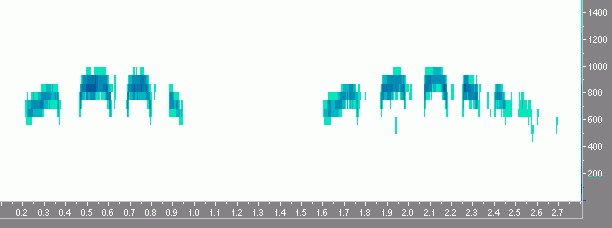
Most bird vocalizations are produced by the syrinx, a vocal organ unique to birds. Acoustic features such as pitch (frequency), loudness (amplitude), tempo and patterning determine how a sound is perceived and how far it carries. Songs are usually longer and more complex than calls; calls tend to be short, simple signals used for immediate information.
Functions and examples
Bird sounds serve many functions in daily life and reproduction. Common uses include:
- Advertising territory to rivals and attracting mates.
- Coordinating flock movements and maintaining contact.
- Alarm and mobbing calls that warn others of predators.
- Parent–offspring communication such as feeding calls.
Mechanism, learning and variation
Some vocal patterns are innate, while many species learn their songs by listening to adult tutors during a sensitive period. Learned variation can produce local "dialects" within a species. Certain species are capable of mimicry, copying sounds from other birds or environmental noises.
Study, monitoring and cultural importance
Scientists study bird sound through field recording and analysis in a discipline called bioacoustics. Recordings are used to monitor populations, assess habitat health and study behavior. Birdsong also has cultural value for birdwatchers, composers and educators; for further information see research and resources.
Notable distinctions
Not all birds sing: song production is most developed among passerines (perching birds), but many non-passerines make complex calls or use non-vocal sounds. Duetting, seasonal changes in singing and sex differences in vocal behavior are notable patterns that reflect ecological and evolutionary pressures on communication.
Related articles
Author
AlegsaOnline.com Bird sounds Leandro Alegsa
URL: https://en.alegsaonline.com/art/11709
Sources
- springerlink.com : "Sexual selection and the evolution of bird song: a test of the Hamilton-Zuk hypothesis"
- doi.org : 10.1007/BF00174024
- doi.org : 10.1093/beheco/arg108
- doi.org : 10.1034/j.1600-048X.2000.310404.x
- doi.org : 10.1086/428299
- pubmed.ncbi.nlm.nih.gov : 15729661
- birdresearch.dk : "Covariation between brain size and immunity in birds: implications for brain size evolution"
- doi.org : 10.1111/j.1420-9101.2004.00805.x
- pubmed.ncbi.nlm.nih.gov : 15669979
- news.nationalgeographic.com : National Geographic: African bird shouts false alarms to deceive and steal. Study shows drongos in the Kalahari are masters of deception. 1 May 2014
- rspb.royalsocietypublishing.org : rspb.royalsocietypublishing.org/content/early/2010/10/27/rspb.2010.1932.full