
A Sound Garden — wind‑driven public sculpture in Seattle
A Sound Garden is a wind-activated public sound sculpture by Doug Hollis (1982) on NOAA property near Magnuson Park, Seattle. It inspired the band Soundgarden and has controlled access since 2001.
Overview
A Sound Garden is a site-specific sound sculpture installed in 1982 on National Oceanic and Atmospheric Administration (NOAA) property adjacent to Magnuson Park in Seattle. Designed to interact with natural breezes, the work produces low, resonant tones as wind moves its parts. It is widely known both as an example of environmental sound art and as the namesake of the Seattle rock band Soundgarden.
Image gallery
1 Image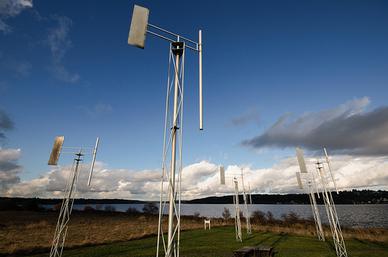
Design and characteristics
The installation consists of multiple vertical metal assemblies that resemble oversized weathervanes. Each assembly supports a set of hollow tubes or pipes tuned by length and mounting so that wind-driven motion causes air to vibrate inside them, creating moaning, whistling or rumbling tones. Because the materials, spacing and orientation vary across the site, the ensemble produces complex, shifting textures that depend on wind speed and direction. The work is often described as an example of an aeolian or wind-activated instrument in the tradition of artists who use environmental forces as material.
History and influence
Doug Hollis, the artist who conceived and built the installation, created the work to foreground wind as an active collaborator. Installed on land managed by a federal agency, the piece is both public art and part of a secure campus setting. Its title and distinctive sound caught the attention of local musicians in the late 1980s and became the namesake for the influential grunge band Soundgarden, linking the sculpture to Seattle's wider cultural history.
Visiting and access
Because the sculpture sits on NOAA property, public access is subject to federal site security rules. Since heightened security measures were introduced in the early 2000s, visitors generally must check in at a security station to walk onto the campus; vehicle access is restricted and photo identification is typically required. These procedures allow on-foot viewing of the artwork and participation in the surrounding public "Art Walk" while maintaining campus safety.
Significance and related forms
A Sound Garden is notable for blending visual sculpture, landscape installation and acoustic experience. It illustrates how simple mechanical elements can be arranged to make the landscape audible, inviting listeners to notice variations in weather and place. The work is often discussed alongside other wind-driven sculptures and musical installations that explore the boundary between instrument and environment.
Practical notes for visitors
- Location: NOAA property near Magnuson Park, Seattle; the site is public but regulated.
- Access: Check-in at the security desk is usually required; vehicles may not be allowed onto the campus.
- Experience: The sound character changes with wind conditions—calm days produce little sound, windy days yield the strongest tones.
For more information about the artist and the work, see resources attributed to the creator and local cultural histories. The artist Doug Hollis is commonly cited in discussions of sound sculpture and environmental art.
Tags
Related articles
Author
AlegsaOnline.com A Sound Garden — wind‑driven public sculpture in Seattle Leandro Alegsa
URL: https://en.alegsaonline.com/art/117
Sources
- seattlepi.com : "Magnuson Park's creaky Sound Garden awaiting a tune-up"
- sol.slu.se : "Landscape Architecture in the Pacific Northwest"
- vh1.com : "Soundgarden: Biography"
- web.stargate.net : "Unofficial Soundgarden Homepage: Band History"
- realchangenews.org : "Art fenced off"