
Cyclone Sidr: 2007 Bay of Bengal Storm and Its Impact on Bangladesh
Cyclone Sidr was a very severe November 2007 Bay of Bengal cyclone that struck southwestern Bangladesh, killing thousands, causing extensive damage and prompting major relief, recovery, and coastal resilience efforts.
Overview
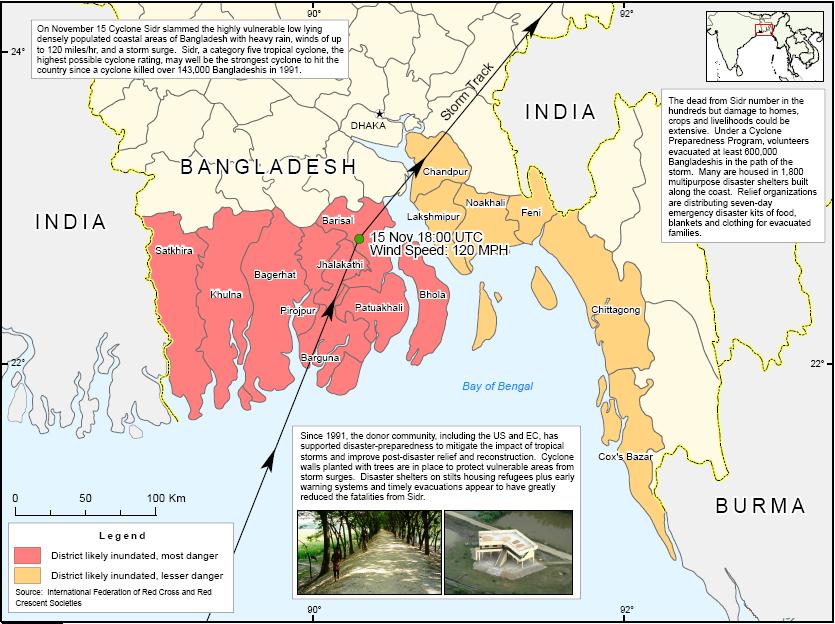
Cyclone Sidr was a very severe tropical cyclone that developed over the Bay of Bengal in mid-November 2007 and made landfall on the southwestern coast of Bangladesh. It is remembered as one of the most destructive natural events to strike the country in recent decades. The storm produced intense winds, heavy rainfall and a powerful storm surge that inundated low-lying coastal areas, destroying homes, infrastructure and crops.
Image gallery
10 Images




Meteorological characteristics
Sidr intensified rapidly over warm ocean waters before reaching the coast. Meteorological agencies classified it among the highest categories of regional storm intensity, reflecting its strong sustained winds and compact but intense structure. The combination of surge, wind and heavy rain made it especially destructive for populated coastal districts and mangrove areas such as the Sundarbans.
Impact and human toll
The human and material cost was severe. Official and credible estimates put the death toll in the thousands, with commonly cited ranges between about 3,000 and 10,000 lives lost. Economic damage was substantial, with aggregate losses widely reported to total around US$1.7 billion. Beyond loss of life, Sidr damaged or destroyed hundreds of thousands of homes, disrupted water and sanitation systems, ruined standing crops and severely affected livelihoods dependent on fishing and agriculture.
Response, relief and recovery
Evacuation warnings, early-alert messages and the use of cyclone shelters saved many lives where they were heeded. Domestic authorities, international agencies and non-governmental organizations mounted large-scale relief operations to provide food, medical aid, shelter materials and water purification. Recovery required long-term reconstruction of housing, embankments and community services, and support for agricultural recovery and income restoration.
Legacy and lessons learned
Sidr led to renewed emphasis on coastal resilience in Bangladesh: strengthening early warning systems, expanding cyclone shelter networks, improving embankments and promoting disaster-prepared building practices. The storm is frequently cited in studies of tropical cyclone risk in the Bay of Bengal and in discussions about adapting vulnerable coastal regions to climate-related hazards.
- Region: Bay of Bengal, southwestern Bangladesh and adjacent coastal districts
- Timing: mid-November 2007
- Consequences: thousands of fatalities, widespread destruction, long-term recovery needs
Related articles
Author
AlegsaOnline.com Cyclone Sidr: 2007 Bay of Bengal Storm and Its Impact on Bangladesh Leandro Alegsa
URL: https://en.alegsaonline.com/art/116919
Sources
- in.reuters.com : "Bangladesh gets $95 mln W.Bank loan for post-cyclone aid"