
Chen Ning Yang (Yang Zhenning) — physicist and mathematical physicist
Biography and overview of Chen Ning Yang, his major contributions to particle physics and statistical mechanics, Nobel-winning work on parity violation, and the lasting impact of Yang–Mills and Yang–Baxter ideas.
Chen Ning Yang (also known as Yang Zhenning), born October 1, 1922, is a Chinese-born physicist and mathematical physicist whose research reshaped mid-20th century theoretical physics. He is widely recognized both as an experimental and theoretical physicist in terms of influence and as a mathematician by training and approach. Yang's work spans foundational problems in statistical mechanics and modern particle physics, and has left enduring mathematical structures still used in physics today.
Image gallery
8 Images


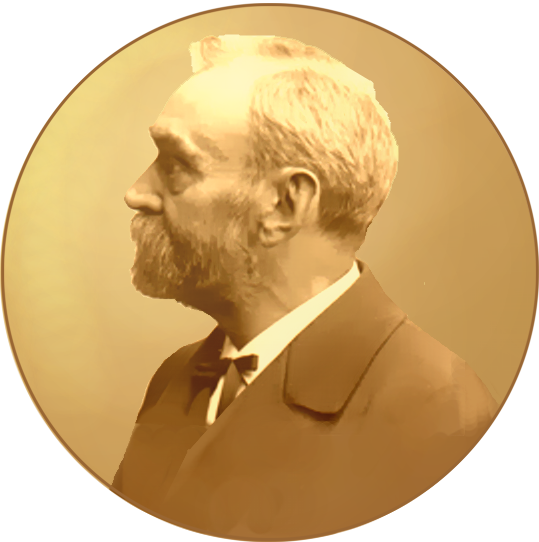


Major contributions
Yang's scientific legacy includes several concepts and results that carry his name. Among the most significant are:
- Yang–Mills theory: a non-abelian gauge theory developed with Robert Mills that became a cornerstone of gauge theories and underpins the theoretical structure of the Standard Model of particle physics.
- Parity nonconservation: with Tsung-Dao Lee, Yang proposed that the weak interaction need not conserve parity; experimental confirmation of this idea led to the 1957 Nobel Prize in Physics awarded to the duo for revealing this fundamental asymmetry (parity nonconservation).
- Yang–Baxter equation: an identity that arose in models of statistical mechanics and integrable systems; it later became central to developments in exactly solvable models, quantum groups, and low-dimensional physics.
- Exact and mathematical methods: Yang made important contributions to the mathematics of many-body problems, scattering theory, and solvable models that connect physical intuition with rigorous mathematics.
These achievements illustrate how Yang's work crosses the boundary between physical insight and mathematical formulation. His approach often turned physical problems into precise mathematical structures, enabling both exact solutions and broad conceptual advances.
Context and impact
The discovery that parity might not be conserved in weak interactions overturned a prevailing symmetry assumption and opened new directions in particle physics. Yang and Lee's proposal prompted decisive experiments that confirmed parity violation and changed how physicists model subatomic processes. Yang–Mills theory, meanwhile, provided the language of non-abelian gauge fields that later described the strong and electroweak forces, influencing the search for unified descriptions of fundamental interactions.
In statistical mechanics and condensed-matter physics, the Yang–Baxter equation and related exact solutions provided tools to analyze one-dimensional systems, phase transitions, and correlation functions. These tools have continued relevance in quantum information, mathematical physics, and the study of integrable models.
Career and legacy
Yang has had an active academic career spanning continents and generations of students and collaborators. Beyond his specific results, his style—combining rigorous mathematics with clear physical reasoning—helped build bridges between fields and trained researchers who continued to expand the subjects he influenced. He remains an emblematic figure for how deep conceptual questions yield structural frameworks that persist across decades.
Today, references to Yang appear in discussions of gauge theory, integrable systems, and mathematical methods in physics. His name marks concepts that are taught in advanced courses and used in contemporary research, ensuring that his contributions remain central to both the history and ongoing development of theoretical physics.
For further reading about Yang's work and its scientific context, consult specialized reviews and textbooks on gauge theory, the history of the weak interaction, and solvable models in statistical mechanics. Additional biographical and technical material is available through authoritative scientific archives and institutional pages that preserve the record of twentieth-century physics.
More about Yang as a physicist | Mathematical perspectives on Yang's work | Statistical mechanics topics linked to Yang | Yang's role in particle physics | Details on the work leading to the Nobel Prize
Related articles
Author
AlegsaOnline.com Chen Ning Yang (Yang Zhenning) — physicist and mathematical physicist Leandro Alegsa
URL: https://en.alegsaonline.com/art/116322
Sources
- insti.physics.sunysb.edu : "Biography of C.N. Yang"
- nndb.com : "Chen Ning Yang"
- nobelprize.org : "The Nobel Prize in Physics 1957"
- amphilsoc.org : "Benjamin Franklin Medal for Distinguished Achievement in the Sciences Recipients"
- Nobel Prize in Physics