
Camillo Golgi: Italian physician and pioneer of neuroanatomy
Camillo Golgi (1843–1926) was an Italian physician and pathologist who developed landmark staining methods, described the Golgi apparatus, and shared the 1906 Nobel Prize for work on the nervous system.
Camillo Golgi (7 July 1843 – 21 January 1926) was an Italian physician and scientist whose laboratory methods and microscopic observations transformed the study of nervous tissue. Trained as a clinician and pathologist, Golgi combined clinical work with meticulous histology and anatomical description. His career blended hospital practice, teaching and research on the structure of cells and neural tissue; he is often linked in biographies with the broader history of European medicine (biographical summary).
Image gallery
5 Images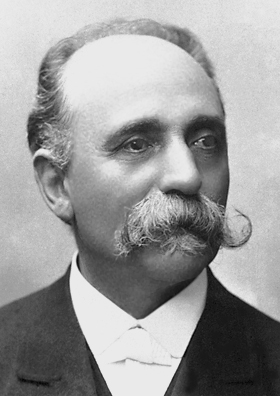


Major contributions
Golgi introduced techniques and discoveries that remain central to biology and neuroscience. His most notable contributions include:
- Black reaction (Golgi stain): a silver-chromate staining method that revealed entire neurons and their processes in striking detail, enabling clear visualization of cell bodies, dendrites and axons.
- Golgi apparatus: the organelle he described at the turn of the 20th century, now recognized as a central hub for processing and sorting proteins in eukaryotic cells.
- Theoretical influence: his observations fed into debates about the organization of the nervous system, including the competing reticular theory and neuron doctrine.
Golgi’s laboratory findings led to a Nobel Prize in Physiology or Medicine in 1906, shared with Santiago Ramón y Cajal. The award acknowledged their complementary roles: Golgi for staining methods and detailed descriptions, and Cajal for interpreting neurons as discrete cells. Their differing interpretations—Golgi favoring a continuous network and Cajal promoting the neuron doctrine—helped shape modern neuroanatomy.
The Golgi stain remains a fundamental technique in neurohistology and is still used in reduced form or as inspiration for modern contrast methods. The Golgi apparatus, identified by Golgi and later named in his honor, has become a core concept in cell biology because of its role in modifying, sorting and shipping proteins and lipids within cells.
Beyond these discoveries, Golgi’s legacy is notable for how a single methodological innovation can alter a field: by revealing structures previously invisible, he enabled new questions and theories about brain organization, development and pathology. His work illustrates the interplay between tools, observation and theory in scientific advance.
Related articles
Author
AlegsaOnline.com Camillo Golgi: Italian physician and pioneer of neuroanatomy Leandro Alegsa
URL: https://en.alegsaonline.com/art/115862
Sources
- nobelprize.org : "Biography of Camillo Golgi"
- nobelprize.org : "The Nobel Prize in Physiology or Medicine 1906"