
Bill Shankly
Bill Shankly was a Scottish footballer and manager best known for transforming Liverpool into a major force in English and European football.
Bill Shankly (2 September 1913 – 29 September 1981) was a Scottish football player and manager whose influence reached far beyond his own era. He is remembered above all for rebuilding Liverpool into one of the most successful clubs in Britain, but his life also reflects the wider story of working-class Scottish football in the 20th century. Shankly combined discipline, plain speaking, and an uncompromising belief in teamwork.
Image gallery
8 Images
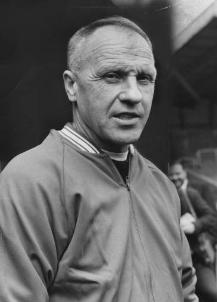


Early life and playing career
Shankly was born in Glenbuck, a small mining village in Ayrshire, Scotland. The area produced several footballers, and Shankly grew up in a community where sport often offered an alternative to the mines. He began his career with Glenbuck Cherrypickers before moving into senior football. As a player, he spent time with Carlisle United and then established himself at Preston North End, where he became known as a reliable and hardworking half-back.
He also represented Scotland at international level. His playing career was interrupted by the Second World War, a period that changed football across Britain. During the war he served in the army. After the conflict, he returned to Preston and later moved toward coaching and management, where his impact became much greater than it had been as a player.
From lower-league management to Liverpool
Shankly’s early managerial posts were with Carlisle United, Grimsby Town, and Workington. These jobs were important in shaping his approach: he learned how to improve limited teams by raising standards, building confidence, and demanding commitment from every player. He later worked at Huddersfield Town before accepting the Liverpool manager’s post in 1959.
At the time, Liverpool were not the dominant club they would become. Shankly took charge of a side in need of renewal and gradually turned it into a championship-winning team. His success was not based on a single tactic or signing, but on a complete reorganization of the club’s mentality and working methods.
Liverpool legacy
Under Shankly, Liverpool won major honours and began a period of sustained success. The club captured league titles, the FA Cup, and European silverware during his reign. More importantly, he helped establish a professional culture that would continue after he retired. He built strong squads, encouraged close communication between staff, and helped create the famous Liverpool Boot Room tradition of football discussion and planning.
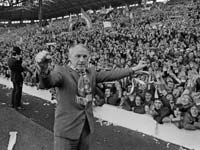
Shankly became a heroic figure for supporters because he spoke directly, valued the fans, and treated football as a shared cause rather than just a business. He believed the club should belong to the people who supported it, and that attitude helped define Liverpool’s identity for generations. Even after leaving in 1974, his reputation at Anfield remained immense.
Style, character, and reputation
Shankly was known for his intensity, humor, and memorable public remarks. He could be inspirational in victory and unsparing in criticism, but his message was usually simple: effort, unity, and loyalty mattered most. He was not only a successful manager but also a symbol of the values many supporters associate with traditional football culture.
His influence is still discussed in histories of Liverpool and of British football more broadly. Modern managers often work with far more resources and analytics, but Shankly’s example remains important because it shows how leadership, identity, and belief can change a club.
- Born: Glenbuck, Scotland
- Played for: Carlisle United, Preston North End, and others during the wartime era
- Managed: Carlisle United, Grimsby Town, Workington, Huddersfield Town, Liverpool
- Best known for: transforming Liverpool into a major football power
Shankly died in 1981, but his name remains closely associated with Liverpool’s rise and with one of the clearest examples of managerial influence in football history.
Tags
Related articles
Author
AlegsaOnline.com Bill Shankly Leandro Alegsa
URL: https://en.alegsaonline.com/art/11489