
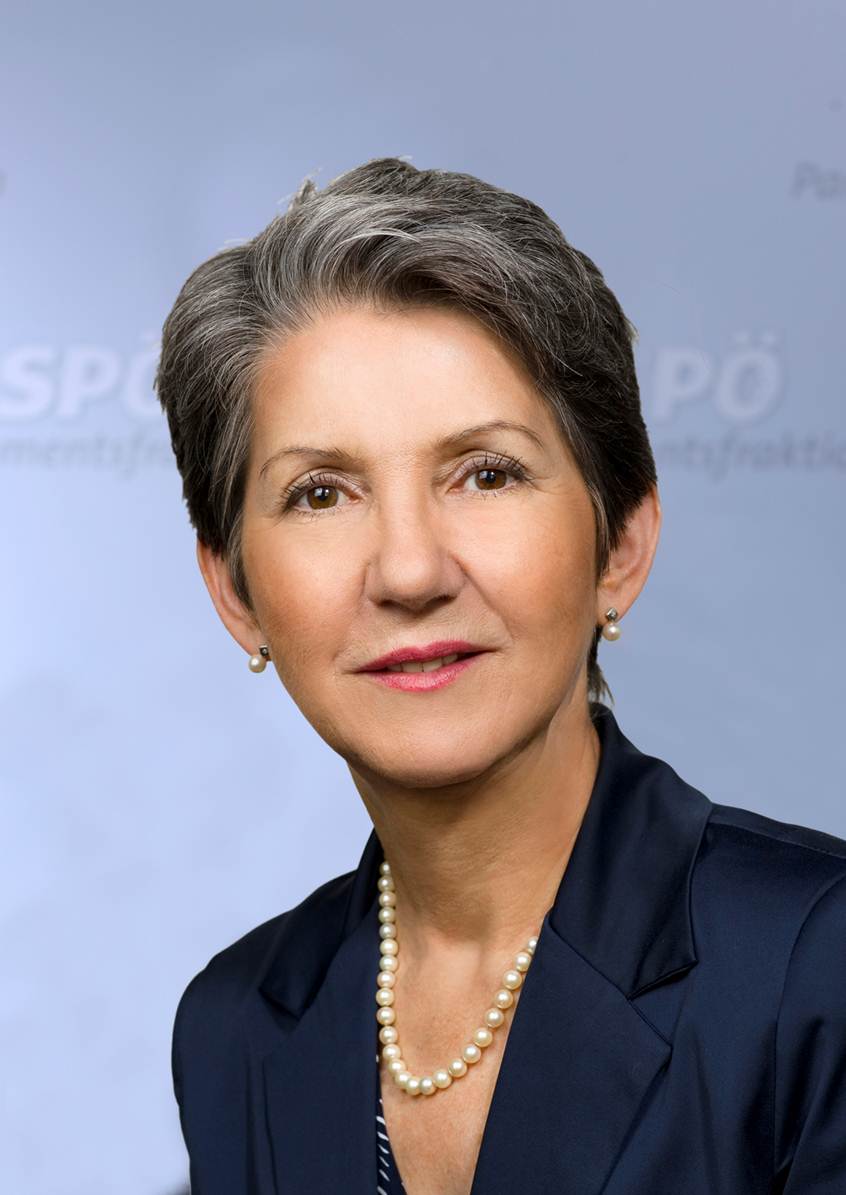
Barbara Prammer (1954–2014): Austrian politician and parliamentary leader
Austrian Social Democratic politician who served as President of the National Council (2006–2014), earlier minister for women's affairs and consumer protection, noted for advocacy on gender equality and parliamentary leadership.
Barbara Prammer (11 January 1954 – 2 August 2014) was a leading Austrian politician affiliated with the Social Democratic Party of Austria. Over a career that spanned several decades she became one of the most visible figures in Austria's national politics, combining party work with high office in the federal government and parliament.
Prammer held a number of senior positions in Austrian public life. She served as Federal Minister for Women Affairs and Consumer Protection from 1997 to 2000 and was elected to the National Council in 1999. In the parliamentary leadership she was Vice President of the National Council from 2004 until 2006, and from 30 October 2006 she served as President of the National Council until her death in 2014. The president of the National Council chairs sessions of Austria's lower house, represents the assembly and plays an important role in shaping parliamentary procedure and public debate.
Image gallery
2 Images
Key offices and dates
- Federal Minister for Women Affairs and Consumer Protection, 1997–2000
- Member of the National Council, elected 1999
- Vice President of the National Council, 2004–2006
- President of the National Council, 30 October 2006 – 2 August 2014
Her political work emphasized gender equality, the protection of consumers, and stronger democratic participation. As minister she promoted policies aimed at improving the legal and economic position of women. In parliament she was known for seeking consensus across party lines and for insisting on respectful debate and procedural fairness. Colleagues and observers frequently described her as a committed advocate for social democratic values and for wider inclusion of women in public life.
Prammer's personal life was private; she was a mother of two children. In 2014 she was diagnosed with a serious illness and died on 2 August 2014. Her death was attributed to pancreatic cancer. She remained in office until shortly before her passing, and her illness and death prompted widespread tributes from across Austria's political spectrum.
Her legacy in Austrian politics includes raising the profile of women's issues at the federal level and reinforcing the role of the National Council as a forum for reasoned, cross-party negotiation. Memorials and retrospectives after her death emphasized her contributions to parliamentary life and to public discussion about equality and social policy. While her career was rooted in party politics, she is often remembered for the institutional role she played in managing Austria's legislative process during a period of change and debate.
Related articles
Author
AlegsaOnline.com Barbara Prammer (1954–2014): Austrian politician and parliamentary leader Leandro Alegsa
URL: https://en.alegsaonline.com/art/114839
Sources
- parlament.gv.at : "Nationalratspräsidentin Barbara Prammer verstorben"