
Alonzo Church: Logician and Pioneer of Computability
Alonzo Church (1903–1995), American logician and mathematician, created the lambda calculus, formulated Church's thesis, and proved foundational results that shaped computability and theoretical computer science.
Overview
Alonzo Church (June 14, 1903 – August 11, 1995) was an American mathematician and logician whose work established many of the basic concepts of computability and formal logic. Based for much of his career at Princeton, Church helped create rigorous models of computation and clarified what it means for a function to be effectively calculable. His research bridged pure logic, philosophy of mathematics, and the emerging field later called theoretical computer science (see related topics).
Image gallery
2 Images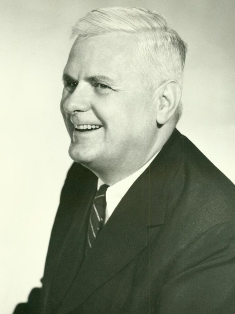
Major contributions
- Lambda calculus — A formal system for expressing computation based on function abstraction and application. Lambda calculus became a fundamental model of computation and is a direct ancestor of functional programming languages (lambda calculus).
- Church's thesis — The proposal that the intuitively computable functions are precisely those definable by a formal system such as lambda-definability; this idea is often presented alongside the equivalent formulation by Alan Turing as the Church–Turing thesis.
- Church–Rosser theorem — An important property of the lambda calculus showing that, when reduction converges, different reduction paths lead to a common result; this theorem underpins consistency and predictability in formal rewritings.
- Undecidability results — Using lambda calculus and related methods, Church demonstrated the existence of well-posed decision problems that have no algorithmic solution, contributing to the early resolution of the Entscheidungsproblem.
Explanation and examples
Lambda calculus uses simple syntactic rules to represent functions and their application. For example, an anonymous function that adds one to its input can be written and manipulated symbolically; composing such expressions models computation without referring to machines. This abstract viewpoint influenced the design of programming languages (especially functional ones) and formal systems for reasoning about programs.
History and influence
Church's work in the 1930s set the stage for later developments by colleagues and students. His interactions with contemporaries, including Alan Turing and Stephen Kleene, helped crystallize the modern concept of algorithmic computation. The Church–Turing perspective remains a guiding principle in computability theory and informs fields from proof theory to programming-language semantics.
Legacy and distinctions
Beyond specific theorems, Church is remembered for establishing durability and clarity in mathematical definitions of computation. His ideas continue to appear in logic textbooks, research on the foundations of computer science, and practical language design. For introductory and advanced treatments of his contributions, readers can consult standard references in mathematical logic and theoretical computer science (biographical sources, scholarly surveys, field overviews, technical expositions).
Related articles
Author
AlegsaOnline.com Alonzo Church: Logician and Pioneer of Computability Leandro Alegsa
URL: https://en.alegsaonline.com/art/113885