
870 (DCCCLXX) — a year in the 9th century
Overview of the year 870 CE: calendar context, major political events such as the Treaty of Meerssen, Viking activity in the British Isles, and wider cultural and geopolitical background.
870 (DCCCLXX) was a year in the 9th century commonly dated in modern historiography as 870 CE. In contemporary chronology it was a common year beginning on Sunday under the Julian calendar. The year sits in a period of shifting post-Carolingian borders, increased Scandinavian raids, and vibrant intellectual life across the Islamic world and Byzantine Empire.
Image gallery
1 Image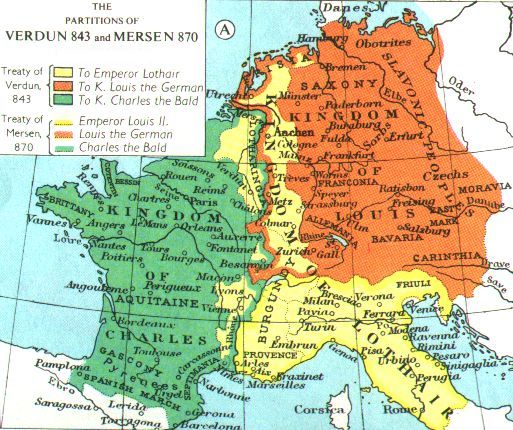
Political developments in Western Europe
One of the most consequential events of 870 was the final division of the middle Frankish kingdom that followed the death of Lothair II. Frankish rulers Charles the Bald and Louis the German agreed terms in 870 that partitioned Lotharingia (the territories between their realms), reshaping the political map of western and central Europe and laying foundations for later regional identities.
Viking activity and the British Isles
Scandinavian seaborne activity remained a major factor this year. The forces often grouped in modern accounts as the Great Heathen Army continued campaigning in England and exerted pressure on Anglo-Saxon kingdoms. Norse groups also raided and settled along parts of the Irish, Scottish and Frankish coasts, influencing trade, settlement patterns and local power struggles.
Broader cultural and geopolitical context
Beyond northwestern Europe, the 9th century world was diverse: the Abbasid Caliphate sustained intellectual and commercial networks centred on cities such as Baghdad, while the Byzantine Empire under its contemporary rulers managed diplomatic and military challenges in the eastern Mediterranean. These regions contributed to long-term exchanges of ideas, technology and commodities.
Notable facts and legacy
- The partition decided in 870 adjusted boundaries that would affect medieval state formation in France and Germany.
- Continued Viking incursions accelerated cultural and demographic change across the British Isles.
- The year is a representative moment of the early medieval transition from Charlemagne's heirs toward more localized polities.
For concise reference the year is sometimes rendered in Roman numerals as DCCCLXX. While not every event from 870 is documented in equal detail, its major outcomes are visible in political maps, archaeological evidence of Norse activity, and the administrative records of contemporary courts.
Related articles
Author
AlegsaOnline.com 870 (DCCCLXX) — a year in the 9th century Leandro Alegsa
URL: https://en.alegsaonline.com/art/113085