
3rd century (201–300 CE): Political upheaval and cultural change
Survey of the 3rd century (201–300 CE): a period of intense political fragmentation, the Roman Crisis, Sassanid and Chinese transformations, religious shifts, epidemics, and administrative reforms.
The 3rd century covers the years 201–300 CE and is marked by wide-ranging disruptions across Eurasia and the Mediterranean. Although not all regions experienced the same events, this century is often remembered for intense political instability in the Roman world, the emergence of new states in Persia and China, and important religious and social changes that shaped Late Antiquity.
Image gallery
6 Images


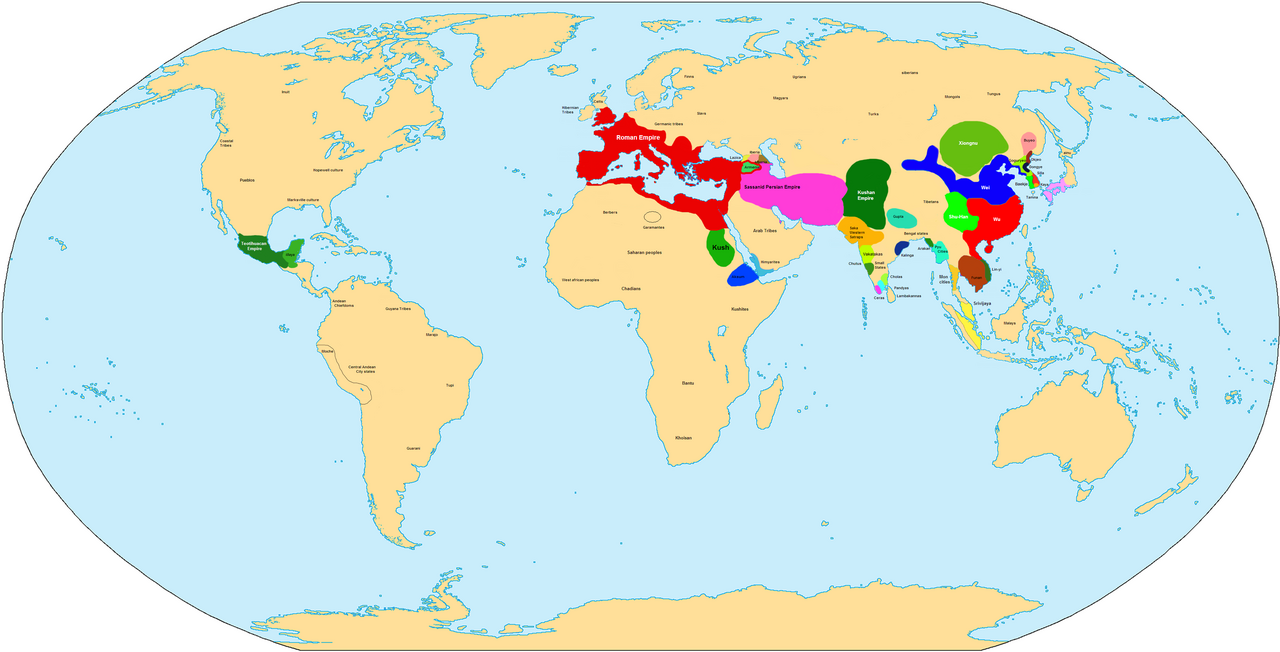

Political transformations
In the west, the Roman Empire entered the so-called Crisis of the Third Century: frequent changes of emperors, military usurpations, economic strain and localized breakaway regimes. For several decades rival polities such as the Gallic and Palmyrene authorities briefly controlled large provinces. The century closed with efforts to restore order under strong rulers who reorganized imperial administration and the army.
Persia, China and regional powers
In Persia a new dynasty displaced the Parthians, creating a revitalized Sassanid realm that contested Rome’s eastern frontiers. In East Asia, the Han dynasty collapsed and China fragmentated into the Three Kingdoms period (beginning around 220 CE), a prolonged era of war and rivalry that profoundly influenced later Chinese statecraft and literature. Across South and Central Asia, trade across the Silk Roads and Indian Ocean continued to transmit goods, ideas and religions.
Religion, society and health
Religious life changed notably: Christianity expanded within Mediterranean urban networks while facing episodic imperial persecutions. New religions also appeared, including Manichaeism, which blended elements from multiple traditions and spread rapidly. The Roman world suffered a severe epidemic in the mid-3rd century that affected manpower and economies and is often cited as a factor that intensified political stresses.
Economy, culture and legacy
The century saw monetary inflation, supply difficulties and the growing role of the military in politics. Cultural production adapted to instability yet preserved and transmitted classical learning. Administrative and military reforms instituted near the century’s end laid foundations for the transformation from the classical Roman state to the structures of Late Antiquity.
- Notable figures and polities: Diocletian (restorer of imperial order), several short-lived Roman emperors, Ardashir I of the Sassanids, leaders of the Three Kingdoms.
- Significant developments: political fragmentation and reunification efforts, religious diversification, epidemic impact, and long-term administrative reform.
Although fragmented and often violent, the 3rd century produced changes that redirected imperial institutions, religious landscapes and interregional connections—shaping the transition from the classical world toward medieval political and cultural configurations.
Related articles
Author
AlegsaOnline.com 3rd century (201–300 CE): Political upheaval and cultural change Leandro Alegsa
URL: https://en.alegsaonline.com/art/112867