
Year 250 (CCL): Calendar, context and significance
Overview of the year 250 (CCL): calendar placement, geopolitical and cultural context in the mid-3rd century, religious developments, and the year's legacy for chronology and scholarship.
Year 250 (Roman numeral CCL) was recorded as a common year beginning on Tuesday in the Julian calendar. It occupies the 250th position in the system of year numbering used for the modern Common Era and Anno Domini designations. Chronologically it is also the 250th year of the 1st millennium, the 50th year of the 3rd century, and the first year of the 250s decade.
Image gallery
1 Image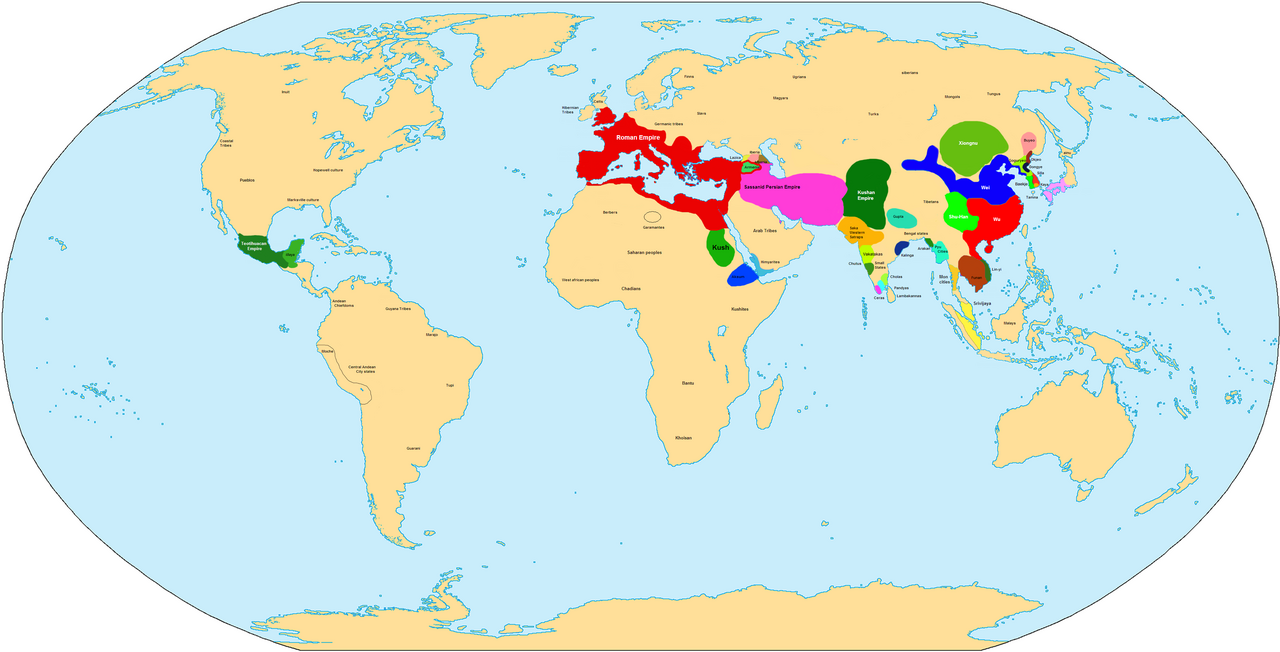
Calendar and dating conventions
Describing 250 as a "common year starting on Tuesday" reflects the Julian calendar then in widespread use in the Mediterranean world. The Julian calendar, introduced in 45 BCE, uses regular 365‑day years and a 366‑day leap year every four years; this differs from the later Gregorian reform used by many countries since 1582. Historical sources and modern chronologies translate contemporary dating systems into the familiar CE/AD numbering; the Roman practice was to name years by magistrates or emperors, so conversion to "250" is a later scholarly convenience.
Historical context
The year falls within the turbulent mid‑3rd century, a period of political instability, military pressure on imperial frontiers, and economic strain across large parts of Eurasia. In the Roman Empire, the emperor Decius (reigned 249–251) attempted administrative and military reforms to meet threats from beyond the Danube and the Rhine and from eastern rivals. Beyond Rome, regions from the Persian frontier to China saw shifting local powers and frequent conflict as polities adapted to demographic and political change.
Religion, society and culture
Religious life and social norms were in flux. In the Roman Empire the period is notable for a renewed imperial emphasis on traditional religious rites; an edict requiring public sacrifice for civic unity has been associated with imperial policy around this time, and its enforcement affected Christian communities. Cultural production—writing, architecture, and coinage—continued but often reflects the strains of warfare and fiscal pressure.
Why 250 matters
- Chronological anchor: the year serves as a convenient marker within the long third century for historians tracing the era's crises and transitions.
- Religious turning point: policies and events around 250 influenced early Christian memory and martyrs' accounts.
- Documentation limits: surviving literary, epigraphic, and archaeological evidence for the year is patchy, so scholars reconstruct events by combining fragmentary sources.
Studying the year 250 illuminates broader patterns rather than a single defining event. It sits in a decade when imperial authority, frontier defense, and religious communities were being renegotiated—a moment representative of wider transformations across the ancient world.
Related articles
Author
AlegsaOnline.com Year 250 (CCL): Calendar, context and significance Leandro Alegsa
URL: https://en.alegsaonline.com/art/112744