
2013 Africa Cup of Nations
Summary and significance of the 2013 Africa Cup of Nations in South Africa: format, results, hosts, and the tournament’s place in African football history.
Overview
The 2013 Africa Cup of Nations took place from 19 January to 10 February 2013 under the auspices of the Confederation of African Football. The competition, officially the 29th edition of the Africa Cup of Nations, was staged in South Africa. Organizers moved the tournament to an odd-numbered year for the first time so it would no longer overlap with the FIFA World Cup cycle, a change intended to ease scheduling and player availability.
Image gallery
8 Images


Format and venues
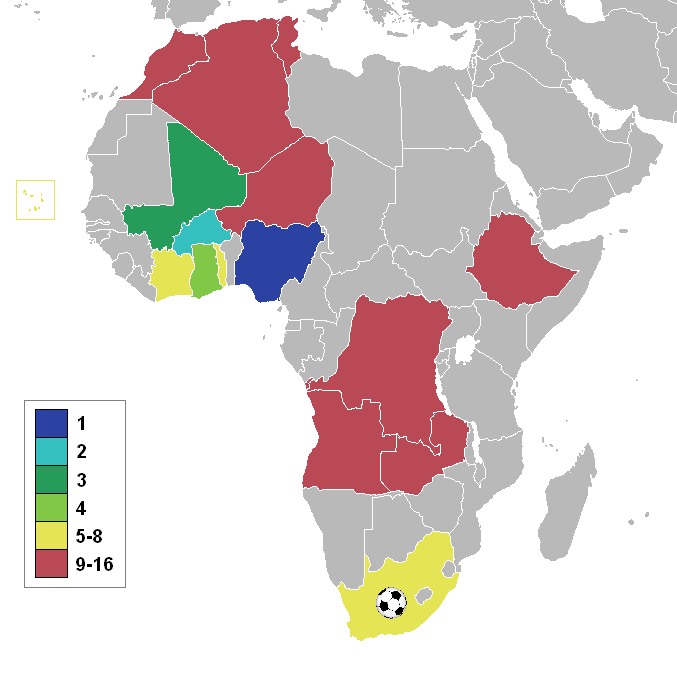
Sixteen national teams competed in a month-long event. The format featured a group stage of four groups with four teams each; the two highest-placed teams from every group advanced to the knockout rounds. Matches were played across multiple stadiums in the host country, using established venues and infrastructure that South Africa had developed for international tournaments.
Qualification and participants
As host, South Africa automatically qualified. The remaining teams earned their places through regional qualifying matches arranged by the continental confederation. The tournament brought together established continental powers alongside nations that had risen through recent qualifying campaigns, creating a mix of traditional contenders and developing sides.
Results and notable outcomes
The final saw Nigeria defeat Burkina Faso 1–0 to claim the title. Mali finished third after winning the consolation match. Nigeria's victory granted its national team the right to represent Africa at the 2013 FIFA Confederations Cup, a short tournament that assembles continental champions as part of FIFA's event cycle.
Legacy and significance
This edition is remembered for its scheduling shift and for being the second time South Africa hosted the competition, reflecting the country's continuing role in African football. The move to odd years has persisted, altering how continental and global tournaments are coordinated. Beyond medals, the event influenced player exposure, commercial partnerships, and the planning of future African competitions.
Further notes
- Organization and governance were provided by the CAF, which continues to oversee qualification and tournament operations.
- The tournament forms part of a long-running continental championship, the AFCON, which remains a key stage for African national teams.
- Host selection and legacy issues, including venue upgrades and local economic impact, were widely discussed after the event in South Africa.
For readers seeking match-by-match details, player statistics, or venue lists, consult official reports and archives maintained by the competition organizers and national associations.
Questions and answers
Q: When was the 2013 Africa Cup of Nations held?
A: The 2013 Africa Cup of Nations was held from 19 January to 10 February 2013.
Q: Who organized the tournament?
A: The tournament was organized by the Confederation of African Football (CAF).
Q: Which country hosted the tournament?
A: South Africa hosted the tournament for the second time.
Q: Why was this tournament held on an odd-numbered year?
A: This was done so that it doesn't get in the way of the FIFA World Cup.
Q: Who won the 2013 Africa Cup of Nations?
A: Nigeria won the tournament after a 1–0 victory over Burkina Faso in the final.
Q: What team won third place at this event?
A: Mali also won the third-place game.
Q: How did Nigeria represent Africa in 2013 FIFA Confederations Cup?
A: Nigeria later represented Africa in the 2013 FIFA Confederations Cup.
Related articles
Author
AlegsaOnline.com 2013 Africa Cup of Nations Leandro Alegsa
URL: https://en.alegsaonline.com/art/112505
Sources
- cafonline.com : "CAF Executive Committee decisions: CAN in odd years from 2013"
- news.bbc.co.uk : "Africa Cup of Nations Cup to move to odd-numbered years"
- old.weathersa.co.za : old.weathersa.co.za
- soccernet.espn.go.com : "2013 African Nations Cup Fixtures and Results"