
1975 Formula One season
Overview of the 1975 Formula One World Championship, when Niki Lauda won the drivers' title for Ferrari, with context on teams, technical trends, season narrative and its legacy.
Overview
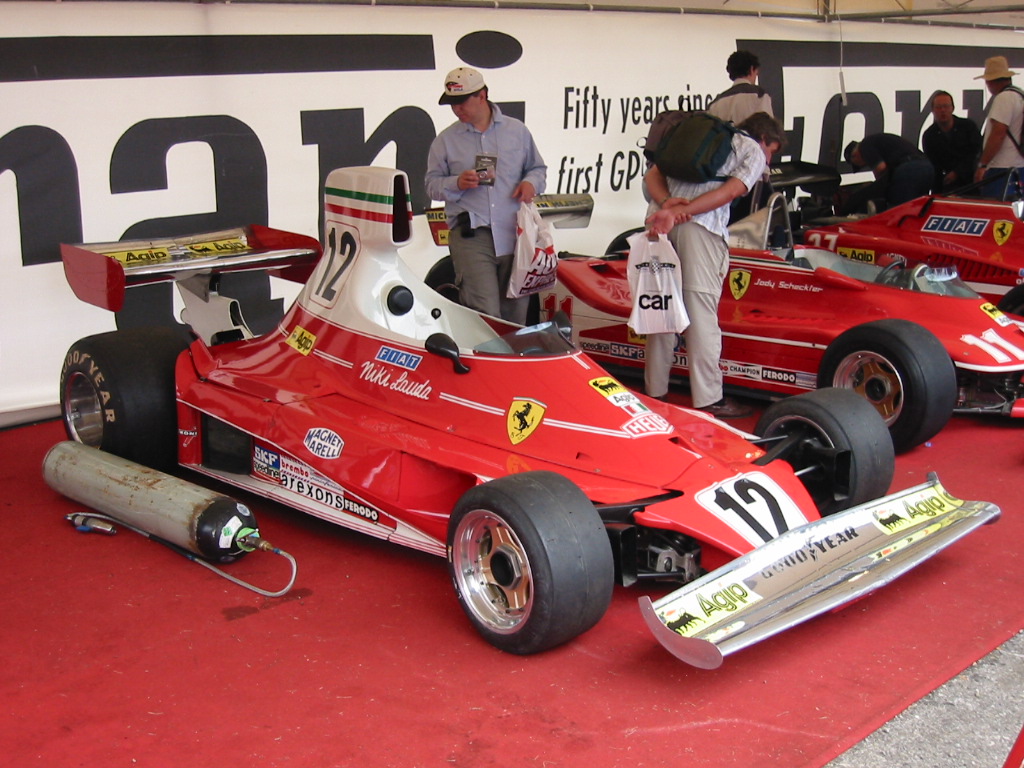
The 1975 Formula One season was contested as the FIA World Championship for drivers and constructors. It is best remembered for the rise of Niki Lauda, who captured the drivers' title driving for Scuderia Ferrari. The championship combined established European grands prix with events beyond Europe and reflected an era in which car development and driver skill both played decisive roles.
Image gallery
10 Images




Characteristics and technical context
Cars in this period were evolving rapidly: teams experimented with aerodynamics such as wings and body shaping, tyre technology improved, and chassis work focused on balancing speed with mechanical reliability. Ground-effect technology would dominate later in the decade, but in 1975 the emphasis remained on incremental aerodynamic gains, engine performance and careful mechanical setup.
Teams, drivers and competition
The grid featured a mix of factory teams and private entrants. Prominent names included Ferrari, McLaren, Lotus, Brabham and Tyrrell, while the driver lineup combined established champions and emerging talents. The season's outcome hinged on consistent point-scoring, strategic racecraft and the ability to keep cars reliable across a demanding schedule.
Season narrative and significance
Throughout the year, strong performances and tactical consistency placed Niki Lauda at the head of the championship fight. Ferrari's engineering and team organisation contributed importantly to his success, producing a package capable of competing at many venues. The 1975 title helped cement Lauda's reputation and marked a notable achievement for Ferrari in the modern era of the sport.
Legacy and notable facts
- Driver achievement: Lauda's championship is remembered as a demonstration of precision driving and steady scoring.
- Team impact: The season highlighted the value of a coordinated factory effort in both car development and race strategy.
- Technical evolution: Developments that year fed into the rapid innovation of the late 1970s, influencing future aerodynamic and chassis work.
For further historical context and detailed race results consult specialist archives and season reviews that document each Grand Prix and the evolving fortunes of teams and drivers.
Related articles
Author
AlegsaOnline.com 1975 Formula One season Leandro Alegsa
URL: https://en.alegsaonline.com/art/112135