
1972 Summer Paralympics (Heidelberg)
International multi-sport event for athletes with spinal injuries held in Heidelberg, West Germany in 1972; featured 984 competitors from 43 nations and a programme of wheelchair sports.
Overview
The 1972 Summer Paralympics were staged in Heidelberg, then part of West Germany. The event brought together athletes with spinal cord injuries to compete in a multi-sport international programme. Organisers recorded participation by 984 athletes representing 43 countries, making it one of the larger gatherings of wheelchair athletes of its era.
Image gallery
2 Images
Participants and events
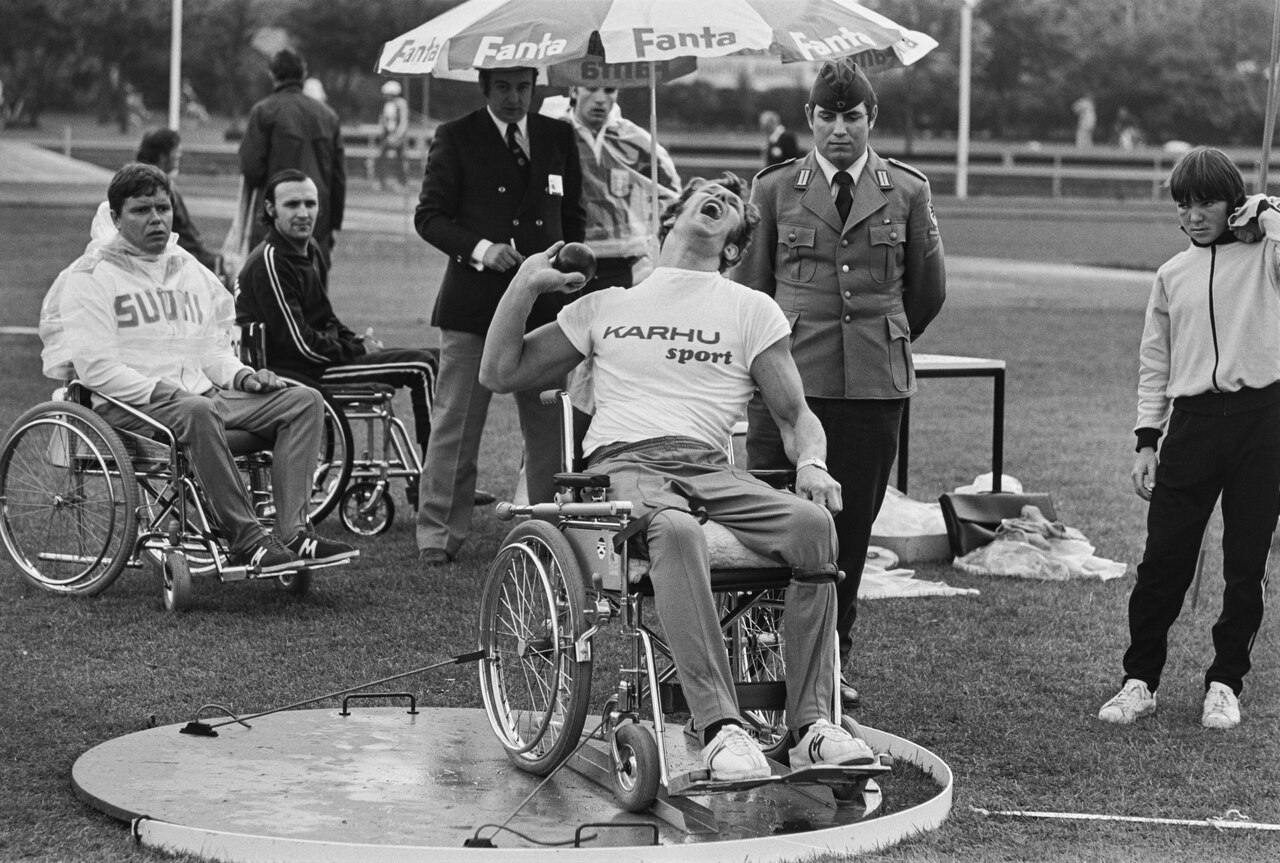
Eligibility at these Games was limited to competitors with spinal injuries; classification systems and categories used at the time reflected that narrower scope. The sports programme focused on wheelchair-based events and included athletics (track and field), swimming, archery, wheelchair basketball, table tennis and weightlifting among other disciplines commonly contested by wheelchair athletes.
Historical context
By 1972 the Paralympic movement was still evolving in organisation and reach. Although the Summer Olympic Games that year were hosted in Munich, the Paralympics were held separately in Heidelberg — a pattern that continued at several editions before the practice of staging the Olympic and Paralympic Games in the same city became the norm. The Heidelberg Games built on earlier competitions that originated in post‑war rehabilitation sport for veterans and civilians with spinal injuries.
Legacy and significance
The 1972 Games contributed to international recognition of competitive sport for people with disabilities and helped drive improvements in accessibility and sports classification. They highlighted the need for broader inclusion: in later decades the Paralympics expanded to include athletes with a wider range of impairments. Many national sports organisations that sent teams to Heidelberg continued to develop domestic programmes for wheelchair sport.
Notable facts
- Total delegation size was nearly a thousand athletes from 43 nations, reflecting steady growth of the movement.
- Competition remained focused on spinal cord injuries, a defining feature of early Paralympic editions.
- The Heidelberg Games helped set organisational precedents for future Paralympics in athlete housing, classification and international coordination.
For further reading on the event's place in Paralympic history and the evolution of disability sport, consult dedicated archives and overviews of the international Paralympic movement.
Related articles
Author
AlegsaOnline.com 1972 Summer Paralympics (Heidelberg) Leandro Alegsa
URL: https://en.alegsaonline.com/art/112121
Sources
- paralympic.org : "Summer Paralympic Games"
- paralympic.org : "SUMMER PARALYMPIC GAMES OVERVIEW"