
1970 Formula One season
Summary of the 1970 Formula One World Championship, remembered for Jochen Rindt's posthumous title, technical advances exemplified by the Lotus 72, and its influence on safety and car design.
Overview
The 1970 Formula One season was a pivotal year in grand prix racing, combining technical innovation, fierce competition and tragic loss. The campaign is most often remembered for the championship won by Jochen Rindt, who accumulated enough points to secure the drivers' title despite being killed in a practice accident late in the year. That outcome made him the only driver in Formula One history to be declared World Champion posthumously, and it focused global attention on driver safety.
Image gallery
8 Images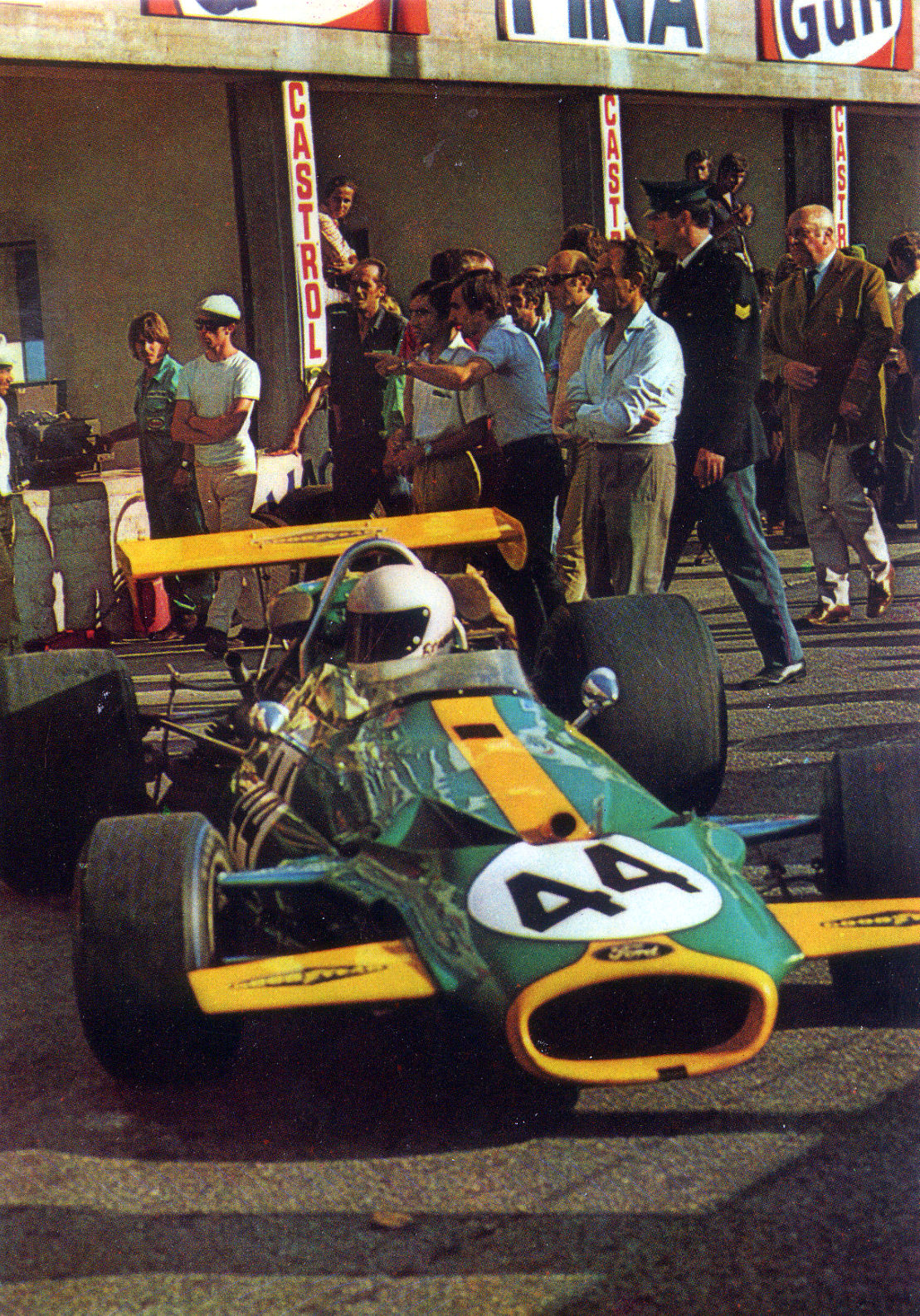


Cars and technical developments
The season saw rapid evolution in car design. The Lotus 72, introduced earlier and developed through 1970, became a defining machine of the era with its wedge profile, inboard brakes and relocated radiators. Teams experimented with aerodynamics, suspension layout and weight distribution, leading to faster and more complex cars. These changes pushed both performance and the demands on driver skill and circuit safety.
Season narrative and key figures
Rindt was the standout driver, but the year also featured strong performances from a cohort of leading racers who challenged for wins and podiums. Races were contested across Europe and beyond, and several events produced close battles and dramatic outcomes. The calendar and results reflected a sport in transition, where engineering advances and team tactics increasingly shaped championship battles.
Impact and legacy
The death of Rindt—together with other serious accidents that season—accelerated debate about track and car safety. Organizers, teams and governing bodies faced renewed pressure to improve protective structures, circuit barriers, medical response and vehicle construction. Over the following seasons, many safety measures were introduced or refined, changing Formula One's approach to risk.
Notable facts
- Unique title: Rindt remains the only posthumous World Champion in Formula One history.
- Technical influence: Designs introduced or refined in 1970 influenced racecar engineering throughout the 1970s.
- Safety turning point: The season contributed to the growing movement for improved driver and circuit safety.
Taken together, the 1970 season stands as a watershed moment: a year of extraordinary driving and innovation shadowed by events that transformed how the sport managed danger. It remains one of the most discussed and studied campaigns in Formula One history.
Related articles
Author
AlegsaOnline.com 1970 Formula One season Leandro Alegsa
URL: https://en.alegsaonline.com/art/112109