
Europe and the World in 1490: Political Shifts, Exploration, and Cultural Change
Overview of Europe and the world in 1490: rising centralized states, Renaissance cultural shifts, early Atlantic and African exploration, and global political landscapes on the eve of expanded cross‑continental contact.
The year 1490 falls in the closing years of the 15th century, a period often described as the transition from the late Middle Ages into the early modern era. It was an age marked by expanding long‑distance exploration, intensified state formation in Europe, dynamic developments in art and learning associated with the Renaissance, and the continued flourishing of major civilizations outside Europe.
Image gallery
3 Images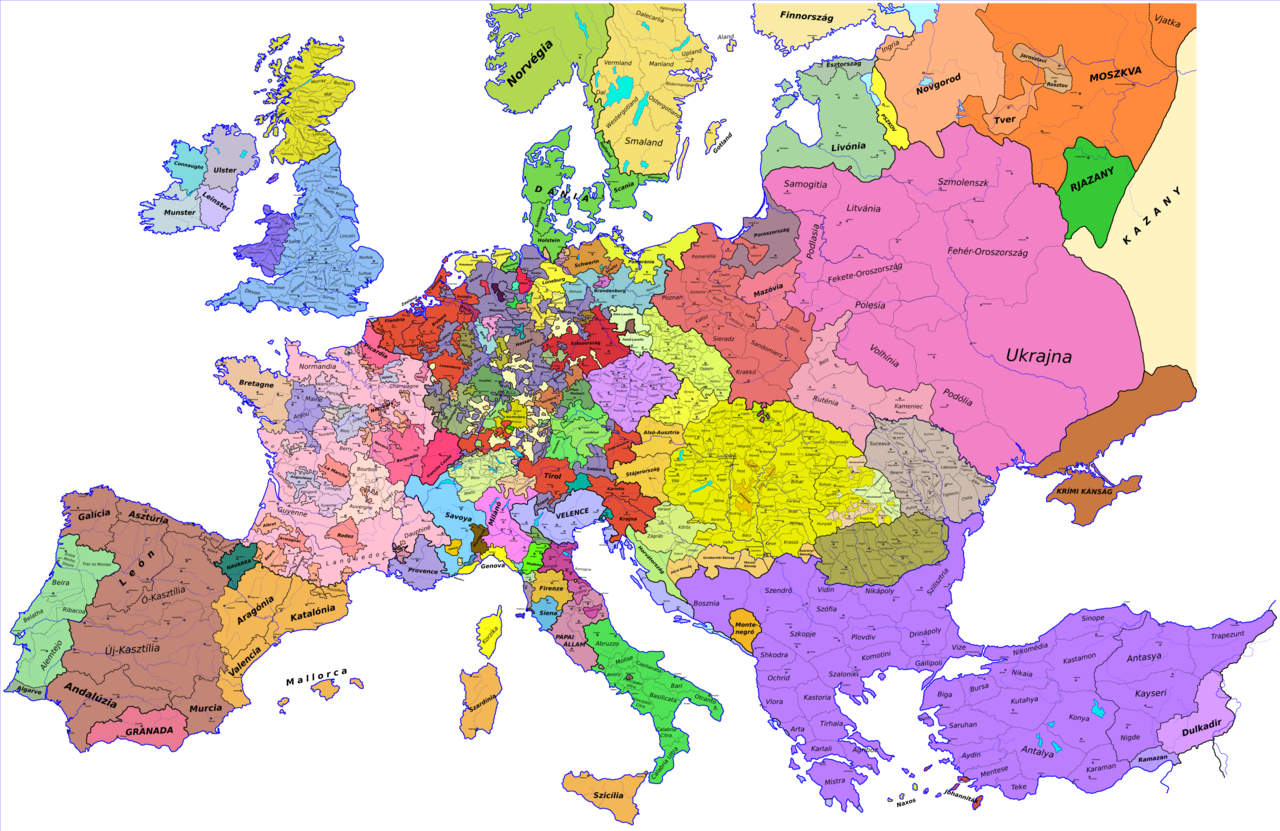

Broad context
At this time, political power in Europe was shifting toward more centralized monarchies even as the continent remained divided into a patchwork of kingdoms, duchies and city‑states. The Iberian realms of Castile and Aragon were consolidating under the Catholic Monarchs, Portugal pursued maritime exploration down the African coast, and Italian city‑states such as Venice, Milan and Florence were important commercial and cultural centers. The Ottoman Empire controlled much of the eastern Mediterranean and parts of southeastern Europe, while powerful dynasties ruled in Asia and the Americas saw complex, highly organized indigenous states.
Political landscape
- In Western Europe, monarchs continued to strengthen centralized authority and to compete for trade and influence overseas.
- Italy remained politically fragmented but culturally vibrant, with courts and republics sponsoring artists and scholars.
- The Ottoman Empire maintained its role as a major Eurasian power, exerting influence across southeastern Europe, Anatolia and the eastern Mediterranean.
- In East Asia, established dynasties presided over stable bureaucratic states and flourishing regional cultures.
Exploration and contact
The late 15th century was an era of expanding maritime exploration. Portuguese navigators worked to map the west coast of Africa and to secure sea routes to Asia. Castile and Portugal both showed increasing interest in Atlantic navigation, trade and the search for new sea passages. These exploratory efforts set the stage for dramatic events and cross‑continental contacts in the following decade.
Culture, science and technology
- Renaissance humanism and artistic innovation continued to spread from Italy into other parts of Europe, influencing painting, sculpture, literature and architecture.
- The printing press, introduced to Europe in the previous century, was enabling wider dissemination of books and ideas, contributing to rising literacy among certain urban and clerical elites.
- Scholarly interest in classical texts, natural philosophy and empirical observation grew, laying groundwork for later scientific developments.
Society and economy
Agrarian economies remained dominant in much of the world, but commerce and urban life were increasingly important in many regions. Trade networks linked Europe, North Africa, the Middle East and parts of Asia, while local markets and guilds shaped production in cities. Social structures still included rigid hierarchies, but economic change and state centralization were producing gradual social mobility in some areas.
Major centers and civilizations
- Europe: a mixture of kingdoms (for example, Iberia and France), duchies and autonomous city‑states, with growing royal administrations.
- Ottoman Empire: a dominant power in the eastern Mediterranean and southeastern Europe.
- China: governed by an established imperial dynasty with a sophisticated administrative system and active internal economy.
- Pre‑Columbian Americas: complex polities and cultures such as the Aztec and Inca empires (and many other regional cultures) continued to develop independently of Europe.
Notable individuals active around this time
- Rulers and statespersons who shaped late 15th‑century politics across Europe and Asia.
- Artists and thinkers of the Renaissance, whose work influenced painting, architecture and scholarly study.
- Navigators and sponsors exploring Atlantic routes and testing new maritime technologies.
Legacy
The years around 1490 were formative for several long‑term historical trajectories: the acceleration of maritime exploration that would soon link Europe more directly with the Americas and Asia; the cultural flowering of the Renaissance; and the slow emergence of stronger centralized states. Events and developments in this period set patterns that would become more visible and consequential in the early decades of the 16th century.
Related articles
Author
AlegsaOnline.com Europe and the World in 1490: Political Shifts, Exploration, and Cultural Change Leandro Alegsa
URL: https://en.alegsaonline.com/art/111409