
1458
1458 — a year in the late Middle Ages noted for papal and Central European successions; also the integer 1458 (2·3^6) with simple arithmetic properties and a small divisor set.
1458 can refer to the calendar year in the 15th century or to the integer 1458. As a year it sits in the late Middle Ages, a period of political realignment in Central Europe, ongoing conflict in England, and imperial consolidation in the eastern Mediterranean. As a number it has elementary but interesting arithmetic characteristics that make it easy to analyze by hand.
Image gallery
1 Image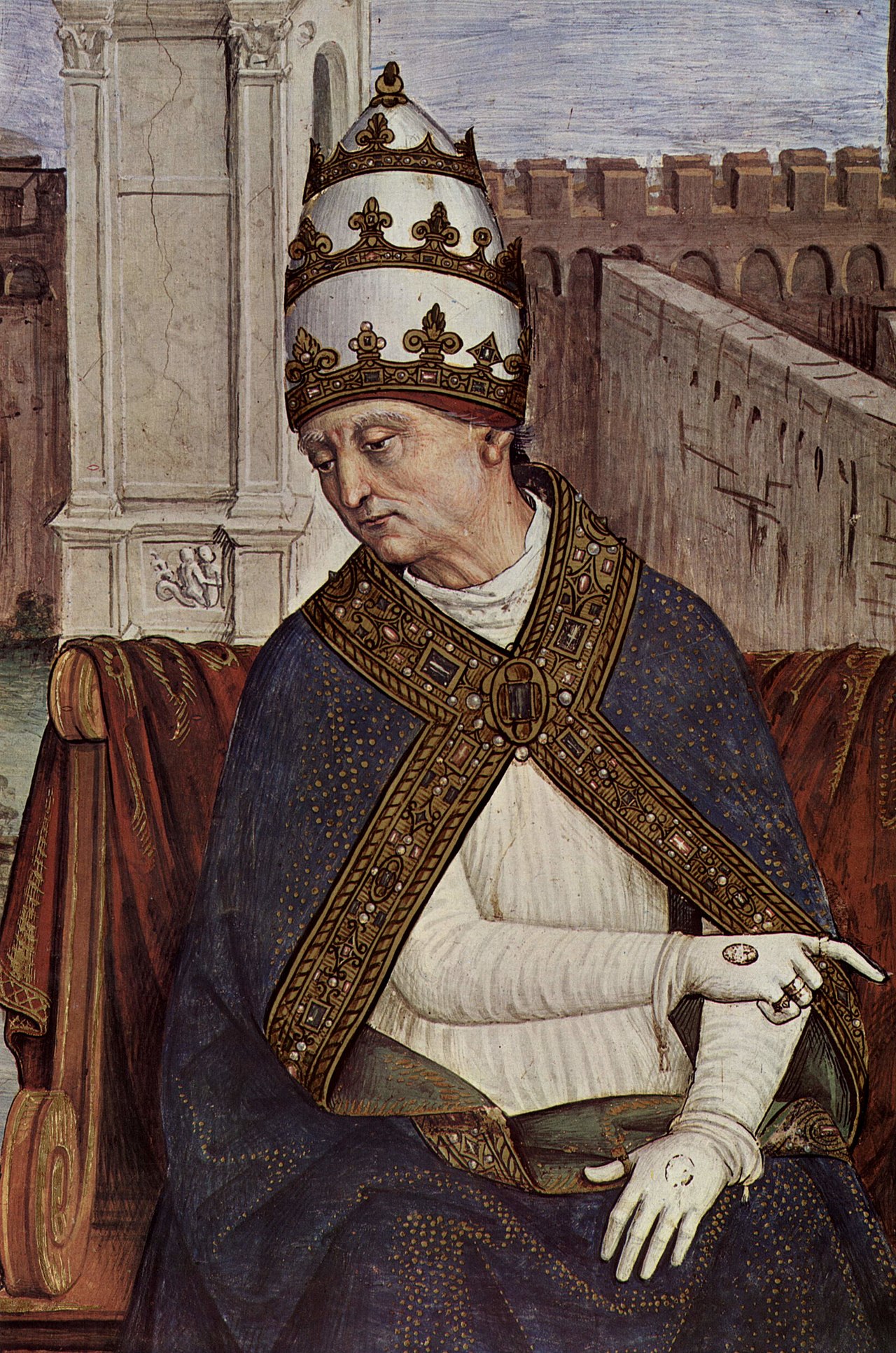
Mathematical characteristics of the number 1458
As an integer, 1458 factors as 2 × 3^6. This factorization yields several straightforward consequences and checks useful in elementary number theory and arithmetic:
- Prime factorization: 2 × 3^6.
- Number of positive divisors: (1+1)×(6+1) = 14.
- Sum of divisors (σ): 3 × 1093 = 3279, so the sum of proper divisors is 1821 and 1458 is an abundant number.
- In decimal it is divisible by 9 and 81 (since it contains high powers of 3); in binary it is 10110110010, and in Roman numerals it is written MCDLVIII.
Year 1458: political and cultural context
The year 1458 falls in a transitional phase across Europe and beyond. The Ottoman Empire was consolidating gains made after the fall of Constantinople (1453). In Western and Central Europe, dynastic struggles and local confederations continued to reshape borders and influence.
Notable developments often associated with 1458 include:
- The election of a new pope in 1458: following the death of Pope Callixtus III, Enea Silvio Piccolomini was chosen as Pope Pius II, beginning a pontificate that engaged with Italian politics and calls for a crusade against the Ottomans.
- Changes in Central European crowns: several kingdoms experienced contested successions or the election of new rulers, reflecting the fragmented and elective nature of many medieval polities.
- Continuity of regional conflicts: the Wars of the Roses in England and conflicts among Italian city-states and German principalities persisted through the decade, affecting trade, diplomacy, and military affairs.
Significance and legacy
Though 1458 is not typically singled out as a watershed year, it sits amid a decade of important developments. Papal policy under Pius II and the political careers of Central European rulers who took power around this time helped shape the region’s response to Ottoman pressure and the balance between monarchy and nobility. In arithmetic and recreational mathematics, 1458 provides a clear example of a number dominated by a single prime power multiplied by a small factor, illustrating divisor-counting formulas and the notion of abundance.
When encountered in texts or lists, it is valuable to clarify whether the reference is to the year or the integer: the historical year invites exploration of surviving chronicles, diplomatic records, and art of the period, while the integer is a compact object for elementary factorization and divisor problems.
Related articles
Author
AlegsaOnline.com 1458 Leandro Alegsa
URL: https://en.alegsaonline.com/art/111374